Portuguese
  Spanish




Cornell University Research Describes The Creation Of A Darker Fabric Capable Of Absorbing 99.87% Of Incident Light, Obtained From Merino Wool Treated With Polydopamine And Plasma, Inspired By The Structure Of The Wonderful Bird And With Process Considered Viable For Large-Scale Production
The darkest fabric ever created by researchers at Cornell University absorbs 99.87% of all incident light, a result obtained from merino wool treated with polydopamine and plasma, with applications ranging from design to materials science.
Development Of The Darkest Fabric In The Laboratory
The darkest fabric was developed by engineers at Cornell University from a knitted fabric made of white merino wool.
The material received a coating of polydopamine, a synthetic melanin polymer, before undergoing treatment in a plasma chamber.
-
Pennsylvania Mine Creates Ice in Summer Heat and Melts in Winter, Turning a Mountain Crevice into a Reverse Natural Refrigerator

-
China Accelerates Global Expansion of Robotics: From Smart Vacuums to Industrial and Humanoid Machines, Millions Exported to Over 150 Markets
-
Polar Air Mass to Hit Brazil: Temperatures to Plummet in Nine States, Near Freezing in the South with Frost Risk Until Monday
-
Chinese “dark factories” produce electric cars 24/7 with minimal human intervention, as Zeekr assembles 800 units daily, raising concerns in Brazil.





This process allowed for the engraving of nanofibrils on the fabric surface. These microscopic structures are responsible for capturing incident light, preventing it from being reflected out of the material and creating the ultra-black visual effect.
Nanometric Structure And Light Absorption
The nanofibrils act as optical traps. According to the researchers, light ricochets repeatedly between these structures, being progressively absorbed. This mechanism explains why the darkest fabric reaches such high levels of light absorption.
According to Hansadi Jayamaha, a scientist and fabric designer at Cornell University, this behavior of light is the central element for achieving the ultra-black effect observed in the treated material.
Biological Inspiration In The Wonderful Bird
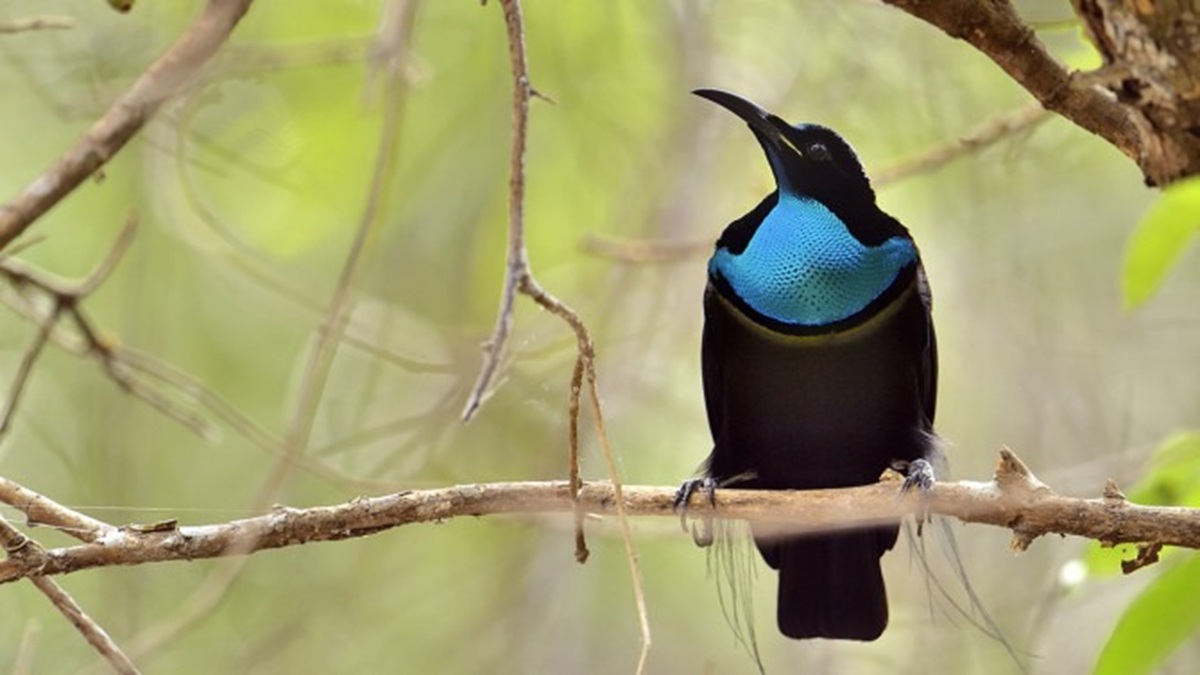
The structure of the darkest fabric was inspired by the magnificent wonderful bird, a species found in New Guinea and northern Australia. The male of the bird displays intense black plumage contrasted with an iridescent blue-green chest.
In nature, the plumage of the wonderful bird appears darker when viewed head-on, becoming reflective at other angles. The fabric developed at Cornell maintains high light absorption even when viewed at up to 60 degrees of tilt.
Comparison With Other Ultra-Black Materials
Although the darkest fabric created at Cornell is not the blackest material ever produced, it comes close to existing records. Vantablack absorbs up to 99.96% of light, while a MIT material made from carbon nanotubes achieves 99.995%.
These materials, however, are described as expensive and difficult to manufacture. The new fabric, according to its creators, features a relatively simple and viable process for large-scale production.
Applications Outside The Laboratory
The darkest fabric has already begun to be explored outside the scientific environment. Fashion design student Zoe Alvarez created a dress made from a material that gradually darkens until it reaches ultra-black, featuring a central blue-green point.
The piece makes a direct reference to the wonderful bird and demonstrates the aesthetic potential of the fabric. A study detailing the material and its manufacturing process was published in the journal Nature Communications.