Portuguese
  Spanish


Named Project Natick, the experiment kept the computers in a capsule functioning alone at the bottom of the sea for two years, without anyone to replace a single part. The underwater data center returned to the surface with numbers that far surpassed land-based servers, and yet Microsoft archived everything.
It sounds like a science fiction script, but it really happened. In 2018, Microsoft locked 855 computers in a steel capsule, filled the cylinder with nitrogen gas, and sent it all to the bottom of the sea, about 35 meters deep off the coast of the Orkney Islands in Scotland. The equipment remained on for two consecutive years, without any human hand touching them, in a test that Microsoft itself detailed on its official site and which entered the list of the most daring infrastructure experiments in computing history.
The project’s name was Natick, and the question behind it was straightforward: is it possible to run servers at the bottom of the ocean, far from any maintenance, and still have reliability? When the capsule resurfaced in 2020, the answer surprised even the engineers. The submerged computers failed eight times less than the identical equipment left on land. And then came the strangest chapter of the story: even with such a good result, Microsoft decided to shelve the bet on the underwater data center for good.
How Microsoft placed an entire data center at the bottom of the sea
The idea didn’t come about overnight. It began in 2013, when researcher Sean James, who had served as a submariner in the United States Navy, wrote an internal paper arguing that servers could live underwater.
-
Animal Once Thought Extinct in the 2000s Reborn in Lab, Survives Minutes, Becomes Rare Biological Case

-
Brazilian School Receives Israeli Biodigester That Converts Food Waste into Cooking Gas Equivalent to Nearly Three 13-Kilogram Cylinders Monthly

-
61-Year-Old Brazilian Retiree Produces His Own Cooking Gas from Cow Manure, Goes a Year Without Buying a Cylinder, and Sells Surplus Biofertilizer
-
Ghana to Launch Public Library Offering Over 100 Air Quality Sensors for Community Use, with Plans to Expand Across West Africa


The company bought into the thesis and, in 2014, assembled a team under the command of engineer Ben Cutler to turn paper into metal. The first test came in 2015, with a single rack of servers sealed in a tube and sunk in shallow waters off the coast of California. It ran for about three months without a problem, enough to prove that the madness had a point.
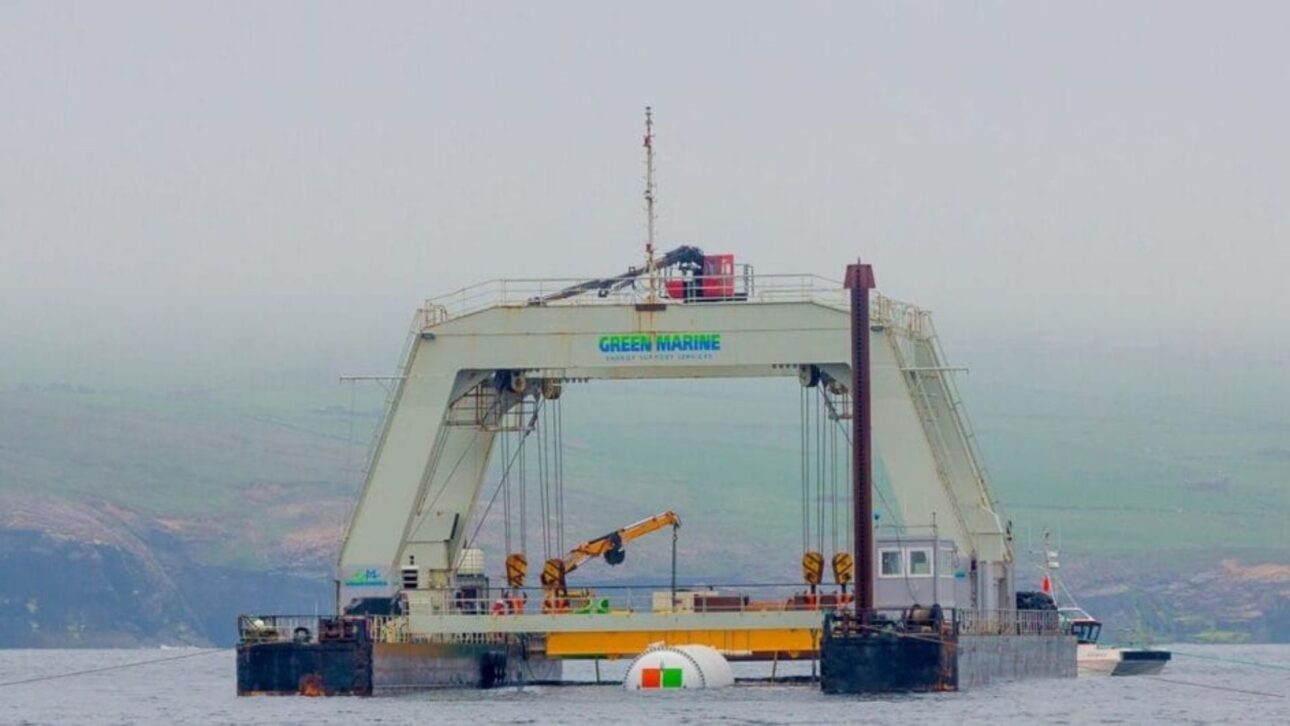
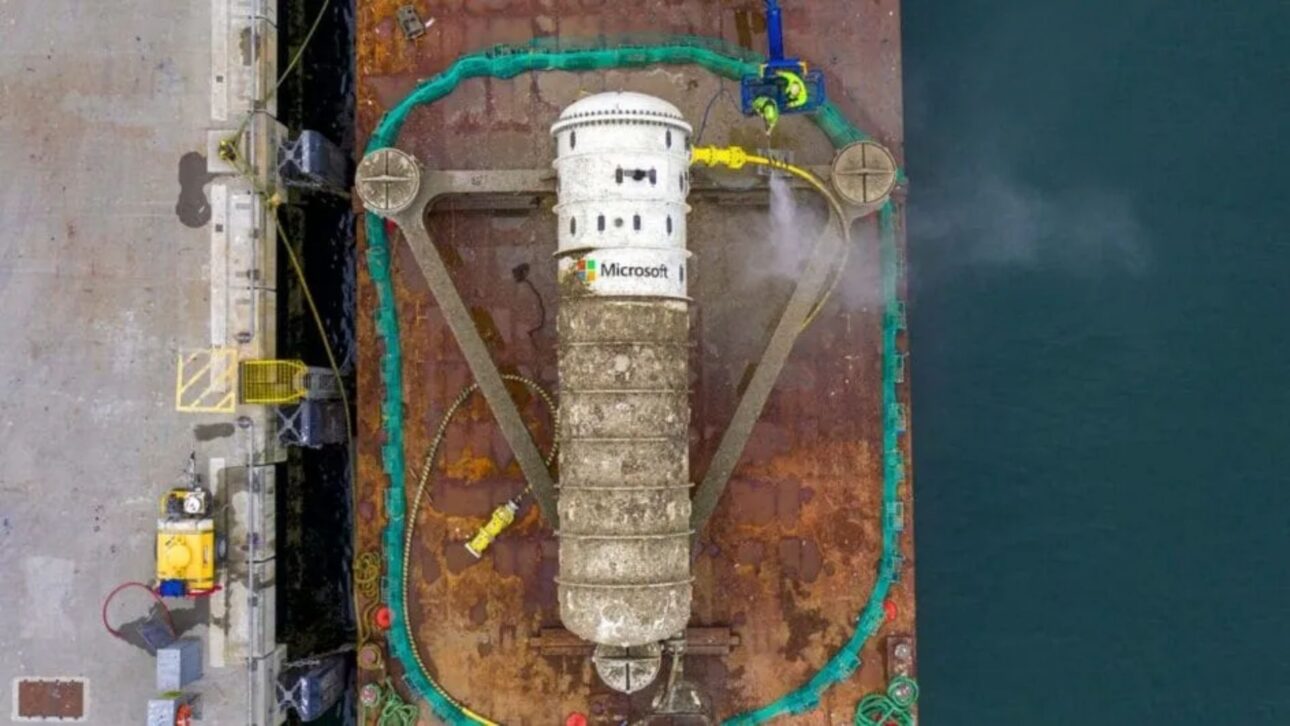
The real test was the second chapter of Project Natick, nicknamed Northern Isles. It was a twelve-meter-long steel cylinder, the size of a small submarine, packed with 855 servers and 27.6 petabytes of storage.
In 2018, Microsoft tied the tube to power and fiber optic cables and deposited it on the seabed of the Orkney Islands, at a depth of 117 feet, equivalent to about 35 meters. From there, the capsule computers began processing Azure cloud tasks completely on their own, in the dark and cold of the seabed.
A little-remembered detail is that those were not brand new servers. According to the Microsoft engineers’ report, the team took a batch of almost a thousand machines already retired from a common data center, divided the group in two and sent 855 to the seabed while leaving 135 running on land, with the same workload. It was a direct competition, old machine against old machine, to see which environment could withstand the strain better.
Why fill everything with nitrogen gas instead of common air?
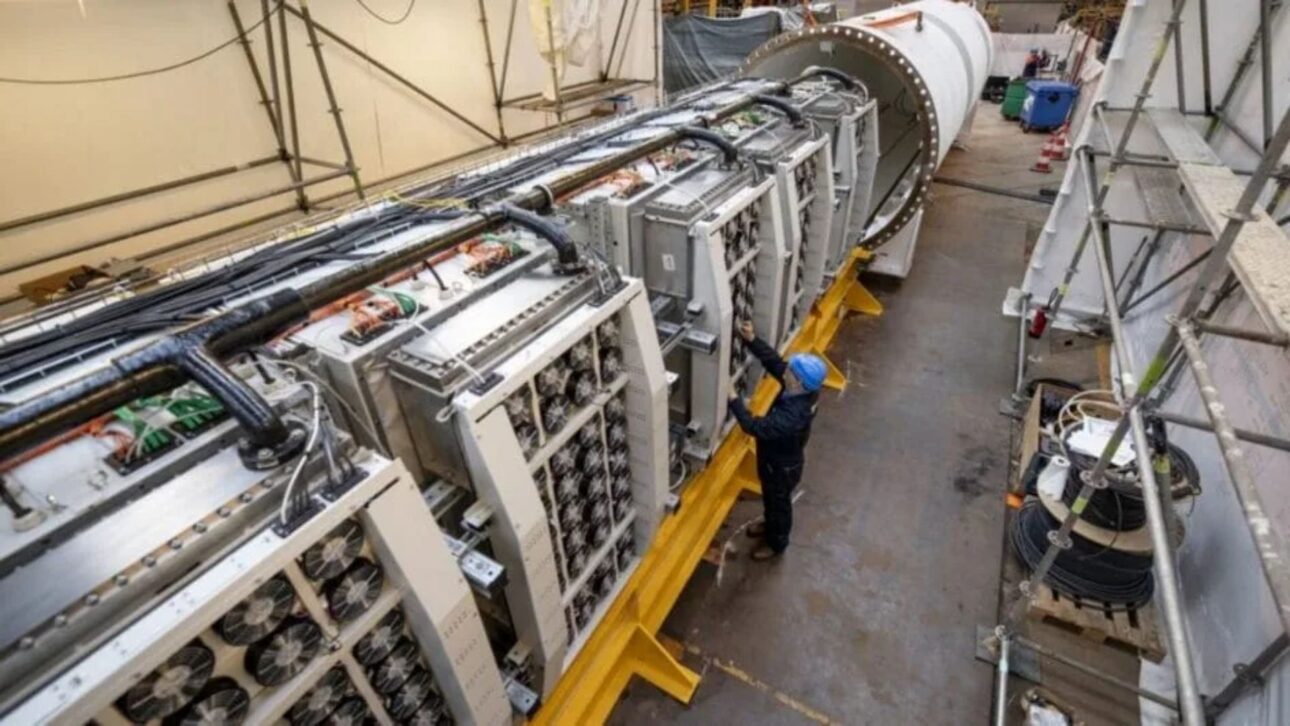
Here is one of the central insights of Project Natick. The air we breathe has about 21% oxygen, and oxygen is a troublemaker: it reacts with metals and components, causes corrosion and rust, and gradually eats away at electronics. Microsoft’s solution was to remove oxygen from the equation. The cylinder was filled with nitrogen gas, which is inert and much less corrosive, creating an atmosphere of nitrogen gas inside that practically doesn’t rust anything.
This gas solved one problem and created another, on purpose. With the tube sealed and filled with nitrogen gas, no one could open it to fix anything, forcing the system to fend for itself. And it was precisely this combination that researchers pointed out as the key to the good result. Ben Cutler, project leader, attributed the high reliability to two main factors: the absence of oxygen inside the capsule and the absence of people circulating to bump into cables and jostle parts during maintenance. Without oxygen and without human hands, the capsule computers were simply left in peace.
There was also an extra precaution that shows the level of rigor. The team controlled the humidity inside, aiming for around 30%, similar to a land environment, to prevent both corrosion and static electricity shocks. And since a long cable connecting the seabed to the shore could become an entry point for spies, the data traffic was protected with encryption resistant to quantum computers. In other words, that underwater data center also served as a laboratory to test technologies that had nothing to do with water.
Cooling that nature delivers for free
If there’s one bill that keeps data center operators up at night, it’s cooling. Servers get very hot, and keeping everything at a safe temperature consumes energy and potable water in absurd amounts. At the bottom of the sea, this problem almost evaporates. The cold ocean water acts as a natural and constant radiator, cooling the machines without the need to spend rivers of energy to air-condition the environment.
In practice, Microsoft drew its own seawater into heat exchangers and returned it to the ocean immediately after, without touching a drop of potable water. The result was enviable energy efficiency, with an energy utilization index of just 1.07, a number that very few land-based data centers achieve. Cutler even commented that the model would allow servers to be installed in virtually any sea on the planet, without competing for fresh water with cities and farms in regions already suffering from drought.
And the environmental impact? Less than many would imagine. According to the project report, the water returned to the sea was only a fraction of a degree warmer than the surrounding water, a difference that disappeared a few meters away. The cylinder even became a kind of artificial reef, covered with anemones and barnacles when it was removed, and the section of the seabed where it was located returned to normal afterward. As a bonus, all the energy used came from the Orkney Islands grid, powered 100% by renewable sources like wind and waves.
What the numbers revealed when the capsule resurfaced
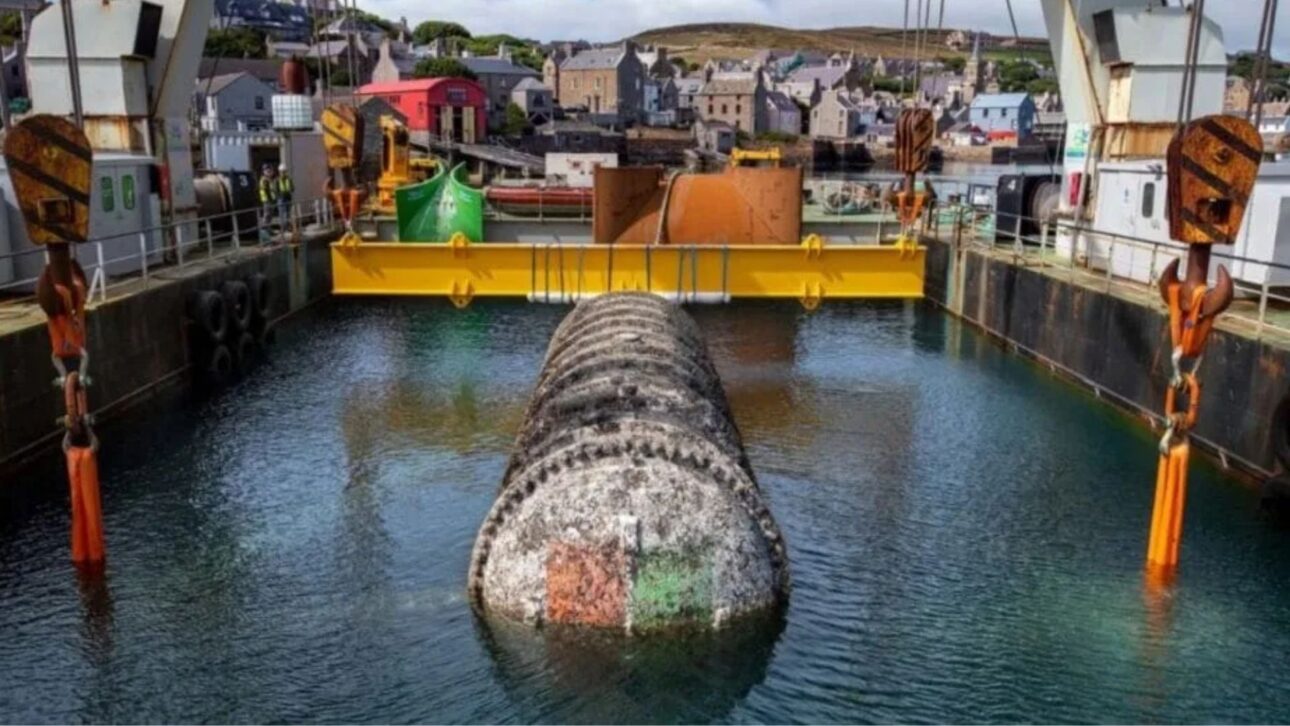
The moment of truth arrived on a gray day in July 2020, when a crane lifted the barnacle-covered cylinder back to the surface. The final tally was surprising. Of the 855 computers in the capsule that spent two years and eight days at the bottom of the sea, only six failed. On the other side of the comparison, among the 135 identical servers that remained on land, eight broke down in the same period. Translating into percentage, it was 0.7% failure underwater versus 5.9% on the surface, the eight times lower rate that made headlines worldwide.
It’s worth an honest second thought, and Cutler himself made sure to note it: these numbers come from used and unmaintained machines, in a specific setup, so you can’t just transfer them to any common data center. Even so, the message was clear. A sealed, cold environment with no people around tends to extend the life of the equipment. During its operation, the underwater data center ran internal Azure cloud tasks, never customer data, and even donated idle capacity to the Folding@home project, which studied the structure of coronavirus proteins at the height of the pandemic.
There was also a logistical advantage that Microsoft made sure to highlight. While building a land-based data center can take up to two years, one of these capsules could be manufactured and installed in about 90 days, from decision to turning the key. Combining reliability, efficiency, and assembly speed, Project Natick seemed to have all the ingredients of a winner.
So why did Microsoft abandon the underwater data center?
This is the question that lingers, and the answer only came years later. In 2024, Microsoft confirmed to the specialized portal Data Center Dynamics that it no longer intends to place servers in the sea. “I am not building underwater data centers anywhere in the world”, said Noelle Walsh, who heads the company’s cloud operations and innovation division. After a few years of silence, during which many people assumed the project was still active, the company finally admitted that the page had turned.
Walsh made sure to say it wasn’t a failure. According to her, the team worked on the project, it worked, and the learning about operating servers underwater, dealing with vibration, and understanding the wear and tear of parts will be used in other areas. In a statement, Microsoft said that Project Natick will continue to exist as a research platform to test reliability and sustainability concepts, with an emphasis on liquid immersion cooling, a technique that, instead of nitrogen gas, immerses components in fluids that do not conduct electricity. The same executive also mentioned interest in robotics, as new servers are becoming increasingly heavy and difficult to handle.
Behind the scenes, the market’s reading is that the underwater data center hit practical and operational limits, in addition to arriving at a time when the company redirected energy and money to the artificial intelligence race. Fixing anything at the bottom of the sea is expensive and complicated, and scaling the operation to the size that the modern cloud requires brings a mountain of maintenance challenges that the friendly pilot in the Orkney Islands did not have to face.
The idea didn’t sink completely along with Project Natick
That Microsoft has exited the game does not mean the race is over. On the other side of the world, China has advanced in the same direction, and the company Highlander has installed a commercial underwater data center weighing over 1,400 tons near the island of Hainan. The concept that capsule computers helped validate remains alive, now in the hands of others.
And there’s a timing detail that makes everything even more ironic. Just now, with the explosion of artificial intelligence putting pressure on the power grid and sparking a hunger for data centers, the idea of placing servers at the bottom of the sea to save energy and water has started to sound less crazy and more strategic. Startups have raised hundreds of millions of dollars to take heavy computing to the ocean. Microsoft paved the way, proved that it works, and then stepped aside just when the world might most need efficient digital infrastructure.
A winner who preferred to keep the trophy in the drawer
In the end, Project Natick is one of those stories that mixes boldness, cutting-edge engineering, and a touch of corporate mystery. Microsoft submerged 855 capsule computers, filled everything with nitrogen gas, left it untouched for two years, and proved that the seabed can be a better home for servers than dry land. And even with the result in hand, it preferred to shelve the idea and place its bets elsewhere. It leaves the impression of a winner who gave up halfway up, leaving behind a question that still bothers the industry.
And you, what do you think of this choice? Did Microsoft throw away a promising technology by abandoning the underwater data center, or was it a sensible decision given the costs of maintaining servers at the bottom of the sea? Share in the comments if you would trust your data to a sealed capsule in the ocean and if you believe that underwater data centers will make a strong comeback in the era of artificial intelligence.