






 Portuguese
  Spanish


According to People, Shay Taylor-Allen learned on March 20, 2026, that she was accepted for a residency in anesthesiology at Yale Hospital, where she worked as a janitor for ten years. The information highlights medical training, functional change, and institutional return in Connecticut, focusing on a career in the hospital and academic sector.
The janitor who worked for ten years at Yale Hospital in Connecticut was approved to return to the institution as a resident in anesthesiology. Shay Taylor-Allen, 32, received the result on March 20, 2026, according to a People report published on March 25.
The case involves a change of role within the healthcare sector, moving from an operational activity in the hospital environment to a formal stage of medical training. Before the residency, Taylor-Allen studied medicine at Howard University and was in her final year when she was selected for the program at Yale.
Entry into the hospital occurred in an operational role
Shay Taylor-Allen began working at Yale Hospital at 18, right after high school. The initial role was as a janitor, in a routine related to cleaning, space maintenance, and operational support within the hospital institution.
-
Microsoft Submerges 855 Computers in Nitrogen-Filled Capsule 35 Meters Under the Scottish Sea, Records Eight Times Fewer Failures Than on Land After Two Years

-
Animal Once Thought Extinct in the 2000s Reborn in Lab, Survives Minutes, Becomes Rare Biological Case

-
Brazilian School Receives Israeli Biodigester That Converts Food Waste into Cooking Gas Equivalent to Nearly Three 13-Kilogram Cylinders Monthly

-
61-Year-Old Brazilian Retiree Produces His Own Cooking Gas from Cow Manure, Goes a Year Without Buying a Cylinder, and Sells Surplus Biofertilizer


This stage gave her direct contact with the healthcare environment, although without clinical involvement. The relevant point, from a professional perspective, is that entry into the hospital occurred through a support role and later connected to a complete medical education.
During this period, Taylor-Allen maintained a connection with the institution while evaluating her next academic steps. The report states that, initially, she had not yet decided whether to pursue a degree.
With the advancement of her academic journey, the hospital ceased to be just a workplace and became part of a larger career change. The source does not provide data on formal internal mobility programs, so the case should be understood as a documented individual trajectory.
Medical training went through Howard University
The formal area change occurred when Taylor-Allen was accepted into the Howard University medical school in 2021. From that point, she left her job as a janitor and dedicated herself to medical training.
Howard University appears as the central academic stage between the previous role at the hospital and the approval for medical residency. Without this education, returning to Yale Hospital as a resident would not be possible within the professional structure of medicine in the United States.
The People report states that Taylor-Allen was in her final year of medical school when she received the Match Day result. This process determines the placement of medical graduates in residency programs.
In her case, the approval was for anesthesiology. The choice of specialty marks a practical and technical phase of the medical career, with supervised training in a hospital environment.
Residency in anesthesiology marks a new stage
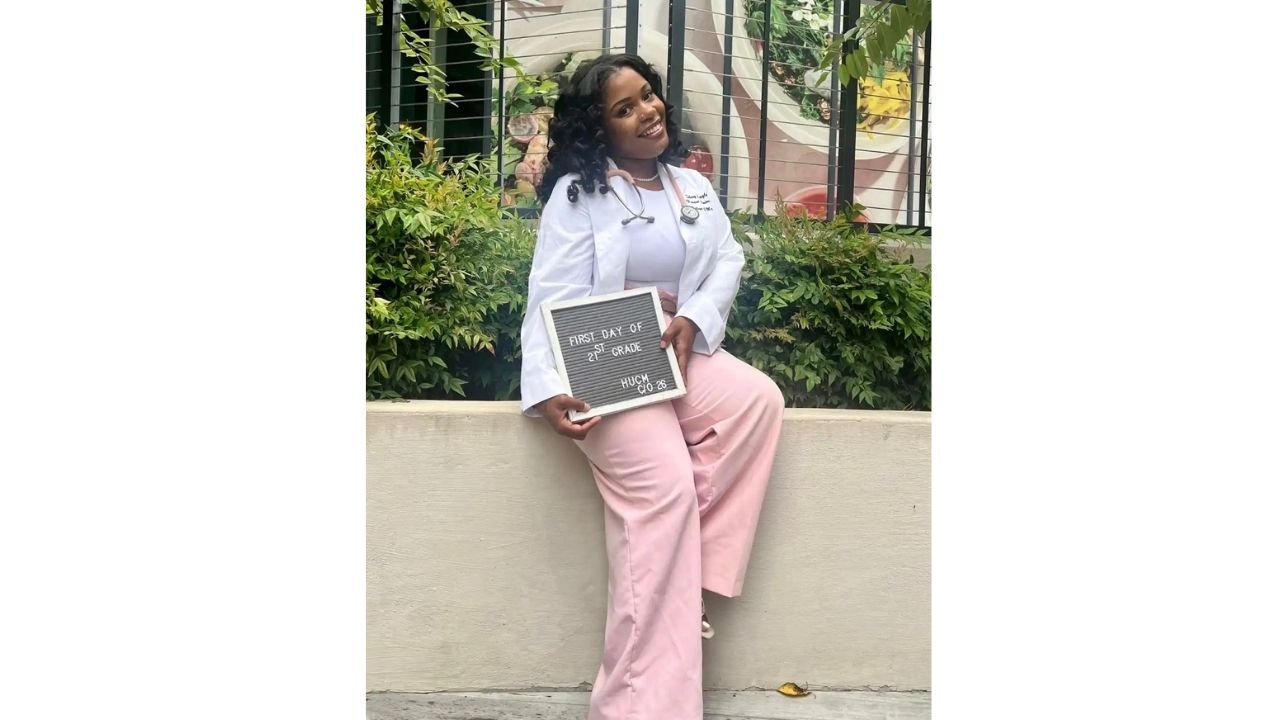
On March 20, 2026, Shay Taylor-Allen learned that she had been approved for the anesthesiology residency program at Yale Hospital. The result confirmed her return to the institution in a different role than previously held.
The residency in anesthesiology requires prior medical education and is part of the specialization stage. The change is not a direct job swap, but a transition built through academic training, selection, and entry into a medical program.
The source reports that she is expected to return to New Haven, Connecticut, to start the program. However, the report does not specify the exact start date of the residency.
This point is important for maintaining accuracy. The confirmed data is the approval in the program on March 20, 2026, not the immediate start of activities as a resident.
Yale Hospital appears as a common point in the trajectory
Yale Hospital is the link between the two professional stages of Taylor-Allen. First, it was the place where she worked as a cleaner for ten years. Then, it became the hospital to which she was selected as a resident in anesthesiology.
This institutional continuity gives relevance to the news because it shows circulation between different roles within the same sector. The case brings together operational work, higher education, and medical residency within a single hospital environment.
The report also states that Taylor-Allen was familiar with sectors and professionals at the hospital due to her previous routine. This contact did not replace medical education but was part of the environment in which the career change was envisioned.
The source does not provide information about recruitment policies, scholarships, course funding, or specific institutional programs at Yale Hospital for workers wishing to transition to clinical careers.
Hospital experience influenced the choice of medicine
According to People, Taylor-Allen began considering medicine after observing the care her mother received and the work of medical teams. The episode is mentioned in the source as a motivating factor to research the path to a medical career.
The original article states that she started seeking information on how to become a doctor and followed the necessary steps from there. The focus here is the professional decision made after continuous contact with the hospital environment.
This reading avoids turning the case into an emotional narrative and keeps the focus on education. The hospital experience helped guide the choice, but the change in role depended on entering medical school, completing the course, and passing residency.
The trajectory also shows how workers in operational areas can observe professional possibilities within large institutions. Still, each such change depends on academic, financial, and selective conditions that the source does not detail.
Case shows professional mobility in the healthcare sector
The hospital sector encompasses very different roles: cleaning, maintenance, nursing, administration, medicine, research, care, and management. Taylor-Allen’s trajectory is noteworthy because it spans two ends of this ecosystem: operational support and specialized medical training.
This framing allows the case to be read as a discussion about professional mobility in the healthcare sector. The news does not need to rely on the emotional contrast between roles, but on the passage through formal qualification stages.
The word “cleaner” appears in the article because it identifies the previous role reported by the source. However, the safer reading is to treat this role as part of the hospital structure, without exploiting it as a symbol of hardship.
In this sense, the highlight is on the transition between occupations, training at Howard University, and entering anesthesiology at Yale Hospital. The change is significant because it shows professional circulation within a highly regulated area.
What the source confirms about dates and institutions
The People report was published on March 25, 2026, and states that Taylor-Allen received the residency result on March 20 of the same year. The residency institution is Yale Hospital, in Connecticut.
The medical training took place at Howard University. The source also states that she worked for ten years as a cleaner at the hospital before being accepted into medical school in 2021.
These are the confirmed and sufficient data to structure the article accurately. There is no information in the source provided about salary, cost of training, number of residents, professional mobility statistics, or broad data on the hospital job market.
Therefore, the article should avoid broad economic conclusions. The case can be connected to the healthcare sector and the medical career, but it should not be presented as evidence of a general trend without additional data.
Transition depended on medical training and selection
The change of Taylor-Allen to residency in anesthesiology went through formal stages. She left the operational role, joined the Howard University School of Medicine, and participated in the selection process for residency.
This sequence differentiates the case from a simple internal job change. Medical residency is a technical, selective stage linked to higher education in medicine.
The return to Yale Hospital, therefore, did not occur through direct promotion within the institution. It happened after academic training and approval in a specific program.
This distinction is essential to avoid exaggerations. The trajectory has public appeal, but the structure of the fact is professional: training, selection, and entry into hospital residency.
Discussion may open debate on career guidance
The case also allows for a broader discussion about professional guidance in large healthcare institutions. Hospitals gather workers with different educational levels, roles, and daily contact with clinical areas.
Without stating that there was an institutional program at Yale Hospital, the report shows that experience in a hospital environment can influence training decisions. The relevant question is how institutions can guide workers interested in technical or clinical paths.
This debate is relevant for hospitals, universities, and medical schools. The source does not provide public or corporate policies on the topic, but the case helps raise a question about access to career information.
Do you think hospitals should offer more academic guidance for workers in operational areas interested in moving to technical and clinical roles? Leave your opinion in the comments and share if professional mobility in the healthcare sector should be more discussed.


