Portuguese
  Spanish


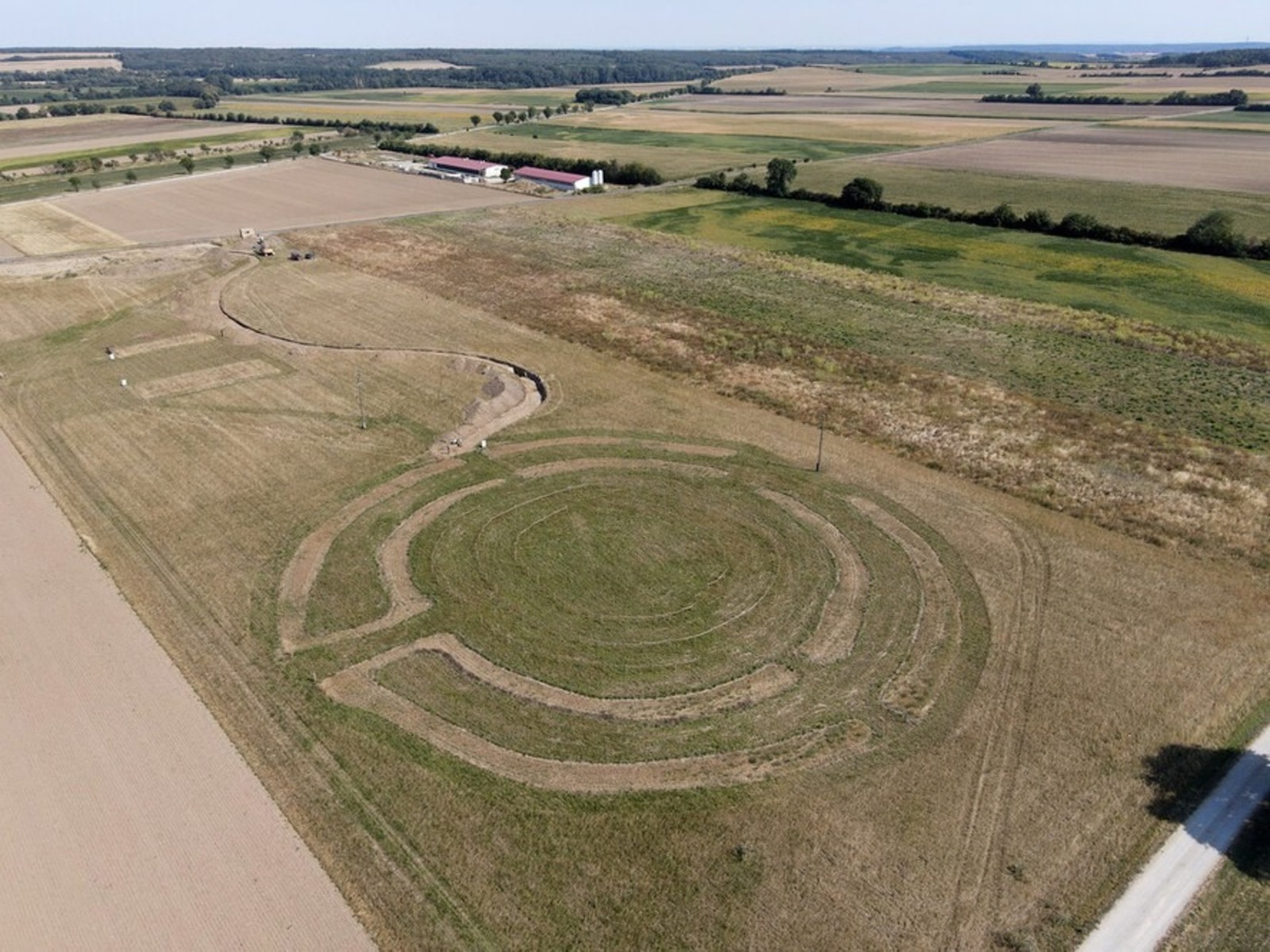


Archaeological Discovery in Rechnitz Reveals Four Circular Structures of Up to 106 Meters, Dating Back 6,500 Years, Preceding Stonehenge and the Pyramids
Under an apparently common field in the Austrian city of Rechnitz, archaeologists discovered something that seemed impossible: circular marks up to 106 meters in diameter, opened about 6,500 years ago by Neolithic communities — long before Stonehenge or the Pyramids of Giza.
The excavations, conducted between 2011 and 2017, revealed an impressive complex. The find occurred after aerial surveys and geomagnetic measurements were carried out by Austrian institutions specializing in prehistoric and virtual archaeology.
Since then, fieldwork continues to document everything before the construction of a visitor center.
-
California Startup Develops Giant “Space Sling” to Launch Vehicles at Mach 6, Reducing Fuel Use and Enabling Thousands of Satellite Deployments

-
ChatGPT Alerts FBI to Prevent Planned Murder of 8-Year-Old in Brazil’s Espírito Santo
-
Scientists Discover 125-Million-Year-Old “Pregnant Fossil” with Preserved Embryos and Microscopic Larvae Inside Mollusk in England

-
17-Year-Old Justin Bernstein Develops Bacteria to Produce Glass on Arctic Ice to Reflect Sunlight, Wins $50,000 U.S. Scholarship




A Window to the Stone Age
“This excavation opens a true window to the Stone Age,” said Nikolaus Franz, director of the Burgenland Archaeology Department, in an official statement.
According to him, analyses show how Neolithic groups chose the location for its ideal conditions for agriculture and livestock more than six millennia ago.
Moreover, scientists identified four main formations, three of which date between 4,850 and 4,500 B.C.
This concentration of monuments makes Rechnitz a unique point in Central Europe, suggesting it may have been an important regional center during the Middle Neolithic.
Mysteries of the Circular Marks
The magazine Smithsonian highlights that similar structures have been located at over 120 European sites. They usually have one to five concentric trenches, surrounded by wooden palisades.
But the exact purpose of these constructions remains a mystery. “We still do not know whether they were used for ceremonies, community gatherings, or observations related to agriculture,” explains Franz. The mystery only increases scientific interest in the site.
Circular Marks: Science and Tourism Side by Side
Investigations continue, with soil samples being sent to the University of Vienna. The goal is to understand the fertility of the land, agricultural techniques, and even the diet of the ancient inhabitants.
The project also aims to transform the site into an archaeological park. The future visitor center will feature experimental crops of barley, flax, and nettle — the same grown thousands of years ago — to bring visitors closer to the routine of the region’s first farmers.
For Governor Hans Peter Doskozil, the initiative goes beyond science. According to him, the center will bring historical knowledge, leisure, and tourism development to Burgenland, strengthening the bond between the past and the present.
With information from Revista Galileu.