Portuguese
  Spanish


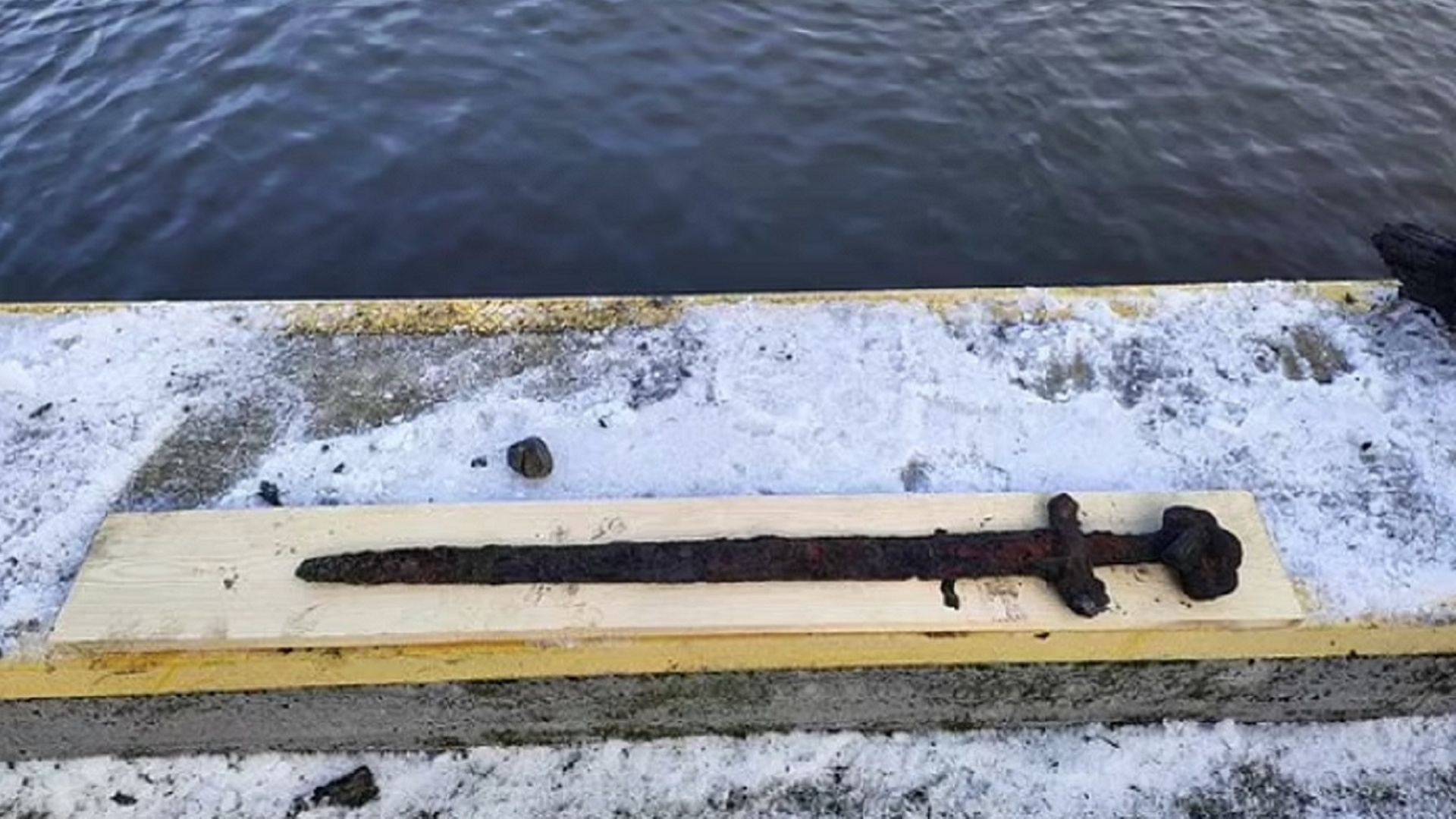


The Discovery of a Rare Medieval Sword in a River in the Netherlands Reignited the Interest of Archaeologists and Historians Across Europe. Moreover, the Excellent Condition of the Artifact Surprised Even Experienced Specialists.
The sword was found in the bed of the Korte Linschoten River, near the city of Montfoort. According to researchers, the object dates from the period between 1050 and 1150 AD, a time when the Bishopric of Utrecht held strong political and religious influence over the region.
A Rare Discovery Preserved by the Natural Environment

The find occurred in March 2024, during river maintenance work. However, only after the removal of a block of clay did the workers notice the presence of the blade. Shortly thereafter, archaeologists from the Environmental Service of the Region of Utrecht confirmed the historical significance of the object.
The clayey soil, low in oxygen, helped preserve the sword for almost a thousand years. Therefore, the blade has reached the present day with minimal corrosion, which is unusual for metallic artifacts submerged for such a long time.
-
At 17, she hand-painted her first watercolor design for school uniforms; her brand grew without investors, sold 135,000 pieces, and aims for $3 million in revenue by 2026.

-
Shell Discovers Intact Early 19th-Century Wooden Shipwreck in the Gulf of Mexico at Over 1,300 Meters Deep
-
Brazilian Entrepreneur Turns Door-to-Door Jewelry Sales into a Family Business Empire with Over 70 Stores

-
$75 Million Bridge in Brazil Opens to Connect Cities, Create Jobs, and Cut Travel Time from 30 to 2 Minutes; Spanning 1.24 km, It’s Among the Country’s Largest and Ends Decades of Ferry Queues.




Mystical Symbols Reinforce Hypothesis of Sacred Ritual

In addition to the preservation, the details of the sword attracted even more attention. On both sides of the blade, the artisans embedded symbols made with copper alloy threads. These elements indicate a possible ritual use.
On one side, there is a solar wheel in the shape of a cross, a common symbol in medieval Christianity. On the other, an endless knot formed by five intertwined squares appears, typical of Viking culture and associated with protection and loyalty.
Given this, experts believe that someone intentionally threw the sword into the river. During that period, offerings to deities or tributes to fallen warriors were part of recurring symbolic practices.
Linschoten Sword Helps to Understand Medieval Europe
The researchers named the artifact “Linschoten Sword,” in direct reference to the place of discovery. The piece measures approximately one meter in length, weighs about 900 grams, and follows the standard of Frankish medieval swords from the 11th and 12th centuries.
After recovery, the team carried out a detailed restoration process. Key stages included desalination and treatment with tannin, essential to prevent metal deterioration.
Currently, the Rijksmuseum van Oudheden in Leiden hosts the sword. The public will be able to visit it until August 2025. Thus, the artifact becomes not only a historical piece but also a direct bridge between the medieval past and scientific present.
Do you believe this sword was used in battles before being thrown into the river, or was it created exclusively for sacred rituals?