






 Portuguese
  Spanish


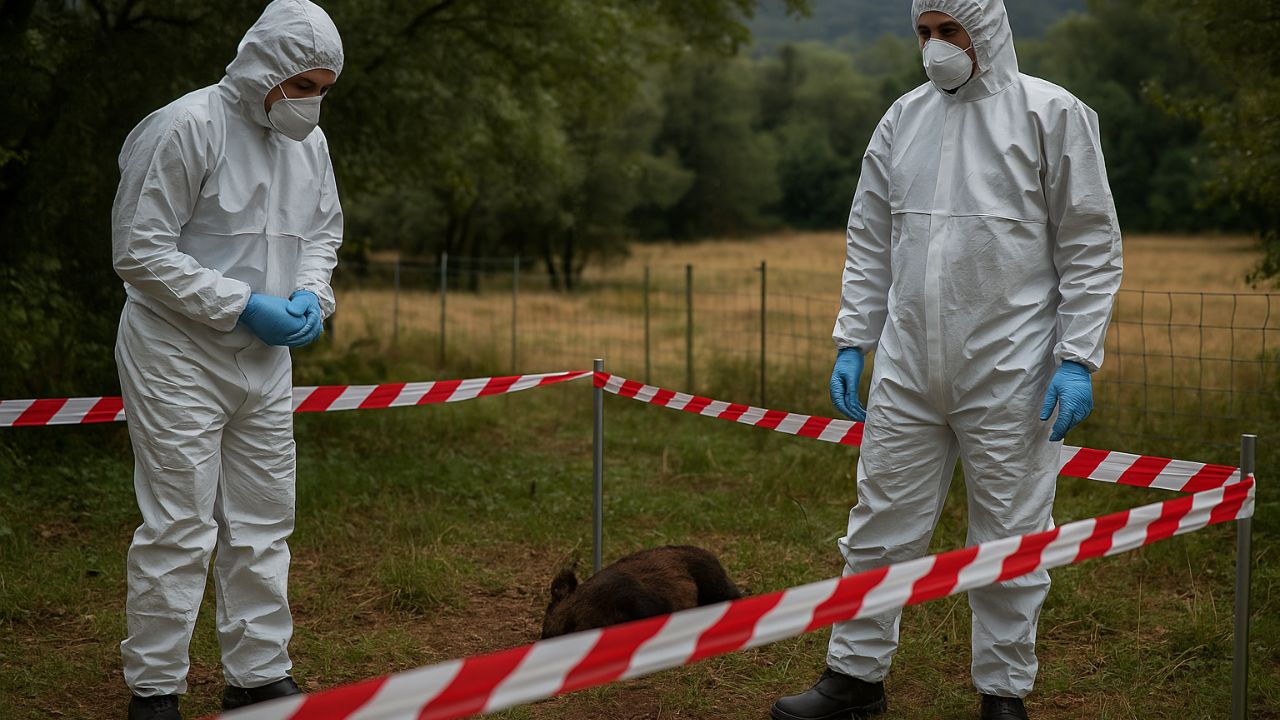


Spain Investigates Suspected Leak of Swine Fever Virus in Laboratories After Deaths of Wild Boars Near Barcelona
The authorities in Catalonia announced that five laboratories will be investigated following suspicion that the swine fever virus may have escaped from a scientific facility in the region.
The case involves 13 wild boars found dead near Barcelona, diagnosed with the disease, discovered this Friday (12/06).
The investigation is taking place in the only area of Spain currently affected, mobilizing health bodies, political authorities, and the productive sector.
-
Pennsylvania Mine Creates Ice in Summer Heat and Melts in Winter, Turning a Mountain Crevice into a Reverse Natural Refrigerator

-
China Accelerates Global Expansion of Robotics: From Smart Vacuums to Industrial and Humanoid Machines, Millions Exported to Over 150 Markets
-
Polar Air Mass to Hit Brazil: Temperatures to Plummet in Nine States, Near Freezing in the South with Frost Risk Until Monday
-
Chinese “dark factories” produce electric cars 24/7 with minimal human intervention, as Zeekr assembles 800 units daily, raising concerns in Brazil.





This measure was taken because, according to the regional government, there are indications that the outbreak may be related to scientific activities carried out a few kilometers from risk areas.
The action was motivated by fears of contamination in a region that hosts dozens of pig farms and represents an important part of the meat production chain in the country.
Thus, the Catalan government intensified controls and mandated an immediate review of all protocols in facilities dealing with the virus.
Catalonia Investigates Five Laboratories for Suspected Virus Leak
The announcement was made by Salvador Illa, regional president of Catalonia, who explained the extent of the investigation.
“An audit of all facilities, of all centers that are working with the African swine fever virus in the 20-kilometer risk zone, has been requested”, Illa stated at a press conference.
According to the leader, “there are few centers, no more than five”, emphasizing that the first laboratory has already been under analysis since last Friday.
The suspicion gained traction after the Ministry of Agriculture in Spain received the report from the EU reference laboratory.
The document presented the genetic sequencing of the virus found in the dead animals and raised questions about the origin of the outbreak.
Genome Points to Possible Laboratory Origin
The Ministry of Agriculture stated that the genetic group detected does not correspond to the strains currently present in the dozens of European countries facing swine fever.
The identified virus is linked to the strain “Georgia 2007”, commonly used in scientific experiments conducted in laboratories.
This finding reinforced the line of investigation regarding a possible accidental leak, although no conclusion has been officially released at this time.
African swine fever is a hemorrhagic disease that is highly lethal to pigs and wild boars, but does not pose a risk to human health.
Nonetheless, outbreaks can have a significant economic impact, especially for countries that depend on the production and export of meat.
Farms Are Under Surveillance, But Pigs Are Healthy
Despite the initial concern, the Catalan government reported that the 80,000 pigs from the 55 farms within the risk area are healthy.
According to Illa, they “can be made available for human consumption following the protocols”, ensuring sanitary safety and internal supply.
He further emphasized that the release to the Spanish market will be done “gradually”, in alignment with epidemiological control guidelines.
The detection of the virus exclusively in dead wild boars so far is considered a reassuring element for the sector, but authorities assert that surveillance will remain at a high level.
First Focus of Swine Fever in Spain Since 1994
This incident marks the return of the disease to Spanish territory after more than two decades. The last record occurred in 1994, underscoring the seriousness of the current case and the need for rapid responses.
For now, the focus remains restricted to the wild boars found near Barcelona. However, given the virus’s high mortality rate in pigs, any progression to commercial herds could result in million-dollar losses.






