






 Portuguese
  Spanish


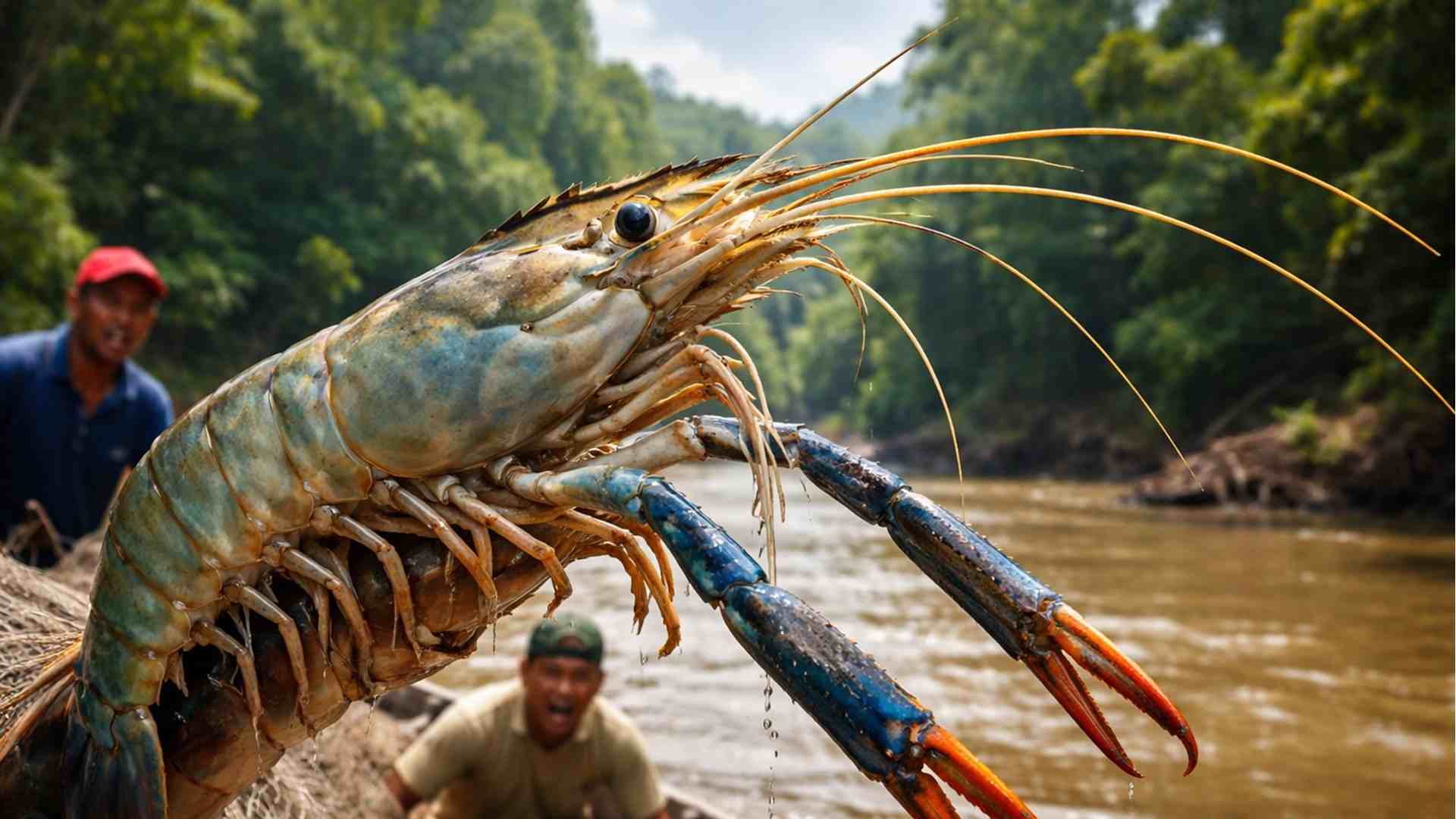


Recurring Reports From Fishermen In A Region Of Brazil Indicate Sudden Increase In The Presence Of Malaysian Shrimp, An Exotic Large Species, Reigniting The Debate About The Risk Of Biological Invasion, Environmental Impacts And Local Economic Effects Still Little Understood
The Malaysian Shrimp, one of the largest freshwater shrimp in the world, has returned to the spotlight following frequent sightings of giant specimens in Brazilian rivers.
This fact has raised alarms about biological invasion, environmental risks, and potential economic impacts in regions where the species has begun to reproduce in the natural environment.
The crustacean, scientifically known as Macrobrachium rosenbergii, is native to the Indo-Pacific and was introduced to Brazil for productive purposes, primarily for freshwater aquaculture. The initial goal was to diversify production and cater to consumers who prefer river species rather than marine species.
-
Russia Follows China in Recognizing Brazil as Free from Foot-and-Mouth Disease Without Vaccination, Boosting Meat Exports and Agribusiness Potential

-
23-Year-Old Brazilian Turns Beekeeping into College Tuition, Harvesting Honey Twice a Year from 50 Hives

-
10-Year-Old Boy Persists After Being Told He’s Too Young, Now Helps Manage Brazilian Farm and Launches New Project
-
Chinese Farmers Develop “Blanket Greenhouses” to Grow Vegetables in Extreme Winter Without Heaters




A Giant Freshwater Species Outside Its Original Territory
The Malaysian Shrimp stands out for its unusual size. Dominant males can reach up to 32 centimeters in length, while females can reach 25 centimeters. Weights can exceed 500 grams, making the species one of the largest among known freshwater shrimp.
One of its most striking characteristics is its long and robust claws, which can reach dimensions close to or even larger than the size of its body. These structures are used for both defense and competition for territory and food.
The coloration of the shrimp varies according to its developmental stage. Juveniles exhibit a striped pattern, while adults tend to display a bluish hue, a characteristic that aids in their identification in records made by fishermen.
Life Cycle And Adaptation To The Brazilian Environment
The life cycle of the Malaysian Shrimp depends, in its larval stage, on brackish waters, which theoretically would limit its spread to continental areas far from estuaries. However, in Brazil, this barrier has proven ineffective.
Egg-bearing females have started to be captured in estuarine areas, indicating that reproduction is already occurring in the natural environment, without exclusively relying on controlled cultivation systems.
This data suggests that the species has found favorable environmental conditions to complete its life cycle outside of ponds.
The shrimp’s adaptability is considered high. The species tolerates temperatures between 14 and 35 degrees, although it develops best in the range of 28 to 31 degrees. It also prefers alkaline pH, ranging from 7.0 to 8.5, conditions that are present in various Brazilian rivers.
Recent Proliferation And Regional Concentration
Although the Malaysian Shrimp has been present in Brazilian rivers for years, fishermen have started reporting a significant increase in sightings in specific regions of the country, especially in the North region, such as Amazonas and Pará, for example.
In the municipality of Barcarena, Pará, fishermen have begun reporting on social media the constant appearance of this crustacean, drawing attention due to its size and the repetition of sightings over a short period.
Reports indicate that the phenomenon does not occur uniformly. In some regions, appearances are still sporadic, while in others there is an unusual concentration of specimens, suggesting a localized population peak.
Experts assess that recent climatic factors may have contributed to this scenario. Events of intense drought recorded in recent years may have altered the salinity of certain areas, creating favorable conditions for large-scale reproduction.
Environmental Risk And Impact On Native Species
The expansion of the Malaysian Shrimp raises relevant environmental concerns. The species is described as carnivorous, aggressive, and cannibalistic, with a predatory behavior towards other aquatic animals, including native fish and shrimp.
This voracity can cause imbalances in local biodiversity, affecting already established populations and altering food chains in rivers and estuaries. The absence of natural predators in the Brazilian environment amplifies this risk.
Additionally, the shrimp is known to transmit the White Spot Syndrome virus, WSS, a disease that can affect native shrimp species and cause significant damage to artisanal and commercial fishing.
The Ecological Role And Natural Limits Of The Species
Despite the concerns, researchers emphasize that not all individuals of the Malaysian Shrimp manage to reach adulthood in the natural environment. In the juvenile phase, many serve as food for fish and other aquatic species.
The shrimp also plays a specific environmental role, acting as a detritivorous and omnivorous organism. It feeds on vegetable remains, organic material from the bottom, dead animals, and small benthic organisms.
This behavior contributes to the recycling of organic matter in aquatic environments, although it is not sufficient to neutralize the risks associated with its uncontrolled proliferation.
From Environmental Threat To Economic Interest
The advancement of the Malaysian Shrimp also arouses economic interest. Its meat is valued in the market, being considered of good quality and high yield due to the large size of the animal.
Given the challenge of population control and the absence of natural predators, commercial fishing emerges as a possible strategy to mitigate environmental impacts, transforming the problem into an economic opportunity for local fishermen.
However, experts warn that the rapid reproduction of the species makes control a complex challenge, requiring continuous planning and monitoring to avoid unwanted side effects.
Similar Cases And Precedents In Brazil
Brazil has already faced similar situations with other invasive species. One of the most well-known examples is the lionfish (Pterois volitans), native to the Indo-Pacific, which has spread through the Caribbean and along the Brazilian coast.
To contain its advance, initiatives encouraged its capture and consumption, transforming the lionfish into a culinary delicacy as a way to reduce its population in the natural environment.
This precedent is often cited as a possible model for the Malaysian Shrimp, although experts emphasize that each species presents specific management challenges.
Absence Of Emergency Actions And Scientific Monitoring
So far, there are no official records of specific emergency actions to contain the proliferation of the Malaysian Shrimp in regions of Brazil where population increases have been observed.
Researchers continue to monitor the presence of the species and evaluate potential environmental impacts, but acknowledge that the phenomenon still requires more in-depth studies to support effective public policies.
The absence of natural predators and the high adaptability favor the rapid proliferation of the crustacean.
Introduction To The Country And Management Failures
The introduction of the Malaysian Shrimp in Brazil occurred with the aim of diversifying aquaculture production and exploiting the rapid growth of the species. The quality meat and good productive performance made the crustacean attractive to producers.
However, the lack of proper management and the scarcity of preventive measures may have contributed to the inadequate spread of the species in the natural environment, allowing its adaptation outside of ponds.
The shrimp’s resistance, combined with its broad environmental tolerance and varied diet, reinforces its capacity for survival and expansion in different river regions of the country.
Between Threat And Economic Alternative
The invasion of the Malaysian Shrimp in Brazil still needs to be studied further, but experts emphasize the need for control measures to mitigate environmental impacts before the situation becomes irreversible.
As the topic progresses slowly in the public sphere, the question remains about the future of the species in Brazilian rivers. The crustacean may solidify as a threat to biodiversity or be incorporated as an economic resource under strict control.
For now, the Malaysian Shrimp continues to spread, challenging authorities, researchers, and riverside communities to deal with a species that grows quickly, adapts easily, and has already ceased to be just an aquaculture experiment to become a real problem in the rivers of Brazil.


They look good to eat. And cook in many ways. Just like in the movie Forrest Gump.
Lmao, small issue. Just eat them lol
Just eat them like we do, these Prawn fetch high price in market