Portuguese
  Spanish


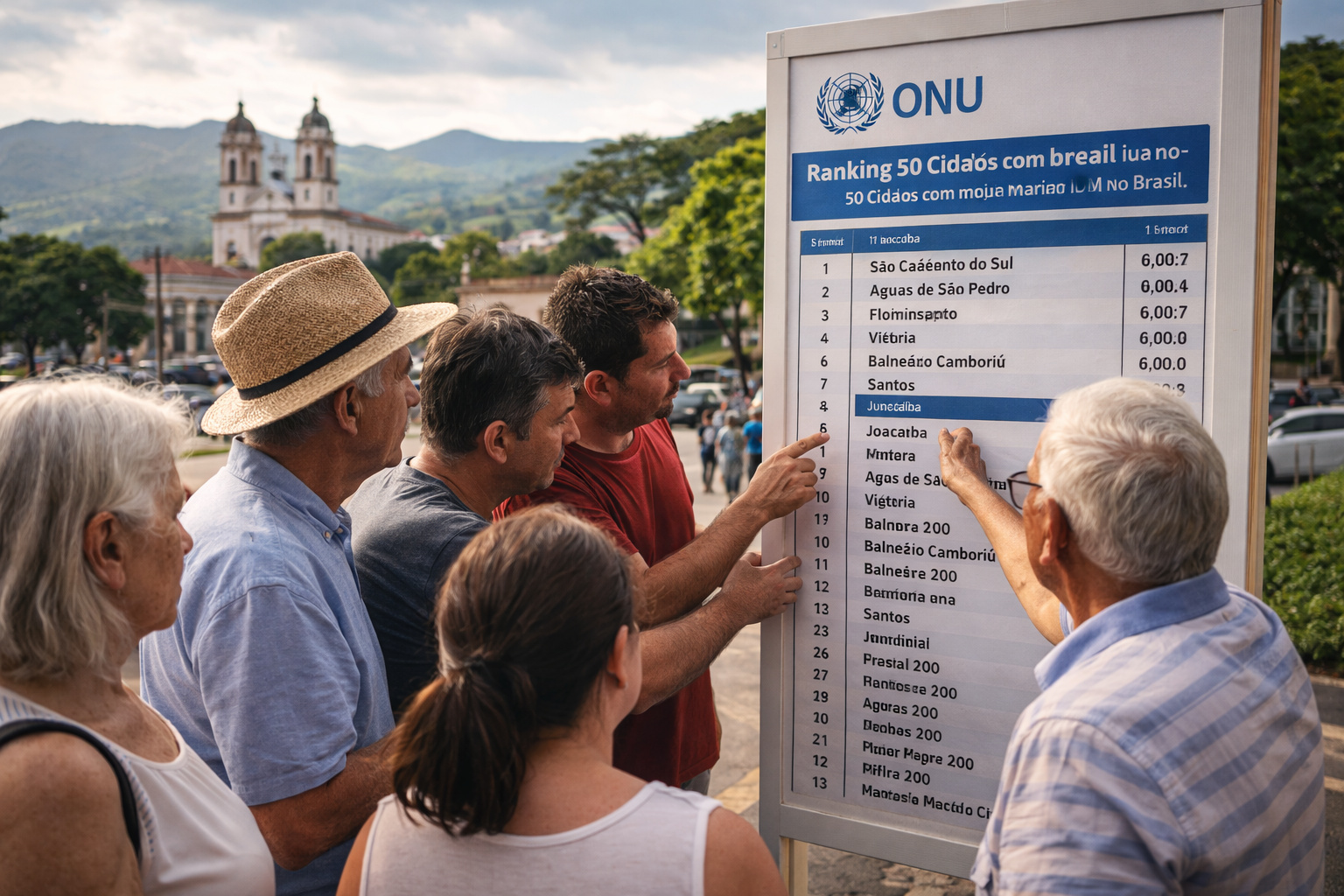


PNUD Survey, Based on the Human Development Atlas, Points to Municipalities with Very High HDI and Redefines the Map of Quality of Life in Brazil
The best quality of life indicators in Brazil are not concentrated only in the capitals.
According to the Human Development Atlas in Brazil, released by the United Nations Development Programme (UNDP), dozens of inland municipalities register HDI above the national average.
The survey was conducted in partnership with the Institute of Applied Economic Research (Ipea) and the João Pinheiro Foundation, with officially consolidated data.
-
Women Once Mocked for Collecting Trash Form Group to Turn Organic Waste into Compost, Generate Daily Income, and Improve Market Cleanliness in One of the World’s Lowest GDP per Capita Countries

-
Archaeologists Uncover 40,000 Roman Bronze and Copper Coins from the 3rd Century in Fire-Destroyed French Neighborhood

-
From Collecting Trash in Brazil to Becoming a Doctor: Cícero’s Journey with a Full Scholarship

-
Henry Ford’s Abandoned Amazon Town Faces Daily Fines as Brazil Seeks to Preserve Fordlândia Ruins




The research evaluated all Brazilian municipalities and listed the 50 cities with the highest Municipal Human Development Index (HDI).
How Municipal HDI Works
The HDI is an adaptation of the global Human Development Index used by the United Nations (UN) since 1990.
The indicator measures three fundamental dimensions:
• Education
• Income
• Life Expectancy
The results range from 0 to 1. The closer to 1, the higher the level of human development. Cities with an index above 0.800 are classified as having very high human development, according to the UNDP’s official methodology.
Inland Dominates the Top of the National Ranking
The survey reveals that the interior of São Paulo houses more than half of the cities with the highest HDI in the country.
Municipalities such as São Caetano do Sul, Jundiaí, and Vinhedo rank ahead of several Brazilian capitals.
Additionally, the South shows impressive performance. Santa Catarina has seven cities among the top 50. In the Southeast, Vitória (ES) and Niterói (RJ) are among the top ten positions.
Official Ranking of the 50 Cities with the Highest HDI in Brazil
According to the UNDP survey, the municipalities with the highest Municipal Human Development Index are:
São Caetano do Sul (SP) — 0.862
Águas de São Pedro (SP) — 0.854
Florianópolis (SC) — 0.847
Vitória (ES) — 0.845
Balneário Camboriú (SC) — 0.845
Santos (SP) — 0.840
Niterói (RJ) — 0.837
Joaçaba (SC) — 0.827
Brasília (DF) — 0.824
Curitiba (PR) — 0.823
Jundiaí (SP) — 0.822
Valinhos (SP) — 0.819
Vinhedo (SP) — 0.817
Araraquara (SP) — 0.815
Santo André (SP) — 0.815
Santana de Parnaíba (SP) — 0.814
Nova Lima (MG) — 0.813
Ilha Solteira (SP) — 0.812
Americana (SP) — 0.811
Belo Horizonte (MG) — 0.810
Joinville (SC) — 0.809
São José (SC) — 0.809
Maringá (PR) — 0.808
São José dos Campos (SP) — 0.807
Presidente Prudente (SP) — 0.806
Blumenau (SC) — 0.806
Rio Fortuna (SC) — 0.806
Assis (SP) — 0.805
Campinas (SP) — 0.805
São Bernardo do Campo (SP) — 0.805
São Carlos (SP) — 0.805
São Paulo (SP) — 0.805
Porto Alegre (RS) — 0.805
Rio Claro (SP) — 0.803
Jaraguá do Sul (SC) — 0.803
Rio do Sul (SC) — 0.802
Bauru (SP) — 0.801
Pirassununga (SP) — 0.801
São Miguel do Oeste (SC) — 0.801
Vila Velha (ES) — 0.800
Botucatu (SP) — 0.800
Ribeirão Preto (SP) — 0.800
Taubaté (SP) — 0.800
Concórdia (SC) — 0.800
Rio de Janeiro (RJ) — 0.799
Goiânia (GO) — 0.799
Guaratinguetá (SP) — 0.798
Marília (SP) — 0.798
Sorocaba (SP) — 0.798
Fernandópolis (SP) — 0.797
Technical Overview of Brazilian Human Development
The study demonstrates that human development in Brazil has a strong presence in medium cities and inland municipalities. According to the UNDP, the Atlas was structured to support strategic decisions and guide public policies.
The data indicates that education, income, and longevity continue to be the central pillars for raising the standard of living of the population.
In light of this official ranking, does the advancement of these cities signal a consolidated trend of the interiorization of development in Brazil?