Portuguese
  Spanish


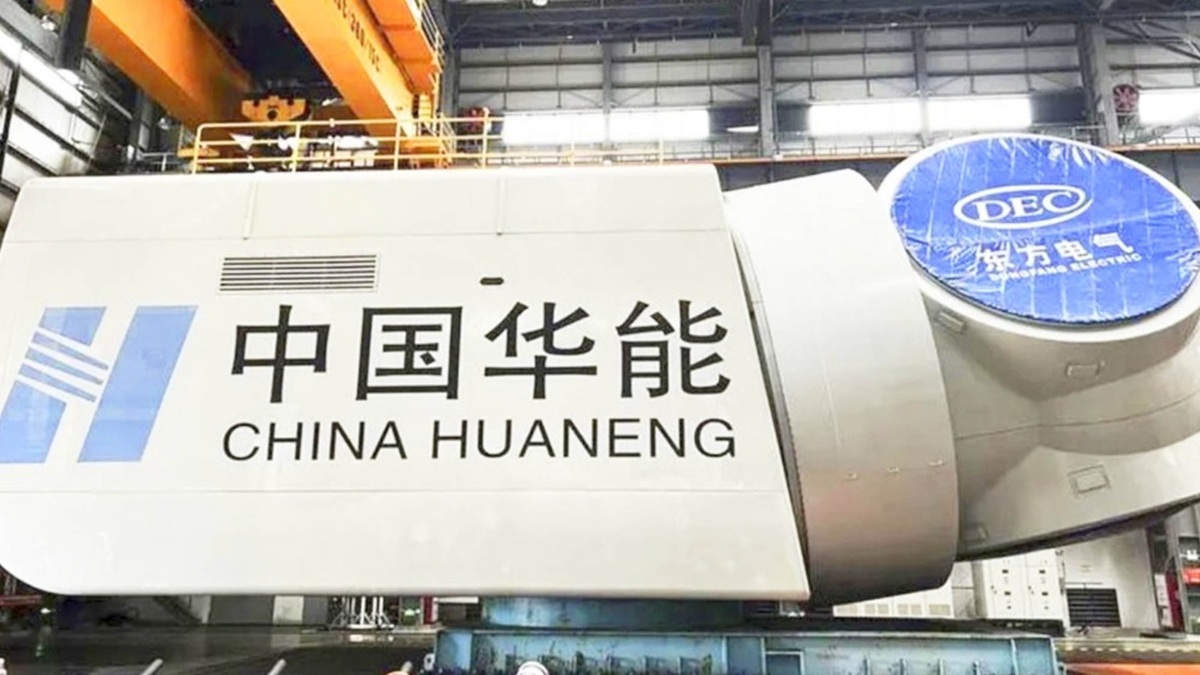


At 340 Meters Tall and Typhoon Resistant, China Has Launched the World’s Largest Wind Turbine. The Structure Impresses Not Only With Its Size But Also With Its Power of 26 MW and Its Ability to Supply Thousands of Households With Clean Energy.
China has just inaugurated the world’s most powerful offshore wind turbine. With a power of 26 MW, a height of 340 meters, and a reinforced structure to withstand typhoons, this innovation marks a new level in clean energy generation engineering.
The installation was carried out by Dongfang Electric Corporation (DEC), at the offshore wind farm in Fuzhou, Fujian province.
The model is not yet available for the international market, but it has already become a global landmark.
-
Billion-Dollar Winds Propel Wind Energy Growth in Brazil, Boosting Unprecedented Technical Workforce Development

-
Brazil filled the Northeast with wind turbines but now faces the side effect of 705 giant blades reaching the end of their lifespan by 2032 just in Rio Grande do Norte, while the world projects 43 million tons of waste by 2050.
-
Brazil has filled the Northeast with wind turbines, but now it faces the side effect of 705 giant blades reaching the end of their useful life by 2032 just in Rio Grande do Norte, while the world projects 43 million tons of waste by 2050.
-
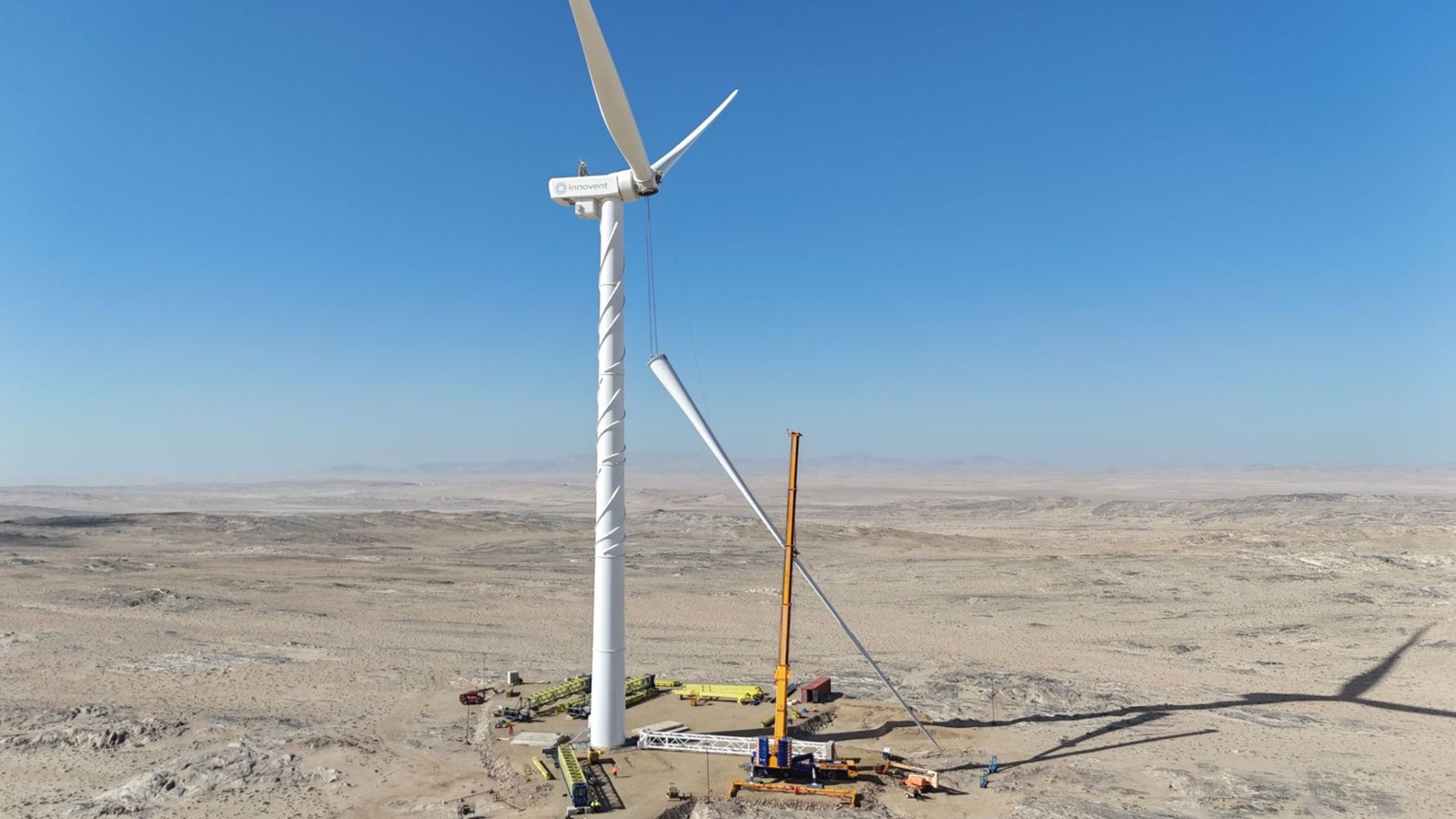
Wind farm in Namibia will have wind turbines assembled without giant cranes and is expected to avoid 200,000 tons of carbon dioxide per year when it becomes operational.


Gigantic Dimensions
The turbine reaches a total height of 340 meters, with the hub located 185 meters above sea level. Each of the three blades is 128 meters long, resulting in a rotor diameter of 310 meters.
The total swept area exceeds 75,000 m², allowing it to harness energy even in variable wind conditions.
The rated power is 26 MW, making it the largest among all known wind turbines to date.
The company’s forecast is that the unit will produce up to 100 GWh per year — enough energy to supply around 55,000 Chinese households.
Designed to Withstand Typhoons
In addition to its size, the turbine has also been designed to withstand extreme weather conditions. The South China Sea is known for its exposure to typhoons.
Therefore, the new turbine was developed to endure winds of up to 220 km/h, equivalent to the force of a Category 4 hurricane.
DEC employed a reinforced structural system, as well as active pitch control technologies (which adjust the angle of the blades) and yaw control (which turns the rotor to better face the winds).
The system also includes dual-layer anti-corrosion protection, redundant sensors, and an internal structure designed to absorb extreme dynamic loads.
Comparison With Other Models
Currently, no other operational model comes close to the power of the Chinese turbine. Here’s the comparison with other large turbines already installed or in development:
| Manufacturer / Model | Power (MW) | Rotor (m) | Blades (m) | Total Height (m) | Location |
|---|---|---|---|---|---|
| Dongfang 26 MW | 26 | 310 | 128 | 340 | Fuzhou, China (active) |
| Mingyang MySE 18.X-28X | 18–20 | 292 | 130 | 316 | China (in testing) |
| Vestas V236-15.0 MW | 15 | 236 | 115 | 280 | Denmark (installation) |
| Siemens Gamesa SG 14-236 DD | 14–15 | 236 | 115 | 271 | Europe (pre-commercial) |
| GE Haliade-X 12/14 MW | 12–14 | 220 | 107 | 260 | United Kingdom / USA |
China’s Leadership in the Sector
With this advancement, China reinforces its position as a global leader in renewable energy. The country already has over 470 GW of installed wind capacity, of which about 40 GW are in offshore parks.
However, the growth of giant turbines also raises concerns. Recent studies warn of potential impacts on ocean currents and coastal ecosystems.
Moreover, installing turbines of this size requires complex logistical solutions, such as special vessels, custom foundations, and adapted ports.
Even so, the new turbine from DEC shows that the future of wind energy will be increasingly larger — and more prepared to face the most extreme winds.