






 Portuguese
  Spanish


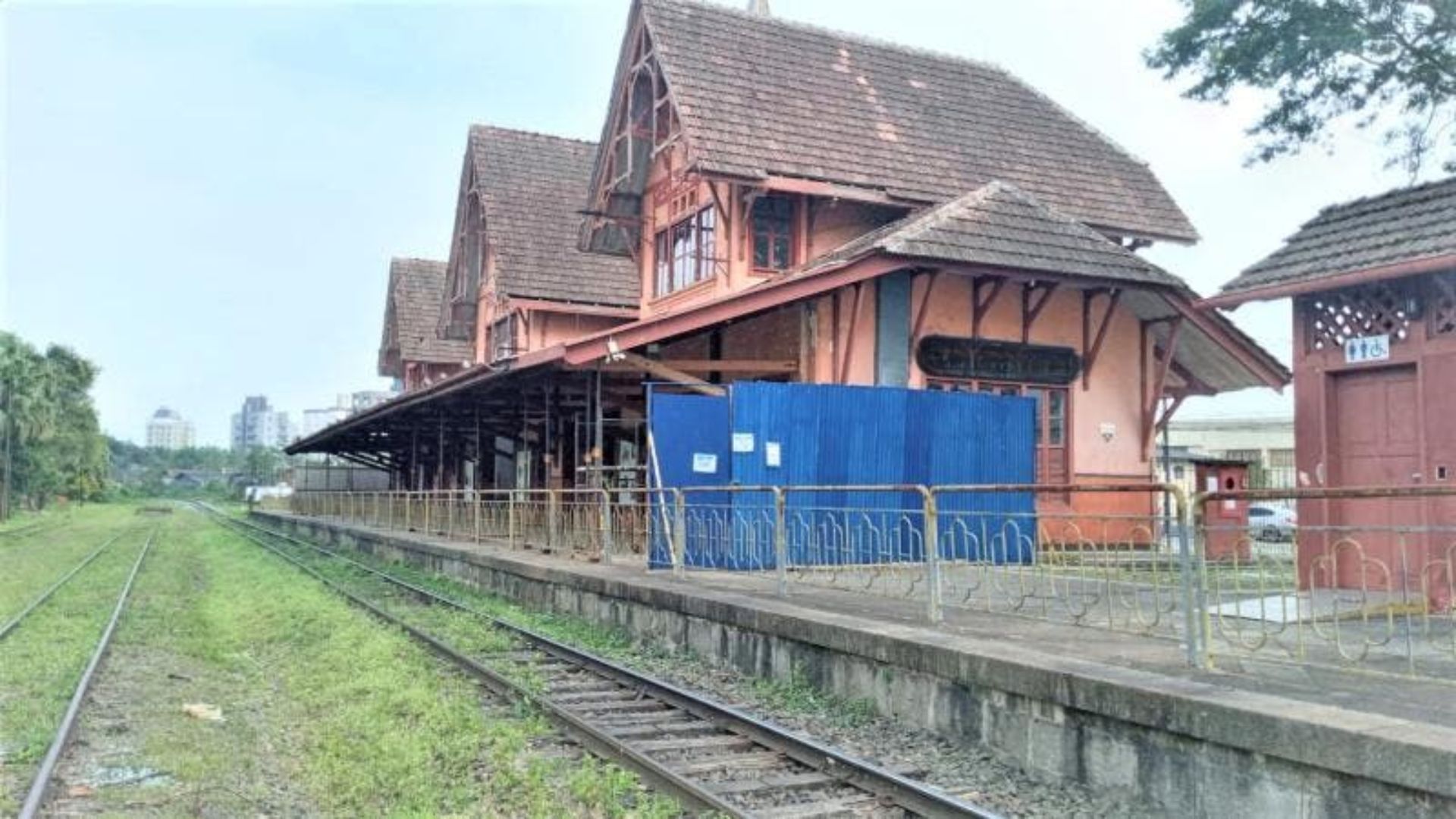


Joinville’s Memory Station Will Undergo Renovation by 2026 and Will Gain New Security Systems. The Historic Space, Listed in Different Scopes, Will Again Function as a Museum and Integrate the Bicycle Memorial.
The Memory Station in Joinville is expected to reopen to visitors in early 2026, after the completion of renovations conducted by the Malha Sul concessionaire.
This week, the City Hall published a notice to contract the systems and equipment outlined in the fire prevention project, a necessary step for the complex’s reopening.
The set also includes the Bicycle Memorial, located in the old cargo terminal. The reactivation occurs in the year when the building turns 120 years old, in August 2026.
-
Bruno Guimarães, 28, Misses Crucial Penalty Against Norway in World Cup After Replacing Vinicius Jr.

-
Inspired by a school lesson on Africa’s water crisis, a young boy raised money through chores to fund a well that transformed a Ugandan community.

-
Brazilian Construction Worker Moves to France, Earns Up to €2,500 Monthly with Home Renovations, Gains Social Media Attention

-
US Navy Sinks USS Oriskany with 230 kg of C-4, Creating World’s Largest Artificial Reef in 37 Minutes





Project Focused on Safety and Preservation
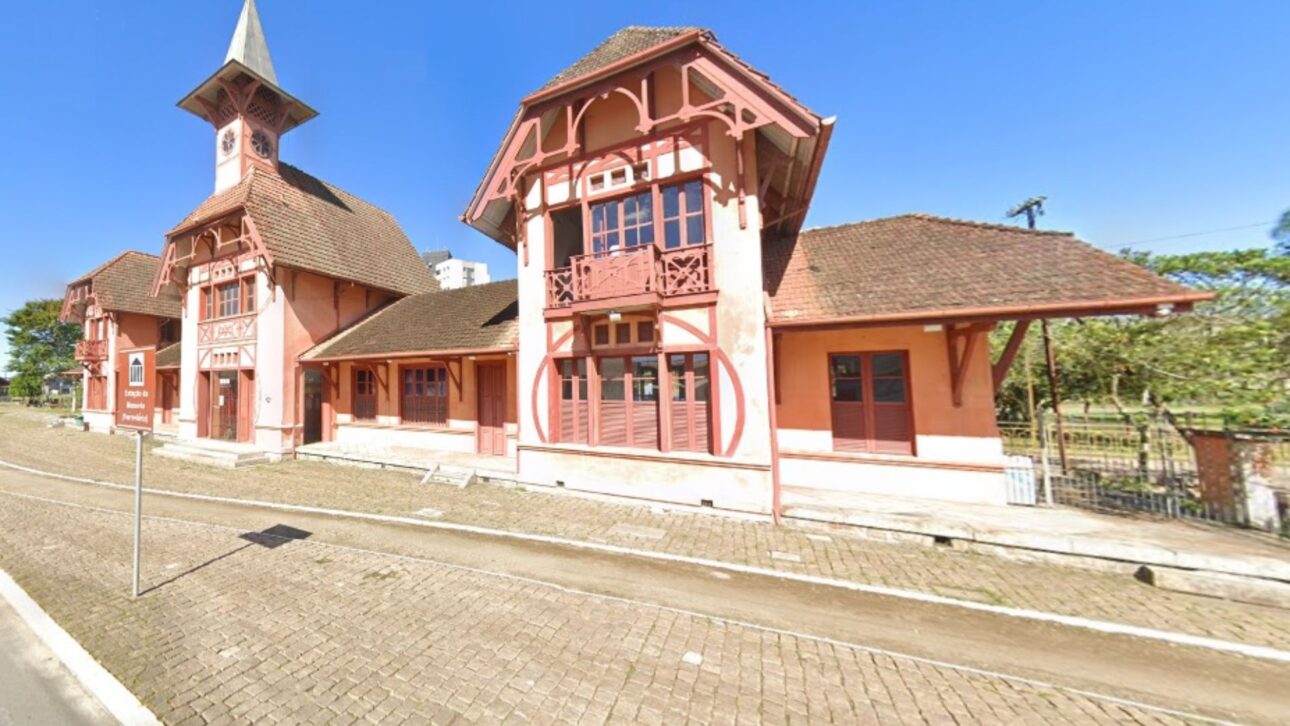
According to the municipality, the bidding includes the installation of detection, alarm, and fire-fighting devices, as well as adaptations required by current regulations.
The expectation is that the services will be carried out within the station complex, ensuring protection for the collection and the flow of visitors.
This measure is part of the package of interventions planned for the reopening of the cultural facility, which will operate as a museum, in the same way it did before the closure.
Cultural Complex Integrates the Bicycle Memorial
In addition to the main building, the intervention encompasses the Bicycle Memorial, established in the old cargo terminal.
The space is part of the visitation circuit of the Memory Station and features items and records related to Joinville’s cycling culture.
The expectation is that, with the improvements completed, the two buildings will operate together again, with accessible visitation routes and appropriate museographic treatment.
Historical Origin and the Role of the Railway
The building has undergone expansions and renovations since the early 20th century and was inaugurated by then President Afonso Pena.
At that time, the station symbolized the delivery of the railway stretch between Joinville and São Francisco do Sul, later extended to the Itapocu Valley and the North Plateau.
This network remains operational for freight transport destined for the Port of São Francisco do Sul, maintaining the logistical relevance of the railway corridor.
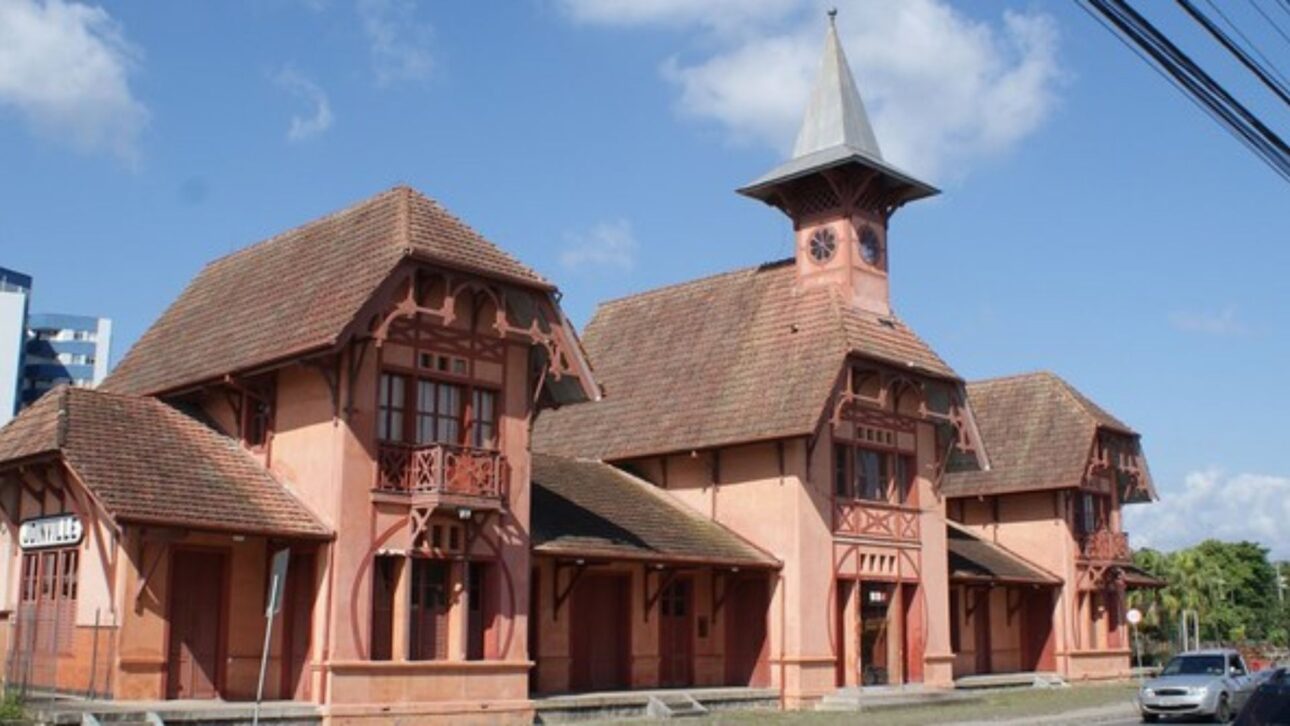
Passengers Exit the Scene, Freight Remains
The regular transport of passengers ceased in 1991, when the old railcars stopped circulating. From then on, the station experienced periods of reduced activity until it gained a new function.
In the 2000s, it underwent intervention and, in 2008, reopened as a museum under the name Memory Station.
The space was closed in 2020 during the Covid-19 pandemic. There was a brief reopening, followed by the start of renovations in 2022, now under the concessionaire’s responsibility.
With the new security package, the municipality aims to strengthen the structure for public service.
Heritage Status in Multiple Spheres and Legal Charges
Since 2008, a legal action has prompted the Federal Public Ministry and the Public Ministry of Santa Catarina to require the Union, ANTT, DNIT, and the concessionaire to maintain and conserve the building.
The building is listed as historical heritage at municipal, state, and federal levels, which imposes technical criteria for any intervention.
This categorization guides restoration, material treatment, and fire protection, aimed at preserving original characteristics without compromising safety.


Reopening as a Museum and Status of Passenger Trains
The return of the public will occur in the museum format, maintaining the exhibition profile prior to the closure. The City Hall emphasizes that there is no forecast for the resumption of passenger trains in Joinville.
The branch continues to be dedicated to freight circulation, a scenario that remains even with the interventions in the exhibition area.
Thus, the architectural set will be returned to visitation with an educational and cultural focus, without commercial operation of passenger transport.
Timeline: From Railway Landmark to Memory Center
Installed in the early 20th century, the station played a central role in the connection between the coast and the interior, facilitating the flow of production and the arrival of supplies.
Later, with the reduction of passenger transport and the prioritization of road transport, the building was repurposed for cultural function.
The creation of the Memory Station in 2008 sealed this transition, opening space for exhibitions, pedagogical activities, and preservation of collections related to the railway and local history.
The closure in 2020 interrupted the routine, but the works that began in 2022 and the new security phase indicate the final stage of the rehabilitation process.
What Changes with the New Fire Prevention System
The contracting of the systems outlined in the preventive project should standardize escape routes, signaling, and fire-fighting equipment, as well as update monitoring.
The adoption of these solutions is a requirement for obtaining operating authorizations and for the protection of visitors, workers, and collections.
In listed buildings, implementation often requires tailored technical solutions capable of reconciling historical integrity and safety performance.





