






 Portuguese
  Spanish


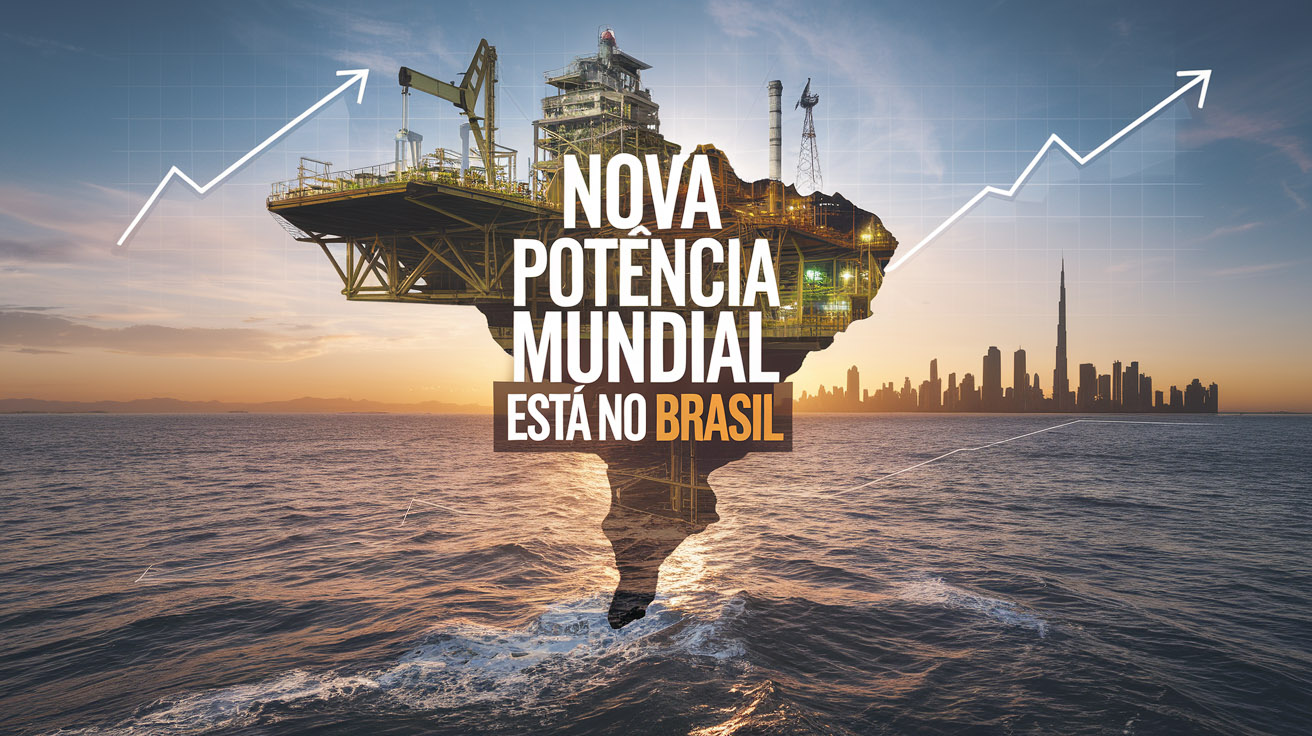


Discoveries Indicate That This State Has Oil Reserves That May Exceed Those of Dubai, Positioning the Brazilian State as a New Global Energy Power. With Potential of 10 Billion Barrels, the Region Promises to Revolutionize the Local and National Economy, Attracting Unprecedented Investments and Development.
In the far north of Brazil, a sparsely populated region may be sitting on an energy fortune that even surpasses one of the global symbols of wealth generated by oil.
Amapá, one of the least populated states in the country, houses gigantic reserves of fossil fuel, with the potential to transform its economy and that of Brazil as a whole.
While the world seeks alternatives to reduce dependence on fossil fuels, oil remains one of the major drivers of the global economy.
-
Brazilian Steel Giant Partners with USP to Develop 40% Stronger Rebar for World’s Tallest Residential Building in Brazil’s Senna Tower

-
Oil Prices Drop to $72 as 20 Million Barrels Pass Through Strait of Hormuz in 24 Hours, Easing Supply Fears but Regional Tensions Keep Market on Edge

-
Brazil’s Ministry of Justice Investigates CazéTV for Betting Ads During World Cup Broadcasts

-
Brazilian Retail Giant Americanas Faces $10 Billion Asset Freeze Amid Investigation into Hidden Debts


Major powers, such as the United States and Saudi Arabia, have built energy empires based on this natural resource.
Now, Brazil may be on the verge of consolidating a new exploration hub on its northern coast, in the so-called Equatorial Margin.
Gigantic Reserves on the Coast of Amapá
The new discoveries off the coast of Amapá indicate an impressive volume of oil.
Geological studies indicate the presence of approximately 10 billion barrels in the region, of which almost 7 billion have already been confirmed.
For comparison, Dubai, one of the main exponents of an oil-driven economy, has an estimated reserve of only 4 billion barrels.
The state’s energy potential places Brazil in a strategic position in global geopolitics.
The deposits are located about 500 km from the mouth of the Amazon River, offshore, and are part of the Equatorial Margin, a promising region for oil exploration.
In recent years, this area has attracted the interest of major oil companies, which see it as a new frontier of exploration with high profitability prospects.
Economic Impact Comparable to That of Guyana
Guyana, a neighboring country to Brazil, recently underwent a radical economic transformation due to the discovery of oil in its territorial waters.
Before beginning resource exploration in 2015, the country’s per capita Gross Domestic Product (GDP) was only US$ 6,000.
With the advancement of the oil industry, this figure is expected to jump to US$ 30,000 by 2025, even surpassing the average income of China, which is around US$ 14,000.
Amapá, which has demographic characteristics similar to those of Guyana, may follow a similar path.
Currently, the state is home to about 733,000 inhabitants, while Guyana has a population of approximately 800,000 people.
If oil exploration occurs efficiently, the economic impact may be comparable to that of the neighboring country, ensuring a significant increase in the income of the population and a revolution in local infrastructure.
A Possible “Oasis” of Development in the Amazon Rainforest
The idea of a prosperous economic hub in the middle of the rainforest is not new.
Dubai, which now boasts luxurious skyscrapers and an economy based on investments and tourism, was an inhospitable desert before the discovery of its oil reserves.
With the resources obtained, the emirate was able to diversify its economy and become one of the world’s most important financial centers.
In the case of Amapá, the challenge is even greater, as the region is situated in one of the planet’s most sensitive biomes.
The advancement of oil exploration will need to be balanced with environmental preservation, a point that is already generating debates among experts and environmental activists.
International experience shows that, with proper regulation and investments in clean technology, it is possible to reconcile economic growth and sustainability.
Potential for Transformation for Brazil
If Amapá can efficiently explore its reserves, Brazil could consolidate itself as an even greater power in the energy sector.
Currently, the country is already among the largest oil producers in the world, and the Equatorial Margin could reinforce this position, attracting billion-dollar investments and generating jobs.
In addition to the local impact, this new exploration frontier may bring benefits to the entire national territory, boosting GDP, strengthening the trade balance, and ensuring greater energy security for the country.
The lingering question is whether Brazil will be able to seize this opportunity in the best possible way, ensuring that the benefits of oil are distributed equitably and sustainably.
With reserves nearly three times larger than those of Dubai and a significantly smaller population, Amapá has all the ingredients to become a new hub of global wealth.
Now, we just have to wait for the next steps in the exploration of this resource and observe how the state will be able to turn this submerged wealth into concrete development for its population.


