






 Portuguese
  Spanish


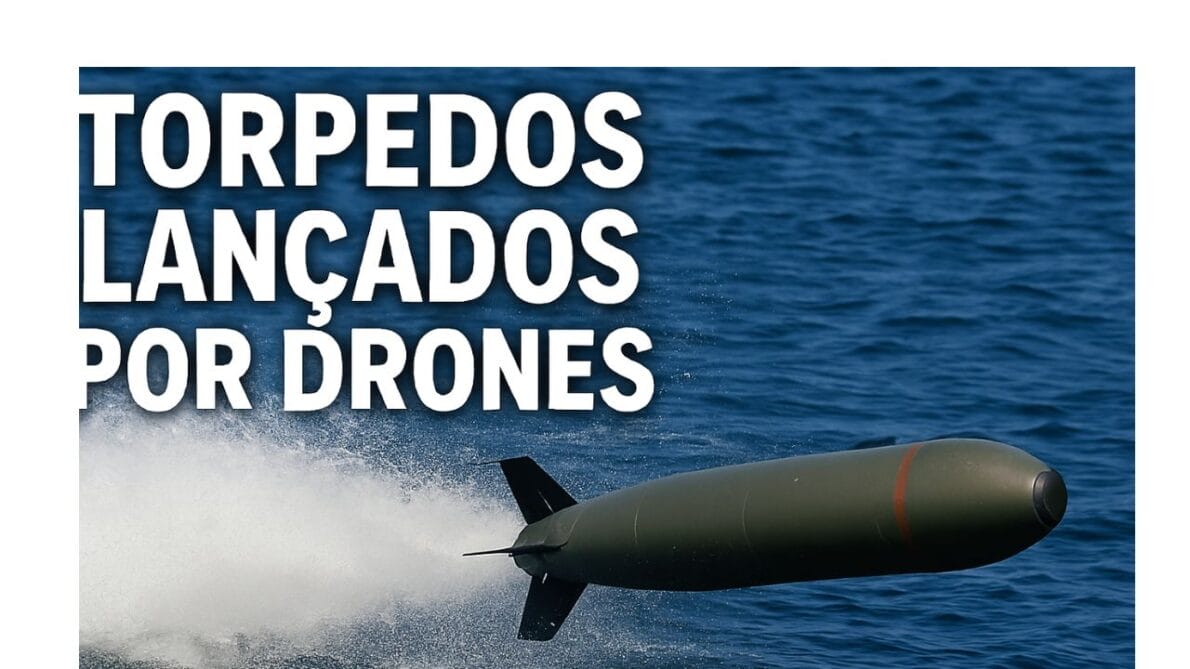


With Copperhead-M, Anduril Revolutionizes Naval Combat by Integrating Artificial Intelligence and Autonomous Weapons in Uncrewed Vehicles
Anduril Industries, a U.S. military technology company, announced on Sunday (7) the Copperhead-M, the first high-speed torpedo designed to be fired by uncrewed underwater vehicles. The innovation represents a strategic shift in maritime dominance, allowing underwater drones to operate independently in offensive, defensive, and surveillance missions. According to the company, the innovation addresses limitations of Cold War-era armaments, providing an accessible, modern, and scalable solution.
What Is Copperhead-M and Why Is It So Innovative
Copperhead-M is a software-defined torpedo, meaning its parameters can be updated digitally to adapt to different scenarios. Unlike traditional torpedoes, it is lightweight, modular, and designed to be launched by AUVs (autonomous underwater vehicles). According to Anduril, it “represents a paradigm shift in naval power,” enabling precision strikes in high-risk environments without exposing human crews.
Two Models for Different Missions: Copperhead-100 and Copperhead-500
The new line includes two versions:
-
China Develops Custom 140-Ton Electric Mining Truck with 770 kWh Swappable Battery, Deploys 290 Units in Xinjiang’s Largest Zinc Mine

-
Meta to Launch Arena, a New Prediction App Targeting 3.56 Billion Users, Competing with Polymarket and Kalshi

-
Scientist Challenges Famous Human Evolution Theory, Argues Homo Sapiens Evolved Gradually Over Thousands of Years
-
15-Year-Old American Builds Ocean Generator with PVC Pipe and 3D-Printed Propeller for $12, Wins National Prize, Presents at White House, and Makes Forbes 30 Under 30 List




- Copperhead-100: 2.5 meters in length, payload capacity of up to 100 pounds, and a diameter of 12.75 inches.
- Copperhead-500: larger and more robust, with a diameter of 21 inches and capacity for 500-pound payloads.
Both can reach speeds exceeding 30 knots and carry sensors, sonar, magnetometers, and even chemical or environmental payloads — making them useful in both military and civilian missions.
Integration with Autonomous Vehicles and Mass Attack Potential
The distinguishing feature of Copperhead-M is its integration with Anduril’s own vehicles, such as the Dive-LD and Dive-XL. These underwater drones can carry dozens of small torpedoes or a few larger ones, functioning as mobile underwater launch platforms. The company envisions launching these weapons from aerial drones, extending strategic reach without the need for traditional submarines.
Civil and Military Applications: From Combat to Search and Rescue
Although developed for military purposes, Copperhead can also be used in search and rescue operations, underwater infrastructure inspection, and environmental monitoring. Thanks to its autonomy, it can operate in dangerous or remote locations, collecting essential data without the presence of human crew members.
The creation of Copperhead-M positions the United States ahead in the race for naval supremacy based on artificial intelligence and automation. In an official statement, Anduril stated that the new systems “provide real-time situational awareness, intelligent guidance, and total control over maritime space.” The company emphasizes that the new generation of armaments will be crucial for “ensuring superiority in future conflicts, with lower costs and greater operational agility.”





