






 Portuguese
  Spanish




A Revolutionary Engine Promises to Change the Future of Combustion: 400 Horsepower, Weight of Only 54 kg, and Operation without Gasoline. Discover This Innovation.
With the definitive ban on gasoline engines in the European Union expected by 2035, the search for less polluting and more efficient alternatives is happening at record speed.
Among the options under development, a hydrogen engine promises to revolutionize the automotive sector and surpass current standards of efficiency and sustainability.
The End of the Fossil Fuel Era?
Gasoline engines, still widely used, face heightened challenges. Their thermal efficiency, which ranges between 20% and 40%, means that most of the energy generated by combustion is lost as residual heat.
-
End of an era in Brazil: beloved sedan by Brazilians is discontinued despite having a 2.0 engine with 151 hp, CVT transmission, 466-liter trunk, and up to 650 km of range.

-
New Law Proposal in Brazil Could Heavily Penalize Drivers: Dangerous Overtaking May Become a Serious Offense with Fines Increased Tenfold and a 12-Month License Suspension; Update on 2026 Progress

-
Electric Revolution: Watts W125 Motorcycle Offers 160 km Range, 90 km/h Speed, and Affordable Price Starting at $3,000
-
General Motors Replaces Over a Thousand Workers with 50 Cobots at Electric Vehicle Plant, UAW Union Criticizes Move Amid Industry’s Automation Push



As a result, there is not only energy waste but also an increase in harmful gas emissions.
In contrast, hydrogen emerges as a promising candidate. In addition to its high energy density per unit mass, its combustion process generates water as a byproduct, eliminating the dangerous nitrogen oxides (NOx) that traditional engines release in abundance.
H2 Starfire: The Engine of the Future
Astron Aerospace, a cutting-edge American company, has developed an experimental engine called H2 Starfire, which uses hydrogen as direct fuel.
This engine is compact, lightweight, and has an impressive thermal efficiency of 60%, far surpassing the best gasoline engines and even other hydrogen engine projects.
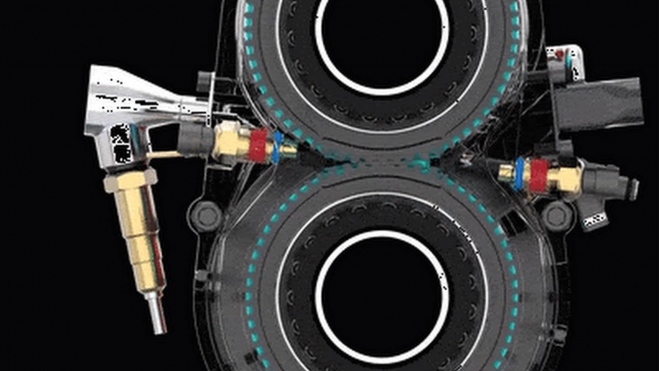
The H2 Starfire eliminates the traditional piston system, replacing it with two shafts that rotate in opposite directions.
This unique design not only reduces weight, down to just 54 kg, but also increases power and torque, reaching 400 horsepower and 678 Nm, respectively.
Another crucial point is its operation at lower temperatures, which prevents the formation of NOx. While conventional engines operate at around 1,300 °C, the H2 Starfire keeps combustion at more moderate levels, generating only vaporized water and clean air.
Potential for Formula 1
Formula 1, known for being the pinnacle of automotive innovation, could be a crucial testing ground for the H2 Starfire.
Currently, the engines used in the category have a thermal efficiency of approximately 50%, considered the highest in the industry. However, the new hydrogen engine from Astron promises to achieve 60%, breaking records and redefining standards.
If adopted in Formula 1, the H2 Starfire could accelerate its validation and, eventually, its commercial application.
This would also position hydrogen as a viable alternative to revitalize internal combustion engines at a time when electric vehicles dominate market forecasts.
A New Chapter in the Industry
The challenges are significant, but enthusiasm around the H2 Starfire is growing. For many experts, it represents a sustainable intermediate solution until electric technologies and other forms of clean propulsion fully mature.
For now, Astron Aerospace continues to conduct tests and adjustments on the engine. If successful, the H2 Starfire could not only redefine the concept of combustion engines but also mark a new era in the use of hydrogen as a primary fuel.
With 400 horsepower, unparalleled efficiency, and zero emissions, the H2 Starfire promises to be the most efficient engine in the industry. The technological race for the best sustainable engine has already begun, and the future looks increasingly closer.


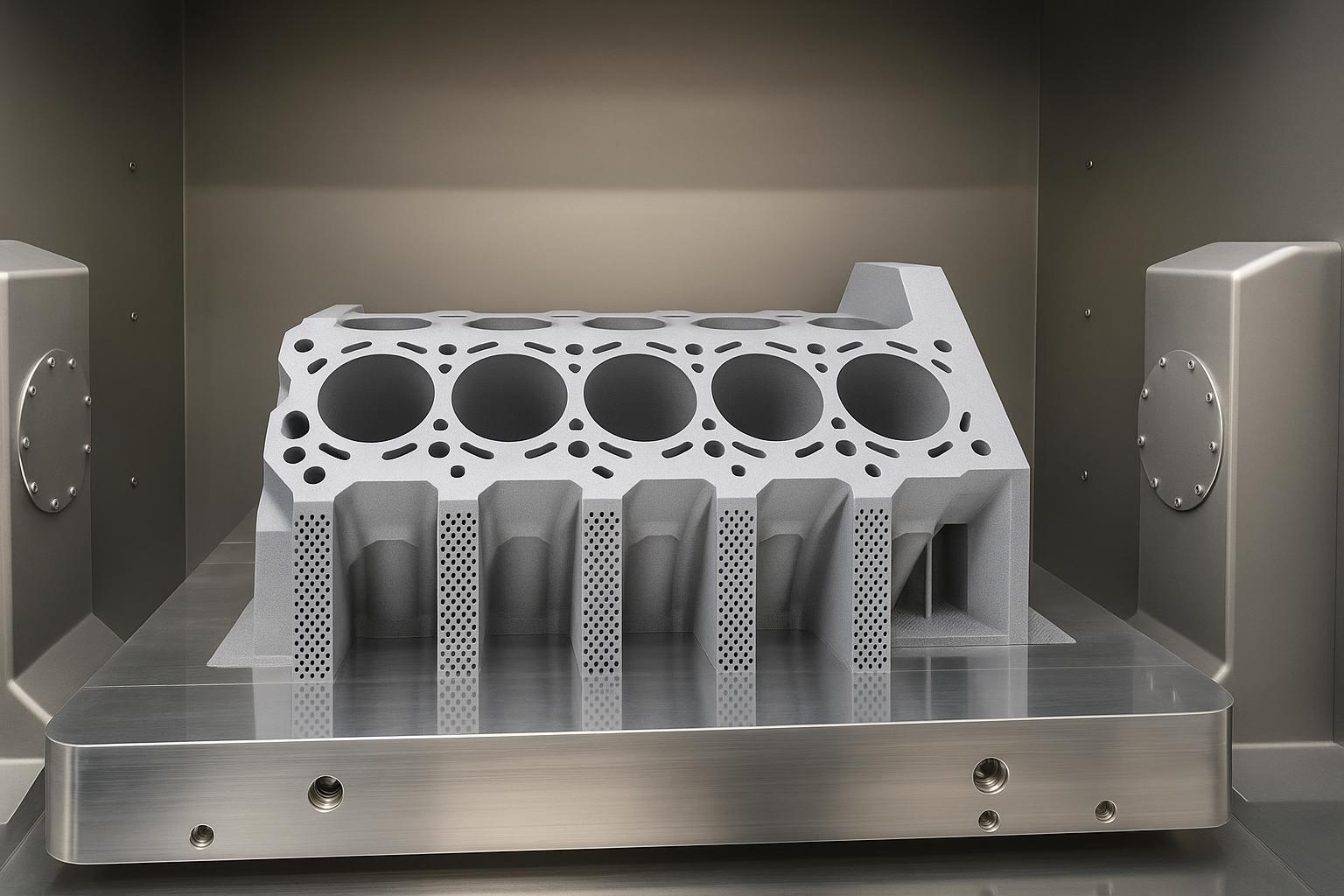







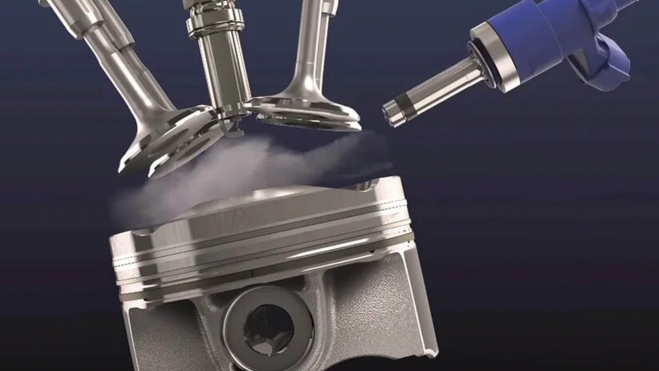
O início do artigo bombástico sobre o novo motor começa com a foto de um trivial alternador, nada a ver com o assunto. Depois de falar que o novo motor não usa pistões e tem eficiencia de 60%, mostra outra foto de um banal motor com pistões e válvulas..
Fica escancarada a total falta de conhecimento automotivo de quem redigiu a reportagem.
400 CV e entrega 678 Nm , me parece esquisito, poderia verificar.
Talvez pudesse ser 67,8 nm? Seria um pouco mais coerente
Boa tarde a todos o Brasil,tem muitos carros movidos água,onde as poderosas indústrias automotivas,não divulgam,isso já faz tempo,só vale si vier de fora.Nossos governantes preocupados pelas multinacionais,onde o dinheiro fala mais auto
Carro movido a agua é como político honesto, dizem que existe mas até hoje ninguem provou que existe.