Portuguese
  Spanish


The Future of Oil: How Much Time Do We Have Before the Energy Transition Consolidates?
Since the oil crisis of 1973, the debate about the end of reserves remains on the agenda. After half a century, the big question still lacks a definitive answer: how much longer will we have oil available on the planet?
Recent forecasts indicate that proven reserves are sufficient to maintain global supply for at least another 50 years.
However, oil prices fluctuate constantly, reflecting not only the uncertainty surrounding the actual available quantity but also the speed at which new technologies and alternative sources are consolidating in the market.
-
With a record production of nearly 3 million barrels per day, Petrobras resumes importing diesel in July, highlighting the bottleneck in Brazilian refining.

-
Qantas and Airbus Invest in Company Aiming to Convert Unsorted Household Trash into Jet Fuel

-
Brazil’s ANP Opens 86 New Oil Blocks in the Equatorial Margin, Expanding the Amazon River Mouth Frontier

-
OPEC+ Boosts Oil Supply by 188,000 Barrels per Day in July 2026, Leading to Price Drop from $112 to $89 per Barrel in Under Two Months
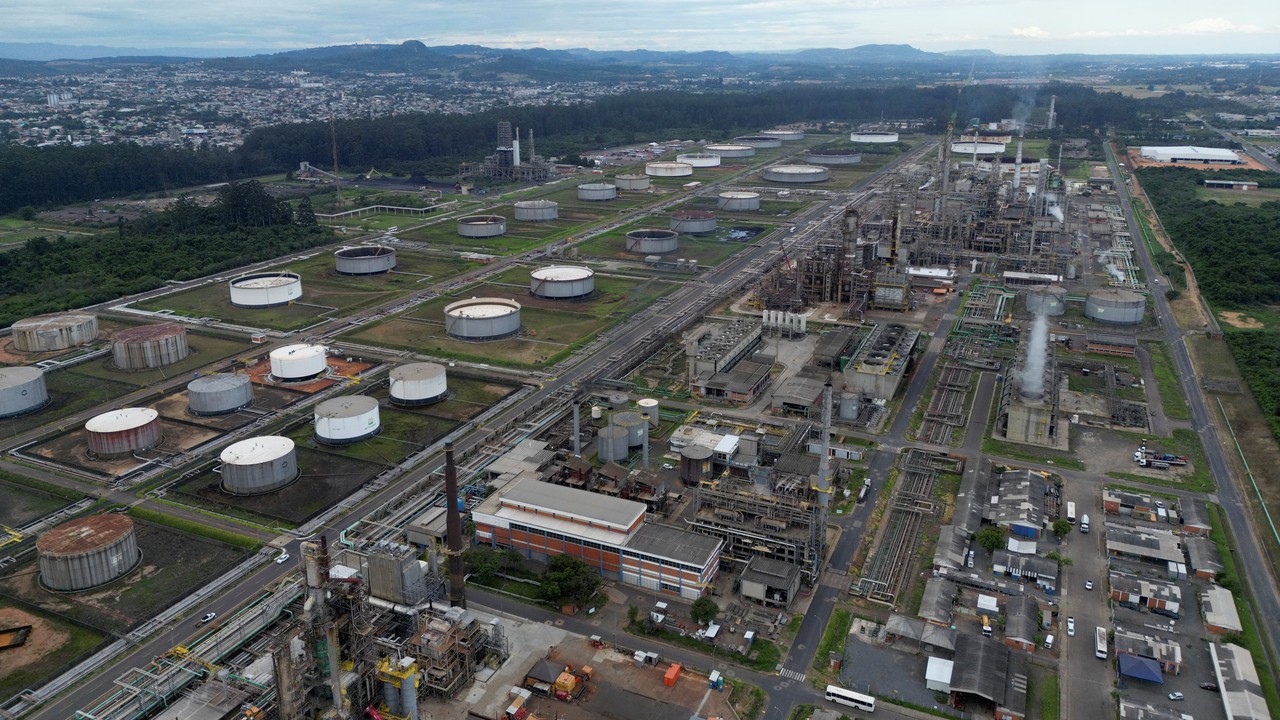



Oil Reserves: Projections and the “Peak of Extraction”
The discussion about the future of oil has taken on new contours with the advance of the energy transition. Experts believe that the world is nearing the so-called “peak of extraction”—the point where demand reaches its maximum before beginning a progressive decline.
According to Atul Arya, chief energy strategist at S&P Global, the global concern has shifted from oil scarcity to its possible obsolescence in light of changes in energy consumption patterns.
This scenario is reinforced by data from the think tank Ember, which points to a historic peak in the use of fossil fuels this year.
The report highlights that in 2023, the global capacity for clean energy production grew at the fastest pace in the last two decades, driven mainly by the expansion of solar energy in China.
New Frontiers in Oil Extraction and Use
Meanwhile, unconventional forms of exploration are gaining ground. Oil sands and shale are concrete alternatives to traditional oil. Even requiring more complex techniques and higher extraction costs, these resources could nearly double the currently known reserves.
Natural gas is also taking on a prominent role. Considered cleaner and more versatile, it is already widely used in industry and petrochemicals, serving as a direct substitute for oil in various applications.
Substitutes Gain Traction
Other energy sources are already established or in rapid development. Ethanol and biodiesel, for example, not only fuel vehicles but are also used in the production of plastics and other products.
Synthetic gasoline, obtained from coal, has also been known since World War II and is still being studied as a viable alternative.
Additionally, nuclear energy, despite being surrounded by debates about safety, is considered a stable and economically competitive source.
Green hydrogen is emerging as a promise of clean energy for the future, although it still faces technological and logistical obstacles to be produced at a global scale.
A Future in Transition
Despite advances in new technologies and energy sources, oil remains an essential component of the global energy matrix. However, with the pressure for sustainable solutions and changes in consumption patterns, the world seems to be heading towards an inevitable energy transition—and, according to experts, this process has already begun.
The change is not expected to be abrupt. What is emerging is a gradual replacement, driven both by the search for economic alternatives and the need to reduce emissions and combat climate change. Oil still has a role to play. But the clock is ticking.
With information from Noticiário Financeiro.