Portuguese
  Spanish





International Research Shows Advances In Clean Hydrogen Production By Replacing Platinum With Solar Energy Activated Plastic Nanoparticles, Reducing Costs, Scaling Up And Strengthening The Role Of Renewable Energy
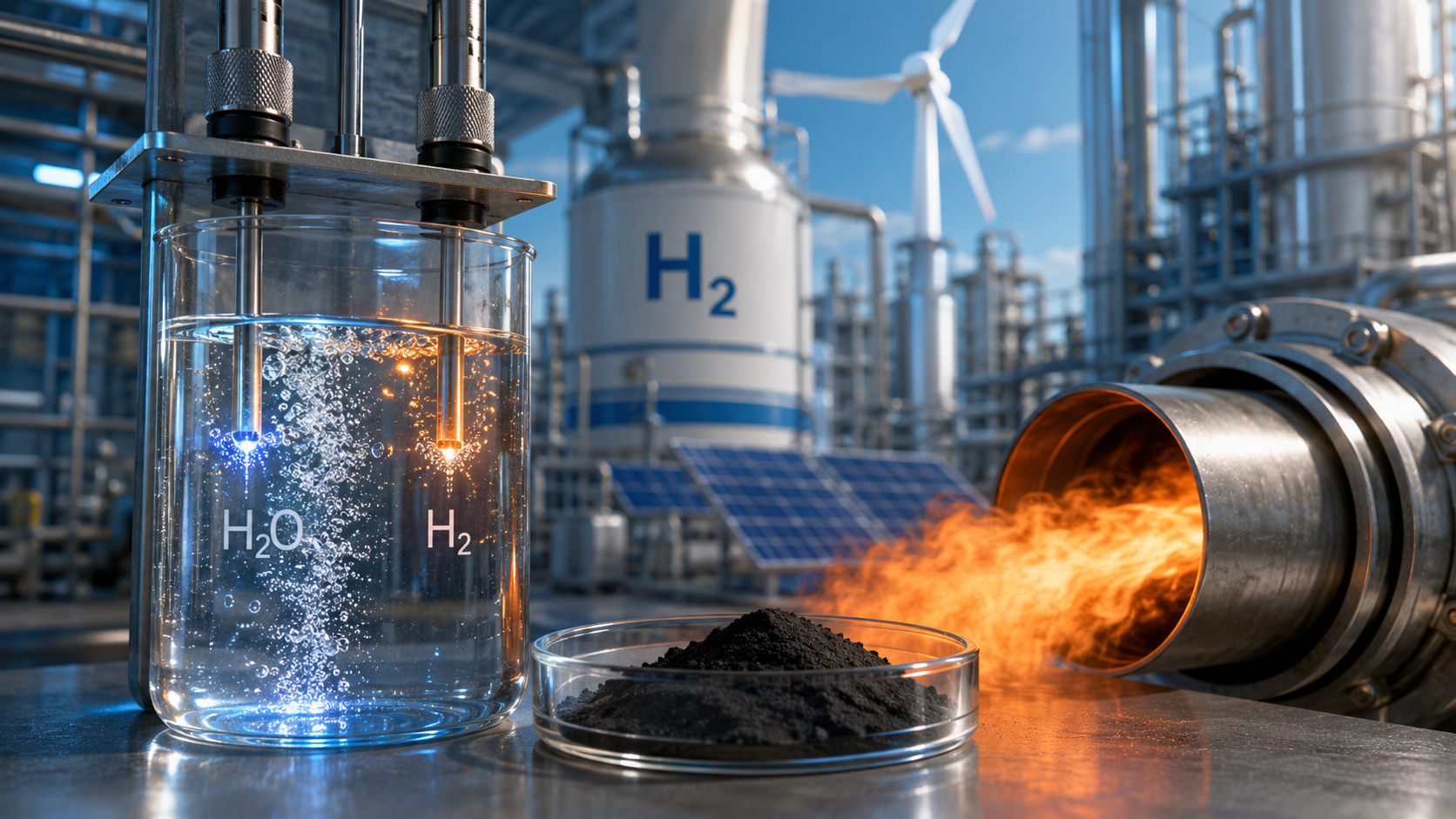
A scientific innovation may accelerate the global energy transition by eliminating rare metals, reducing costs, and expanding access to clean hydrogen. Researchers from Uppsala University in Sweden, in collaboration with scientists from South Africa and Chalmers University of Technology, have demonstrated that it is possible to produce hydrogen using solar energy efficiently and sustainably without the use of platinum, employing plastic nanoparticles activated directly by solar energy.
Solar Hydrogen As A Strategic Vector For Renewable Energy
The discovery addresses one of the main technological barriers of renewable energy based on hydrogen: reliance on expensive, scarce, and environmentally problematic catalysts. Right from the start, the study makes clear its transformative potential for energy security, emissions reduction, and the economic viability of hydrogen as the fuel of the future.
Solar hydrogen is seen by international organizations, such as the International Energy Agency (IEA), as a key element for decarbonizing hard-to-electrify sectors, including steel production, heavy transport, and the chemical industry. When used as fuel or industrial input, hydrogen does not emit greenhouse gases, only releasing water vapor.
-
Fired during apartheid and with a little borrowed money, an electrician started with a borrowed truck and transformed electrical services into a group connected to energy, real estate, and infrastructure in South Africa.

-
Wood has ceased to be just a construction material in Yale research and has become insulation for electrical transformers that face intense heat, aging, and increasing pressure from the renewable energy-powered grid.
-
More than 1,000 residents of a remote island in Kiribati now have clean water and electricity with solar systems operated by the community itself.
-
Ceará brings together 7 giants and R$ 66 billion to transform Pecém into the largest green hydrogen hub in Brazil, with final decisions expected by the end of 2026.



However, despite this potential, more than 95% of hydrogen produced globally still comes from fossil fuels, primarily natural gas. This method, known as methane reforming, generates large volumes of carbon dioxide, contradicting the climate goals associated with renewable energy.
Therefore, direct production from water using solar energy is seen as one of the cleanest and most desirable routes. The challenge has always been to make this process economically viable and scalable, something that the new research aims to solve.
Platinum: Chemistry Efficiency With High Economic And Environmental Costs
For decades, platinum has been considered practically irreplaceable in water electrolysis systems and in the production of solar hydrogen. The metal exhibits high catalytic efficiency, accelerating essential chemical reactions to separate hydrogen and oxygen.
However, platinum is one of the rarest metals in the Earth’s crust, concentrated in a few countries and subject to complex supply chains. Its high price makes projects more expensive, limits large-scale production, and creates geopolitical dependencies.
Moreover, mining the metal is associated with significant environmental impacts, undermining the sustainability narrative of renewable energy. Eliminating platinum without losing performance has always been the great objective of scientific research in this area.
Plastic Nanoparticles And The New Technological Paradigm
The advancement presented by the researchers is based on the use of electrically conductive plastic nanoparticles, developed from conjugated polymers. These materials have the ability to absorb light efficiently, an essential characteristic for processes that use solar energy.
Initially, these polymers had significant limitations, mainly low interaction with water. The scientific team overcame this obstacle by modifying the properties of the material at a molecular scale, making it more hydrophilic and suitable for the aqueous environment.
By shaping the plastic into plastic nanoparticles, the researchers significantly increased the contact area with water and improved electric charge transfer. This structural redesign was crucial for enabling hydrogen production without platinum.

Solar Energy Drives Hydrogen Production Without Platinum
In the developed process, plastic nanoparticles are immersed in water and exposed to solar energy. The sunlight excites the electrons of the polymer, initiating the reaction that breaks the water molecule and releases gaseous hydrogen.
Initial laboratory tests demonstrated that just 1 gram of the polymer catalyst was able to produce about 30 liters of hydrogen in one hour. According to the researchers, the performance is comparable, and in some scenarios even superior, to traditional systems that use platinum.
This result reinforces that efficiency is not necessarily linked to rare metals, but rather to the smart design of materials and the direct integration with renewable energy sources.
Solar Hydrogen And Cost Reduction In The Energy Transition
One of the most significant impacts of eliminating platinum is the substantial reduction in the production costs of solar hydrogen. Conductive polymers are more abundant materials, with well-established production chains and the potential for large-scale manufacturing.
This means that systems based on plastic nanoparticles can be more accessible to developing countries and regions with high incidence of solar energy.
The technology is no longer restricted to large investments and now has decentralized potential, which strengthens the democratization of renewable energy. Additionally, the cost reduction increases the competitiveness of hydrogen against fossil fuels, a decisive factor for its industrial adoption.
Environmental Impacts And Sustainability Gains
From an environmental perspective, the innovation presents clear advantages. By replacing platinum, the pressure on intensive and environmentally sensitive mining activities is reduced. At the same time, the process uses only water, sunlight, and plastic nanoparticles specifically designed for this purpose.
According to Professor Ergang Wang from Chalmers University of Technology, the next steps in the research include the pursuit of electrolysis systems that completely dispense with chemical additives.
This advancement could make solar hydrogen one of the cleanest forms of renewable energy currently available. The combination of low environmental impact and high efficiency positions the technology as a relevant candidate for public policies focused on decarbonization.
Renewable Energy, Storage And Energy Security
One of the major challenges of renewable energy is intermittency. Electricity production from the sun depends on weather conditions and the day-night cycle. In this scenario, hydrogen emerges as a strategic energy storage solution.
Solar hydrogen allows excess solar energy to be converted into a fuel that can be stored, transported, and used when needed. This strengthens the stability of energy systems and expands the integration of renewable sources into the electric grid. With lower costs and no dependence on platinum, this solution becomes even more attractive for modern, resilient energy networks.

Current Limitations And Challenges For Industrial Scale
Despite the promising results, the researchers themselves emphasize that the technology is still in its early stages. Experiments have been conducted on a laboratory scale, and aspects such as material durability, efficiency over time, and industrial viability still need to be evaluated.
Even so, the elimination of platinum is already considered a scientific milestone. The expectation is that, in the coming years, new tests and optimizations will bring solar hydrogen closer to commercial application, consolidating its role in global renewable energy.
What This Innovation Represents For The Future Of Clean Energy
The production of solar hydrogen without platinum symbolizes a profound change in the way humanity can generate and store energy. By combining solar energy, plastic nanoparticles, and advanced materials engineering, the research demonstrates that sustainable solutions can also be economically viable.
Although technical challenges still exist, the path presented is consistent, verifiable, and aligned with global decarbonization goals. If confirmed at an industrial scale, this innovation could redefine the role of hydrogen in the energy transition, making it accessible, clean, and truly sustainable.
In a context of climate urgency and growing demand for renewable energy, advancements like this reinforce that science and innovation continue to be the main drivers for a safer, low-carbon energy future.