Portuguese
  Spanish


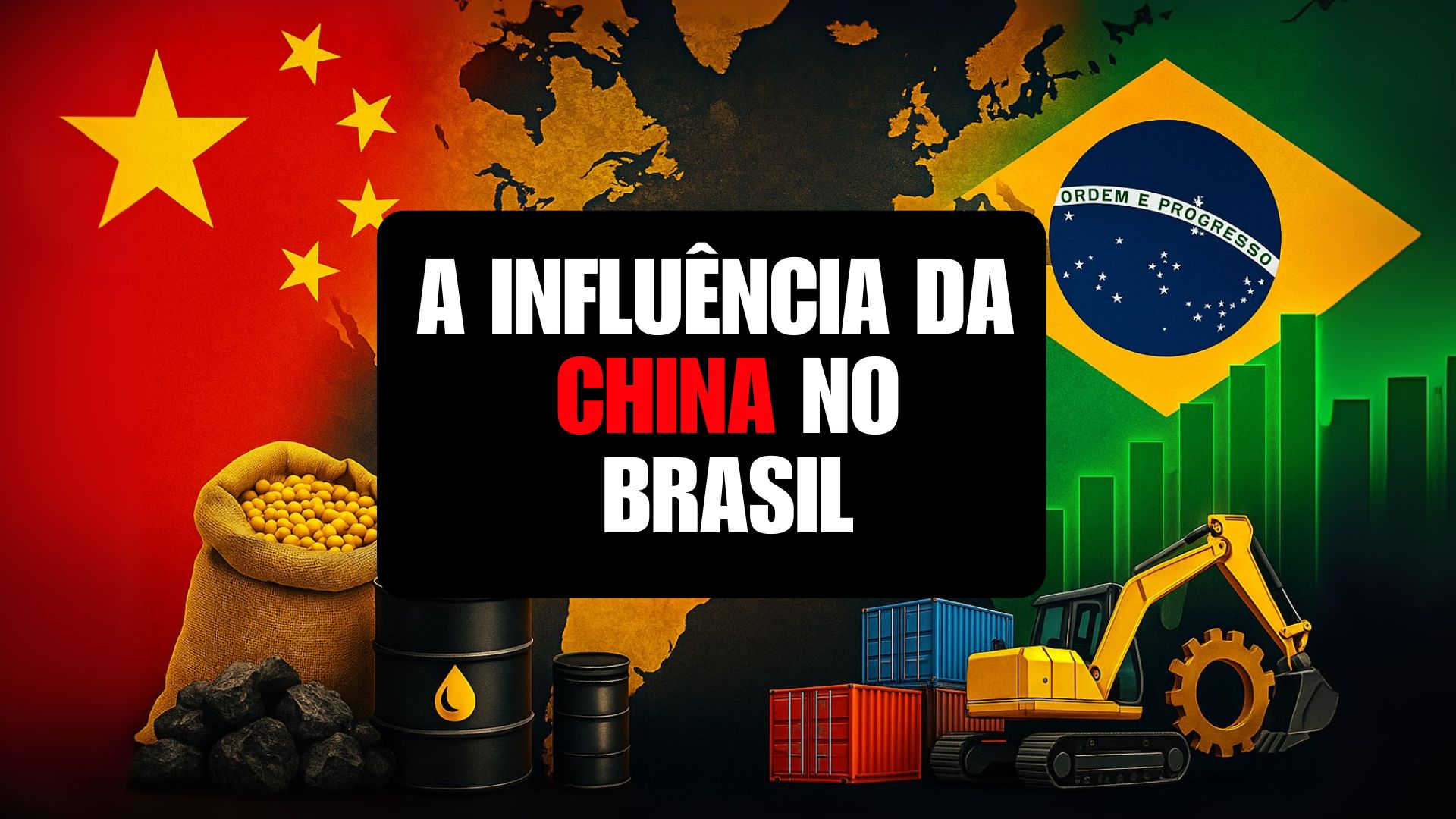

Trade With China Drives Millions of Jobs in Brazil, Ensures Billion-Dollar Surplus and Strengthens the Country’s Position in the Global Scenario, According to a Study by the Brazil-China Business Council.
Brazil has consolidated China as its main economic ally over the past few years.
In 2022, the import-related activities from the Asian country led the generation of formal jobs in Brazil, totaling 5.567 million jobs and surpassing the European Union for the first time since the series began in 2008.
In the same timeframe, labor ties associated with exports to China grew by 62%, a higher increase than that recorded with the United States (32.3%), Mercosur (25.1%), the European Union (22.8%), and other South American countries (17.4%).
-
European Parliament Approves Digital Euro, Aiming to Challenge Visa and Mastercard’s Dominance and Transform Payments Across Europe by 2029

-
Israel finds Hezbollah militarized tunnel over 200 meters long under village, with 4 missile launch shafts, 12 chambers, anti-tank missiles, drones, and weapons depots at a depth of 25 meters.

-
Ukraine launches largest drone attack on Moscow since 2022, Russia claims to have intercepted nearly 200 aircraft near the capital, Kapotnya refinery targeted again, and offensive reignites alert about war reaching the Russian energy heart just a few kilometers from the Kremlin.

-
Truck drivers, freight, and fines from 2022 take center stage in politics: Chamber approves MP with amnesty, mandatory tracking by CIOT, million-dollar penalties, and new minimum wage for those who spend more than 24 hours on the road.




The study “Socioeconomic Analysis of Brazil-China Trade”, prepared by the Brazil-China Business Council (CEBC) in partnership with the Ministry of Development, Industry, Trade and Services (MDIC), quantifies the formal jobs linked to companies that import and/or export via RAIS.
The methodology separates the two ends to avoid double counting, as there are companies that operate simultaneously in both import and export.
Employment Driven by Chinese Imports
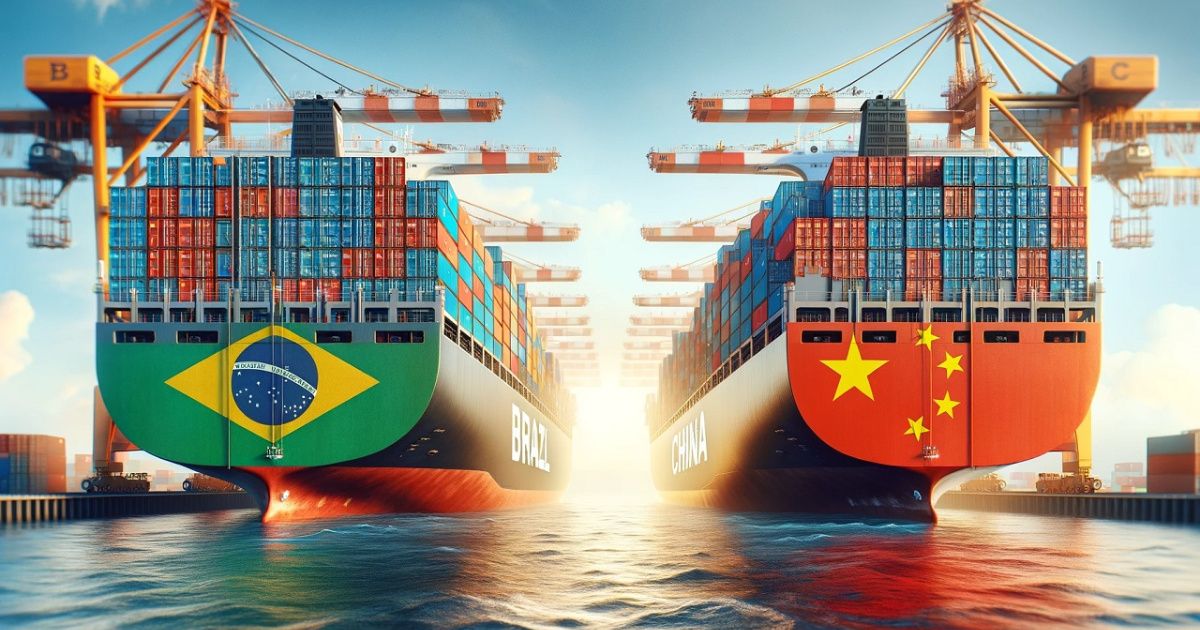
On the import front, trade with China accounted for the largest contingent of formal job openings in 2022.
There were 5.567 million positions, a figure slightly higher than that of the EU, which placed the Sino-Brazilian axis at the top of the national ranking of jobs linked to foreign trade.
The dynamism is also evident in the growth rate: between 2008 and 2022, formal jobs linked to Brazil’s purchases from the Chinese increased by 55.4%, a pace that outstripped South America (21.7%), the EU (21%), the United States (8.7%), and Mercosur (0.3%).
Exports Advance Faster, but With a Smaller Base of Jobs
On the export side, the study shows two simultaneous movements. On one hand, Brazil recorded the largest relative leap in employment between 2008 and 2022 when selling to China (+62%).
On the other hand, the absolute number of jobs linked to sales to the Chinese market — slightly above 2 million — is still lower than that observed in other partnerships: Mercosur (3.8 million), the European Union (3.6 million), South America (3.5 million), and the United States (3.4 million).
The explanation lies in the profile of the export agenda to China, with a strong presence of agriculture and mining.
As summarized by CEBC analyst Camila Amigo: “These sectors, while highly competitive and strategic, generate proportionally fewer jobs due to their high level of mechanization compared to more diversified industrial segments, such as those that have a greater weight in Brazilian exports to the United States, the European Union, and Mercosur.”
Billion-Dollar Surplus and Macroeconomic Effect
The Chinese relevance is not limited to employment. The trade balance with the country has been favorable to Brazil.
Over the past ten years, the accumulated balance was US$ 276 billion, equivalent to 51% of Brazil’s overall surplus during this period.
In 2024, China accounted for 28% of Brazilian exports and 24% of imports, remaining the main partner in both directions of trade flow.
The study emphasizes that the continuation of this surplus helped to reduce external vulnerability, strengthen international reserves, and mitigate exchange rate volatility.
In other words, the net inflow of dollars from trade with China contributed to balancing the balance of payments and creating an environment less susceptible to international shocks.

Business Base and Sectoral Concentration
While imports from China are spread across a wide number of companies, exports to the country concentrate on few large players and few products.
In 2024, more than 40 thousand Brazilian companies imported goods from China, largely industrial inputs such as machines, electronic equipment, chemicals, and fertilizers.
In contrast, the group of companies that exported to the Chinese market in the same year is substantially smaller, around about 3 thousand firms.
The sales agenda remains dominated by soybeans, iron ore, and oil, although other chains, such as meat and pulp, have gained ground over time.
This asymmetry helps explain why the lead in jobs is on the side of imports.
Chinese external purchases nourish productive chains spread across the country, generating occupations at various qualification levels.
Exports, on the other hand, concentrated in highly mechanized sectors, create fewer vacancies per unit of value.
External Context and Perspectives
The international scenario has added a recent component to the discussion.
Since August 2025, the United States has begun applying a 50% tariff on a basket of products imported from Brazil, a measure that has the potential to affect industrial segments and reorient trade flows.
In parallel, the relationship with China relies on complementarity: the Chinese demand food, energy, and minerals, while Brazil purchases industrial goods and essential components for its production.
According to CEBC, strengthening the partnership should come accompanied by export diversification, sustainability, and socioeconomic inclusion.
The guidance is to broaden the range of companies that can sell to the Chinese market and explore niches with higher labor intensity and added value, without losing sight of the competitiveness achieved in commodity chains.
What Needs to Improve
Despite signs of robustness, challenges persist. The export agenda remains concentrated in a few items and the business base is narrow on the sales side to China.
Expanding the number of exporters, facilitating access to financing, and promoting regulatory and sanitary adaptation for more sectors can unlock opportunities.
Simultaneously, policies that leverage the diversity of imports — turning them into investment, innovation, and productivity — help to better capture the employment gains indicated by the study.
Therefore, the Brazilian economy finds in its partnership with China a trade anchor and a vector for formal jobs, especially in the chains supplied by Chinese inputs.
With the figures already observed and the ongoing external pressures, the question that arises is: what measures can expand the number of Brazilian companies capable of selling to China while simultaneously reducing the sectoral concentration of exports?