






 Portuguese
  Spanish


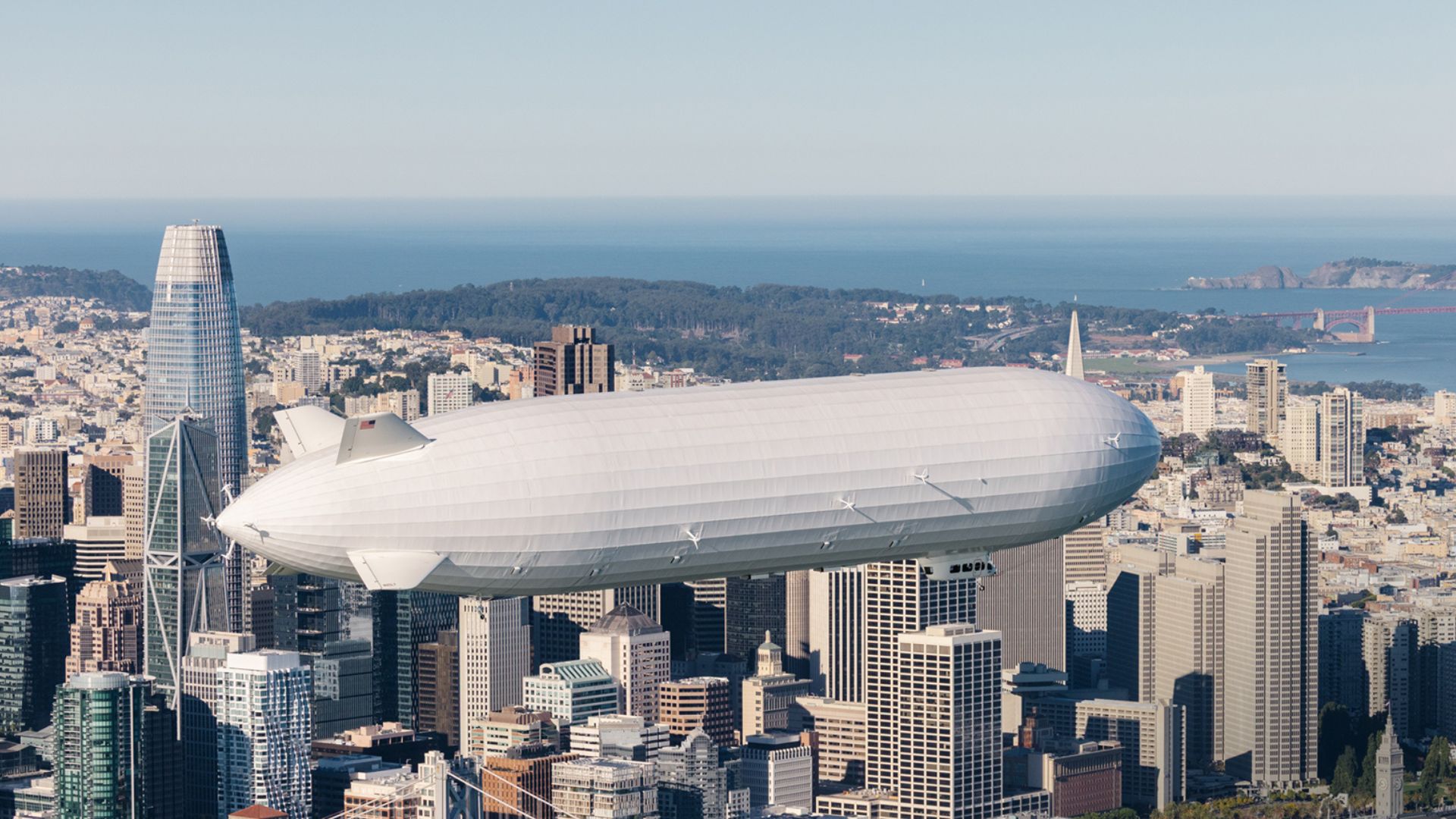


Pathfinder 1 Rigid Airship Expands Testing Area in California and Draws Attention for Combining Large Size, Electric Propulsion, and Modern Control. LTA Research’s Program Aims to Validate Safety and Performance in Flights Over the Ocean, with High-Impact Images and Global Curiosity.
The Pathfinder 1, an experimental rigid airship developed in the United States, has entered a testing phase that has taken the aircraft beyond the immediate surroundings of its base, with flights over San Francisco Bay and a pass under the Golden Gate Bridge.
The operation is conducted by LTA Research, a company working to demonstrate the viability of a return of large rigid airships using current materials and systems, in a proposal that combines lightweight structure, electric propulsion, and modern control for transportation and support missions in hard-to-reach areas.
Testing in San Francisco Bay and the Golden Gate Landmark
The aircraft has drawn attention for bringing together, in a single project, three elements that rarely appear together in current aviation: large volume, rigid architecture, and a testing program focused on safety and gradual expansion of the flight envelope.
-
Workers renovating a playground in northern England uncover 176 World War II bombs buried underground; training artifacts still contained explosives.

-
Brazilian Architect Transforms Waste into Sustainable Homes with Solar Power and Rainwater Systems for 40 Years

-
Security Guard Becomes Doctor at Louisiana Hospital Where He Once Worked, Studied Chemistry Between Shifts

-
Woman Rescued from Luxury Complex in Brazil Worked Without Pay for 55 Years, May Be Entitled to Over $300,000




LTA describes the Pathfinder 1 as a technology demonstrator aimed at validating performance, control, and reliability under different wind conditions and maritime operations, before evolving to more demanding missions and longer routines.
The flights around San Francisco were framed by the company as part of a deliberate progression, planned to test systems and aircraft behavior under varied operational conditions.

The pass under the Golden Gate was treated as a symbolic landmark and, at the same time, as a technical milestone within a broader evaluation of rigid airships, which depends on data collection, analysis, and repetition of procedures to reduce risks and confirm operational limits.
Base at Moffett Field and Routine Controlled Testing
The Pathfinder 1 operates from Moffett Field in Mountain View, California, a location historically associated with aviation that houses large hangars used for large aircraft projects.
LTA utilizes this infrastructure as a base for assembly, maintenance, and testing, with a routine that alternates between ground checks, controlled testing, and carefully planned flights.
As it is an experimental aircraft, the program relies on formal authorization processes and a structured testing plan so that each stage enables the next.
FAA Experimental Certification and Flight Testing Rules
The authorization for this type of testing is tied to specific certifications for experimental aircraft.
LTA itself reports that the Pathfinder 1 received a Special Airworthiness Certificate from the Federal Aviation Administration, allowing flight tests under the conditions provided for the program and with operational restrictions compatible with the development phase.
This type of certification does not equate to the approval of a commercial aircraft, but is a requirement for the testing campaign to be conducted in a regulated manner and under defined parameters.
Expansion of the Flight Envelope and Data in Coastal Environment
Within this context, the expansion of the testing area means more than just “going further.”
It allows assessment of wind response, directional stability, behavior at different altitudes, and the interaction between navigation, control, and propulsion systems in conditions closer to the real world.
In a coastal environment, variables such as gusts, variations in air density, and turbulence associated with terrain and proximity to the sea often require special attention, making San Francisco Bay a relevant area to obtain data under conditions that do not appear with the same intensity in tests restricted to a smaller perimeter.
Return of Rigid Airships and Applications in Logistics

The global interest in Pathfinder 1 is also linked to the fact that rigid airships have become rare throughout the 20th century, mainly due to costs, operational complexity, and changes in cargo and passenger aviation.
LTA’s proposal is to show that, with current materials, sensors, control systems, and a gradual testing philosophy, it is possible to recover some of the capabilities of large lighter-than-air aircraft in specific niches, such as transporting bulky cargo, accessing regions without airport infrastructure, and support operations in remote scenarios.
The company states that its goal is to develop a generation of airships focused on versatility and sustainability, capable of performing tasks such as delivering cargo over significant distances and providing humanitarian support in disaster-affected areas, where runways and roads may be compromised.
This type of application is often mentioned because airships can, in theory, operate with less dependence on heavy infrastructure, as long as the logistics of docking, anchoring, and safety are compatible with the mission site and weather conditions.
Iterative Campaign and Safety in LTA Research’s Program
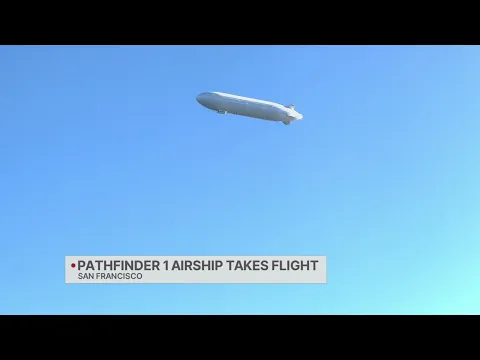

The project also stands out for the way the aircraft is presented to the public and the technical community: as a demonstrator aiming to gather evidence, rather than promising an immediate leap to commercial operation.
LTA describes the campaign as iterative, with internal and external tests, and a gradual expansion of the flight envelope, precisely so that data from each stage informs adjustments, new verifications, and future mission profiles.
In a previous statement, the company explained that the release to fly is part of a “custom” and rigorous testing plan designed to establish operational limits and confirm reliability.
This type of statement is relevant because a rigid airship, unlike conventional aircraft, involves a particular interaction between structure, lift volume, and control systems, in addition to specific handling requirements on the ground, where crosswinds and abrupt weather changes can present significant operational challenges.
Size of Pathfinder 1 and the Visual Appeal of the Project
The size of the Pathfinder 1 also contributes to the curiosity.
Vehicles accompanying the project in California describe it as an airship of about 400 feet in length, placing it in an unusual category for aircraft in regular testing today.
Local media reports have also highlighted that the project attracts attention for attempting to reintroduce, with contemporary engineering, a type of aircraft associated with another era, but with objectives aligned with current problems, such as logistics in emergencies and transport alternatives with a lower environmental footprint.
Air Traffic, Coastal Wind, and Operation Coordination

The testing dynamics over the Bay and the pass under the Golden Gate reinforce the program’s public aspect but also serve a technical function.
By exposing the aircraft to an environment known for variable wind conditions and routes with air traffic limitations, the team gathers data on stability, navigation, and procedures, as well as validates communications and coordination in an airspace that requires precise planning.
At the same time, the flight generates high-impact visual material, a factor that tends to broaden the topic’s reach beyond the specialized audience.
Unconventional Engineering and Volumetric Cargo Missions
What makes this type of airship especially interesting to readers worldwide is the combination of “unconventional” engineering and practical applications.
Instead of an aircraft designed solely for speed, the Pathfinder 1 represents a bet on volume, persistence, and operational flexibility, characteristics that can be valuable in scenarios where transporting large amounts over long periods, with less dependence on runways and roads, makes a difference.
If the Pathfinder 1 and its successors can prove efficiency and safety on a large scale, what types of cargo and missions would be the first to justify the return of large rigid airships to global routes?


“under the Golden Gate Bridge”?! Who edits this thing?