Portuguese
  Spanish


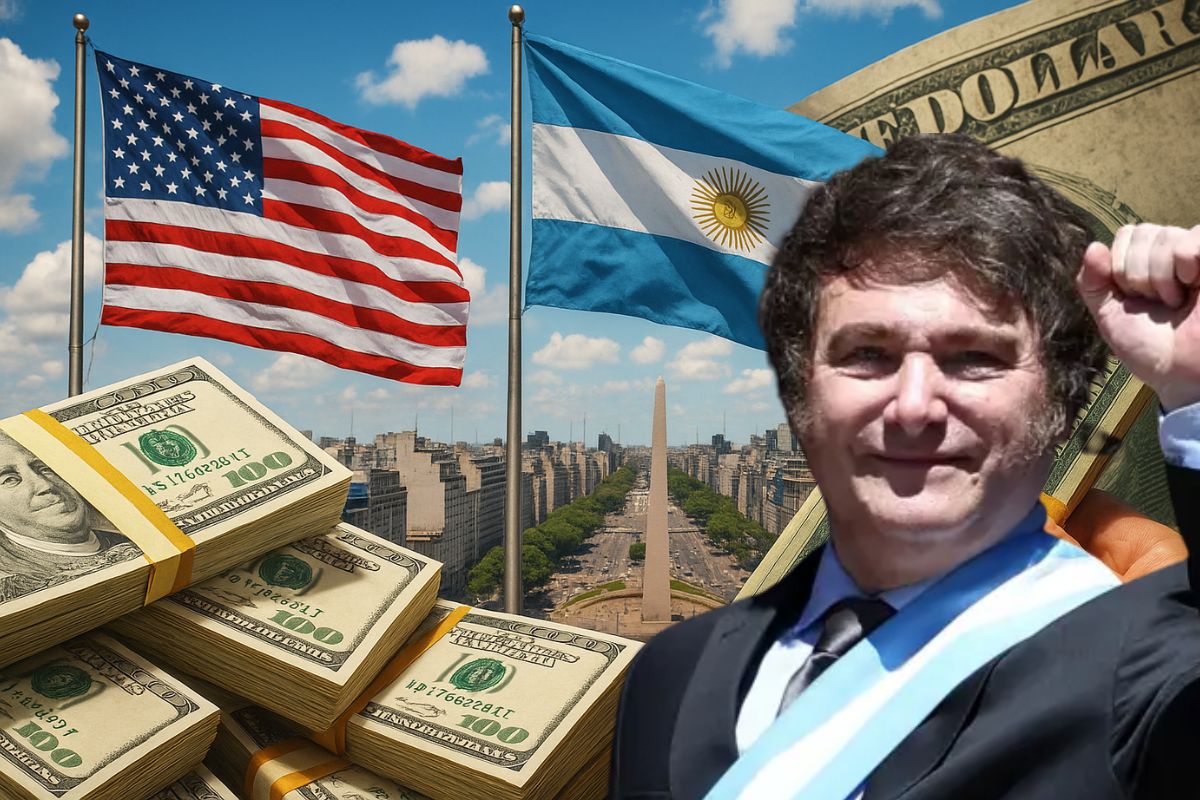

Announcement of Financial Support Comes Amid Critical Legislative Elections and Reignites Debates About Sovereignty, Geopolitics, and External Dependence of Argentina.
The economy of Milei received a sigh of relief after the United States announced that they are considering offering a $20 billion swap line to Argentina. Additionally, the U.S. government stated that it is ready to purchase Argentine dollar-denominated bonds, a gesture interpreted as direct aid to the neighboring country.
The announcement was made by U.S. Treasury Secretary Scott Bessent on September 24, 2025, and immediately reverberated in the markets and in international politics. The measure is seen as an attempt to strengthen Javier Milei amid a persistent social crisis and decisive legislative elections for the future of his reforms.
American Support and Its Interests
According to UOL, the decision was received as a clear signal of U.S. alignment with the Milei government, especially after public endorsement from President Donald Trump during the UN General Assembly. Analysts highlight that the promise is not only financial but also strategic: the U.S. seeks to contain China’s influence, which had already extended its own swap line to Argentina.
-
Former Marketing Agency Owner Thrives on Foraging for 250 Days, Sampling Over 170 Plants, and Says He No Longer Remembers Supermarkets

-
IKEA’s AI Handles Nearly Half of Customer Calls, Company Reassigns 8,500 Staff as Design Consultants, Boosting Revenue by €1.3 Billion
-
Owner of Havan Visits Paraguay to Discuss Lower Taxes, Local Suppliers, and International Expansion with President

-
Brazilian Construction Retail Chain Closes After 60 Years, Begins Liquidation Sale Across Five Cities




In the short term, the Argentine peso appreciated by over 2%, and the country’s bonds rose, bringing temporary relief to Milei’s administration. However, critics within the United States question the use of American resources to rescue a foreign economy, which they argue contradicts the principle of “America First.”
Reaction Within Argentina
In Argentina, the announcement was celebrated by Milei’s allies as proof of international confidence in his liberal project. Markets reacted positively, and the news reduced some of the currency tension that had been building up.
On the other hand, opponents warn that external aid may compromise the country’s economic sovereignty. There are fears that excessive proximity to Washington could imply political concessions, including regarding Argentina’s membership in Mercosur, a topic already discussed by Milei’s government on previous occasions.
International Repercussion
In Europe, outlets like Financial Times and Reuters highlighted the political timing of the announcement, interpreting it as direct support for Milei amid midterm elections. In Latin America, publications like Bloomberg Línea and Terra noted that the measure represents an “American rescue” to balance the influence competition between the U.S. and China in the region.
This geopolitical dispute reinforces the view that Milei’s economy has become a strategic piece on a broader chessboard, where financial decisions have effects that transcend Argentina’s borders.
Immediate Economic Impact and Long-Term Doubts
According to experts cited by UOL, U.S. support could help rebuild Argentina’s international reserves, currently in critical condition. This would facilitate the defense of the peso and create room for a more predictable exchange rate.
Nevertheless, uncertainties persist regarding the terms of the agreement and the structural effects of Milei’s reforms. Despite a recent budget surplus, Argentina faces recession and rising poverty, factors that raise doubts about long-term sustainability even with external help.
The gesture from the United States reinforces political and economic support for the economy of Milei, but also raises questions about sovereignty, external dependence, and the real effects on the Argentine population. While, on one hand, the $20 billion swap may relieve immediate pressures, on the other, it does not guarantee that the crisis is overcome.
Do you believe that American aid will be sufficient to sustain Milei’s reforms, or does Argentina risk becoming even more dependent on the U.S.? Share your opinion in the comments.