





 Portuguese
  English
  Spanish
  3 min of reading
  44 comments




Strategy With 80 Milligrams Of Paracetamol Passed Field Tests, Evolved Into Automated System And Became Part Of The Continuous Control Of The Brown Tree Snake In Guam
The planned action for the forests of Guam has moved from paper to being included in the measures used to combat the brown tree snake.
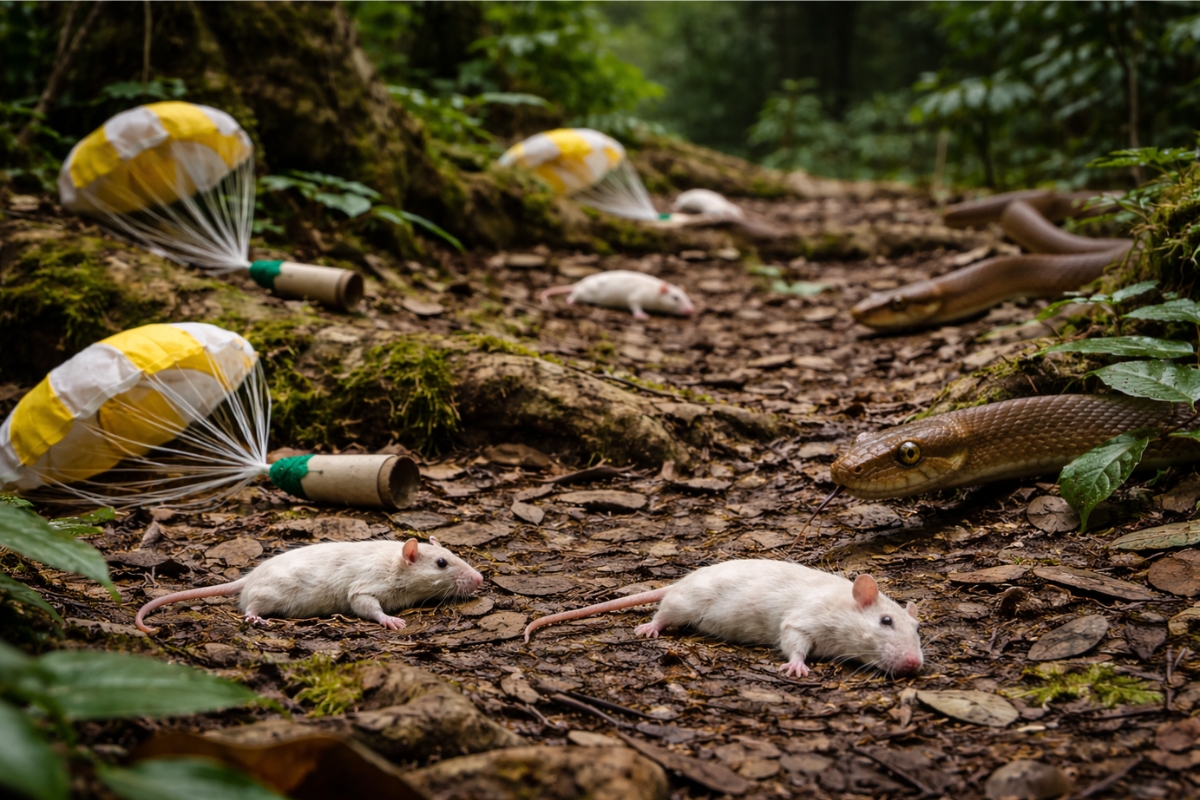
The method uses dead rodents with 80 milligrams of paracetamol, a lethal dose for the species, placed in the environment to facilitate encounters by the snakes.
Besides impacting wildlife, the advance of snakes also affects the island’s infrastructure, posing risks to electrical systems and power outages.
-
Why intelligent life may be extremely unlikely in the universe? Physics, evolution, and statistics challenge one of humanity’s greatest beliefs.

-
The government opens the budget to pay pensions and ends up targeting precisely the FAB’s Gripen fighter jet; the reason for the R$ 800 million block reveals a fragility that has haunted the country’s defense projects for decades.

-
A potato-shaped object over a mountain and orbs multiplying in the sky are among the 72 new files from the Department of Defense that do not prove extraterrestrial life.
-
Family struggling with the electricity bill at the end of the month finds an air conditioner that consumes little and costs only R$ 21 per month; LG device cools the room 40% faster and also comes with a detail that grabs attention.


What Happened And Why It Caught Attention
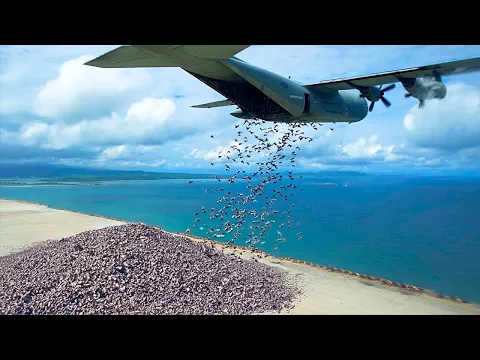
The operation involved the release of 2,000 rats already dead, prepared to serve as toxic bait for the snakes.
The target is the brown tree snake, which can grow up to three meters and has spread aggressively across the island.
The strategy caught attention for using paracetamol as a toxicant for an invasive reptile, taking advantage of the species’ high sensitivity to the compound.
How The Baits Fall From The Trees

Right: proposed alternative land bait made up of a dead rat weighing 13 to 17 g with two 80 mg tablets inserted into its body.
To reduce the risk of other animals finding the baits on the ground, the delivery was designed to get snagged in the vegetation.
The procedure plans for the rodents to be released one by one, with a mini parachute, to get entangled in the trees where the snakes move.
There was also the use of radio tracking on some of the baits to monitor snake movements before death, during the evaluation stages of the method.
Why Paracetamol Entered Snake Control
Paracetamol is an effective oral toxicant for the brown tree snake, with a dose of 80 milligrams associated with very high mortality in the species.
Broad-scale control gained momentum with the development of an automated aerial delivery system, designed to distribute baits in forest areas quickly and uniformly.
Tests and validations indicate that the technique can reduce the abundance of snakes in treated areas, although it does not eliminate the problem definitively.
The Size Of The Problem In Guam And The Daily Damages

Estimates suggest about 2 million snakes in 541 square kilometers of Guam, with densities ranging from 50 to 100 snakes per hectare in critical areas.
The species is linked to the loss of native birds, with the extinction of nine out of the 12 native species cited in the history of the problem.
The pressure also manifests in infrastructure, focusing on reducing power outages and risks in electrical installations.
What May Happen From Now On
The program is not limited to a single action and has become part of a set of control measures, with ongoing research and method adjustments.
Aerial drops may suppress snakes for a period, but reinvasion occurs from untreated areas over months, underscoring the need for reapplications and combinations with other tools.

Guam remains an unincorporated US territory with 160,000 people and military significance, while snake control continues to be an environmental and essential service issue, such as energy.







EQUÍVOCO. CONTROLA COM AVESTRUZ EMA SIRIEMA ok?
Tengo entendido que las serpientes no consumen animales muertos, inoculan con su mordida el veneno
que actua como las enzimas digestivas lo ayuda a digerir la presa antes de ser deglutida, lo que favorece su digestion
entiendes mal
Ótimo iniciativa.