






 Portuguese
  Spanish


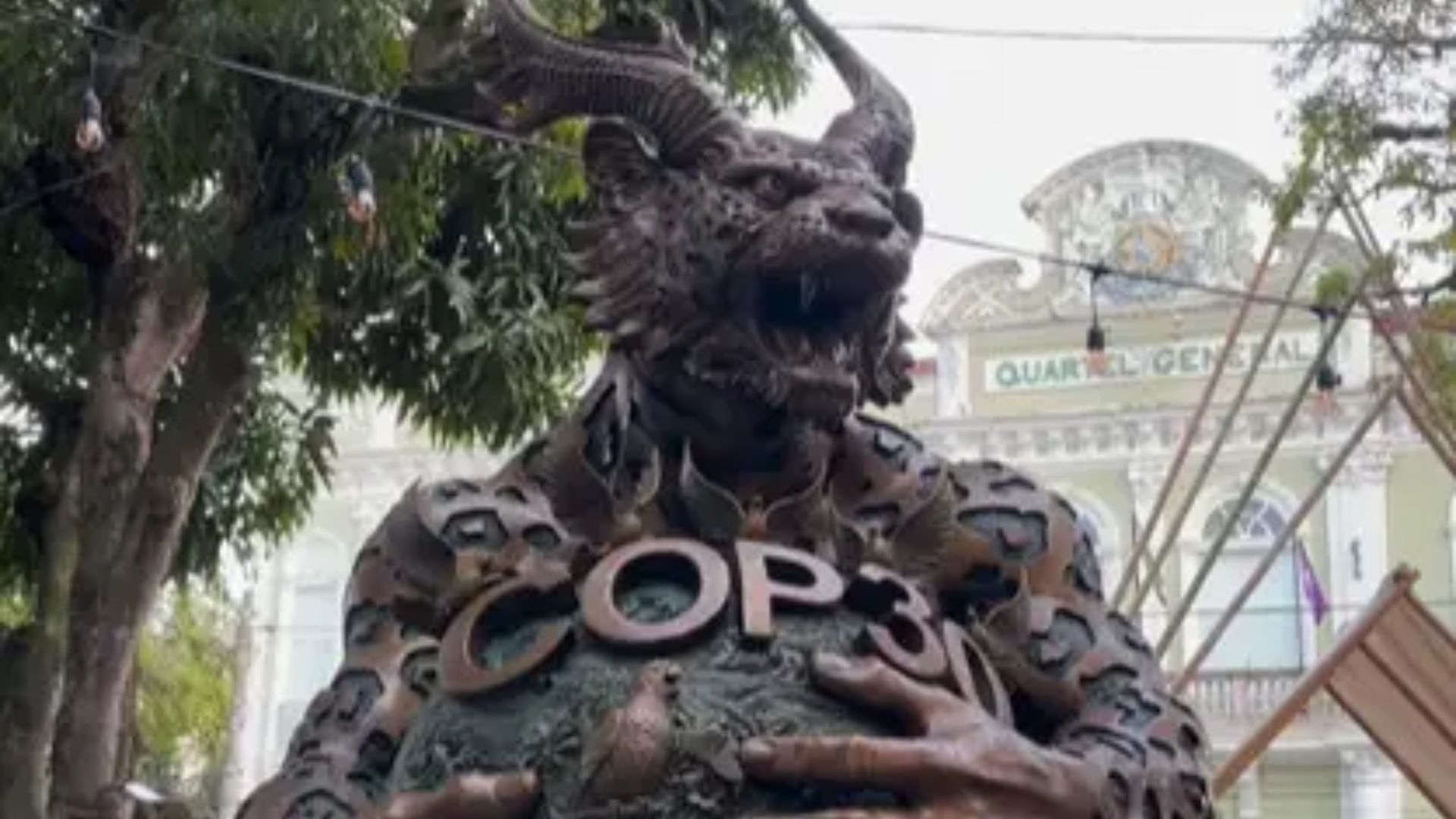


Chinese Sculpture Presented As A Symbol Of Environmental Protection During COP30 Triggers Religious Anger, Goes Viral On Social Media, And Reopens The Debate On Cultural Identity, Faith, And Diplomacy Between Brazil And China
The presentation of the sculpture “Guardian Spirit Dragon-Jaguar”, offered by China to Brazil during the COP30, sparked an intense debate on social media, especially among evangelical groups. The work, signed by Chinese artist Hung Jian, was unveiled at a public ceremony in the Freezone Cultural Action, at the Flag Square, on Sunday, the 16th, as a symbol of cooperation between the two countries in protecting the rainforest. This information was originally reported by Veja, which detailed the repercussions of the work and the impact caused after its official exhibition.
Combining the dragon, a traditional figure in Chinese culture associated with luck, wealth, and new beginnings, with the jaguar, one of the most emblematic animals of the Amazon, the sculpture seeks to represent the symbolic union between Brazil and China in the global climate agenda. According to the artist, the piece expresses not only protection but also vital energy, strength, and renewal — concepts that are recurrent in both Chinese imagination and Amazonian iconography.
Repercussions On Social Media: Support, Criticism, And Strong Religious Reaction
Shortly after the public presentation, videos and photos of the monument began circulating on Instagram, TikTok, and Facebook. However, despite the diplomatic and ecological intention, the work quickly became the target of criticism among religious groups. Many evangelical profiles started interpreting the dragon as a negative spiritual symbol, generating a wave of rejection.
-
College Dropout Turned Window Cleaner Builds $1 Million Cleaning Business with Subscription Model After 18 Years of Door-to-Door Work

-
North Korean Soldier Risks Crossing One of the World’s Most Dangerous Borders, Detained in South Korea

-
Stingless Bee Honey from Brazil Can Cost Up to $120 a Liter, Surprises with Flavors of Wood, Citrus, and Even Cheese
-
Woman Claims to Have Spotted a Technical Pattern in Recent FIFA Tournaments, Predicts Possible World Cup Winner


In the comments of videos showcasing the work, various messages went viral. Among them, one user wrote: “Brazil Belongs To Lord Jesus”, while another user exclaimed: “Take It Back! Thank You!”. The phrase that resonated the most, however, was: “It’s Rebuked In The Name Of Jesus Christ”, garnering over 2,000 likes in just a few hours. This mobilization turned the sculpture into one of the most discussed topics of the day, expanding the debate beyond the COP30.
As a result, pages aimed at religious audiences began discussing what they consider “inappropriate spiritual symbols” in public spaces, reigniting an old debate about foreign cultural manifestations and their influence on national identity. At the same time, other religious and cultural movements defended the work as a legitimate artistic expression, reinforcing its diplomatic value.
Artist Hung Jian And The Symbolism Behind The Dragon-Jaguar
Huang Jian — also recognized as art ambassador for the International Olympic Committee (IOC) — created the sculpture to convey the idea of complementary guardians: the Chinese dragon representing ancient wisdom and vital energy, and the Brazilian jaguar symbolizing courage, territory, and wild nature. Furthermore, the fusion of the two beings aims to illustrate the commitment of the countries in combating climate change.
As emphasized by specialized portals in contemporary art, the initiative symbolizes a dialogue between cultures and the construction of a shared view about the environment. Nevertheless, despite the positive environmental and cultural proposal, the work ended up absorbing a spiritual connotation among Brazilian religious segments — particularly the more conservative ones.
Religious Debate And National Identity
While part of the population celebrated the artistic and diplomatic partnership between Brazil and China, another part interpreted the work as “incompatible” with Christian values. This narrative clash highlights the conflict between distinct worldviews, as discussions about religious symbols, spirituality, and artistic representations tend to provoke strong polarization.
Even though the intent of the work is to emphasize protection and cooperation, many users interpreted the presence of the dragon as a religious affront. Consequently, the controversy reveals how environmental, cultural, and diplomatic themes can quickly acquire spiritual connotations, expanding debates that go beyond the artistic sphere.
In the end, the sculpture became something much larger than a diplomatic gift: it became a mirror of national tensions surrounding faith, cultural identity, and international relations. And You — How Do You Interpret This Work That Mixes China, Amazon, Religiosity, And Symbolism?






Send it to the Vatican. They’ll be happy to put it in their snake building.
Eu e minha família rejeitamos esse presente em nome de Jesus! Desligamos na terra e no céu o que este “presente” representa.
Horrível, mas é a cara do q a humanidade e a política brasileira, fez com a maravilhosa amazônia…
E toda a natureza do planeta.