Portuguese
  Spanish


The meeting between Russian Minister Oksana Lut and Brazilian authorities took place in February 2026, on the eve of the High-Level Commission in Brasília, and exposed a paradox, as CNA data shows China leading fertilizer sales to Brazil, a country that imports about 85% of what it consumes.
Even losing the lead in supplying fertilizers to Brazil, Russia returned to the negotiating table as a strategic partner of Brazilian agribusiness. On February 4, 2026, in Brasília, the Russian Minister of Agriculture, Oksana Lut, met with Brazilian Minister Carlos Fávaro and the Secretary of Trade and International Relations, Luis Rua, to discuss a new cooperation plan in the sector. The meeting took place a day before the 8th High-Level Cooperation Commission between Brazil and Russia, held at the Itamaraty Palace.
The diplomatic move draws attention because, in 2025, China surpassed Russia for the first time as the largest supplier of fertilizers to Brazil. According to the Inputs Bulletin of the Brazilian Confederation of Agriculture and Livestock, CNA, between January and October of that year, the Chinese shipped 9.76 million tons, compared to 9.72 million tons from Russia. The country imports about 85% of the fertilizers it consumes, making each supplier a sensitive piece in the agribusiness machinery.
What Brazil and Russia agreed at the table
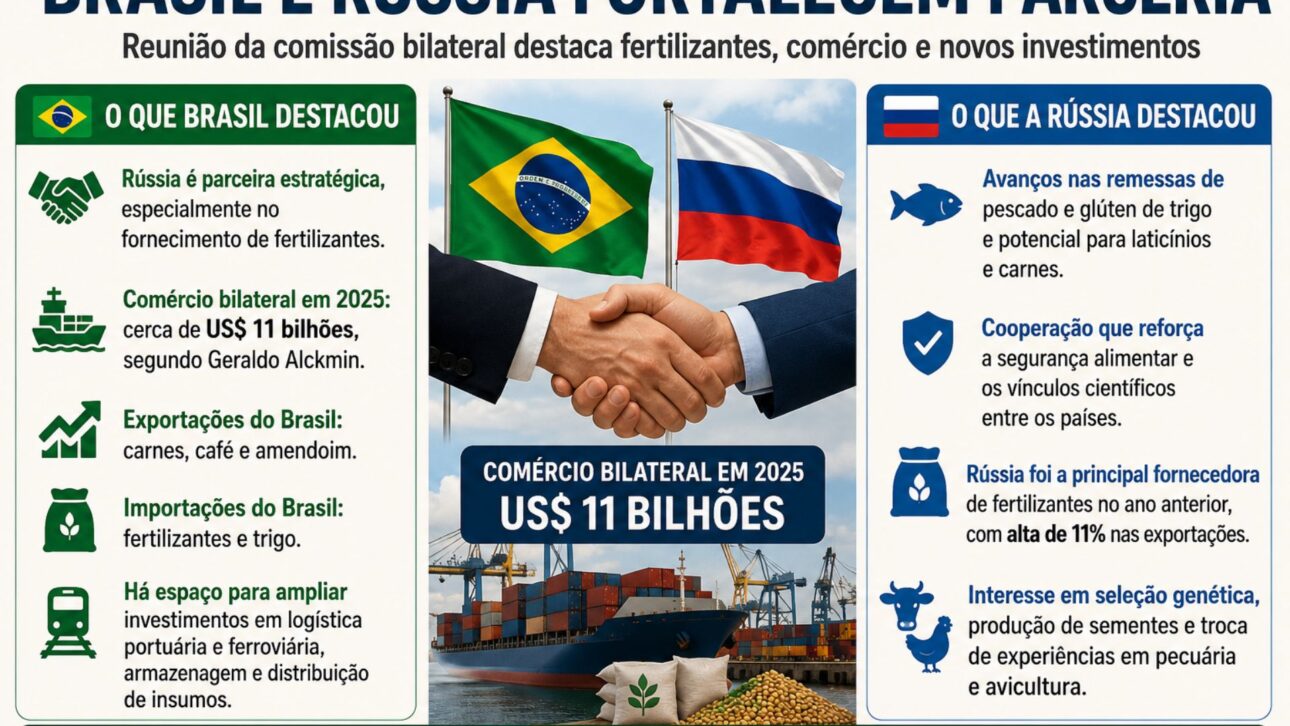
In the meeting, Minister Carlos Fávaro classified Russia as a strategic partner, especially in the supply of fertilizers. According to the Ministry of Agriculture and Livestock, Secretary Luis Rua stated that Brazil exports meat, coffee, and peanuts to the Russian market and imports fertilizers and wheat, and that there is room to expand investments in port and rail logistics, storage, and distribution of the input. Bilateral trade totaled about US$ 11 billion in 2025, a figure cited by Geraldo Alckmin at the commission’s opening.
-
Brazilian Scientists Develop World’s First Tropical Wheat for Biscuit Production, Yielding Up to 150 Bags per Hectare and Highly Resistant to Common Crop Disease

-
El Niño may boost corn and soybean harvests in Brazil and Argentina, offering potential relief for global food prices.

-
Japanese Wagyu Gains International Fame for Its Intense Marbling, Tender Cuts, and High Prices in Brazil
-
Brazilian Farmers with Basic Education Create Backyard Machines That Win National Invention Contest, Beating 242 Projects


On the Russian side, the Ministry of Agriculture of Russia, in a text reproduced by the TV BRICS network, highlighted advances in shipments of fish and wheat gluten and potential for dairy and meats. Minister Oksana Lut stated that the cooperation reinforces food security and scientific ties between the countries, and the Russian agency presented Russia as the main supplier of fertilizers in the previous year, with an 11% increase in exports. The two nations also mentioned interest in genetic selection, seed production, and exchange of experiences in livestock and poultry farming.
The Turning Point of 2025, When China Took the Lead
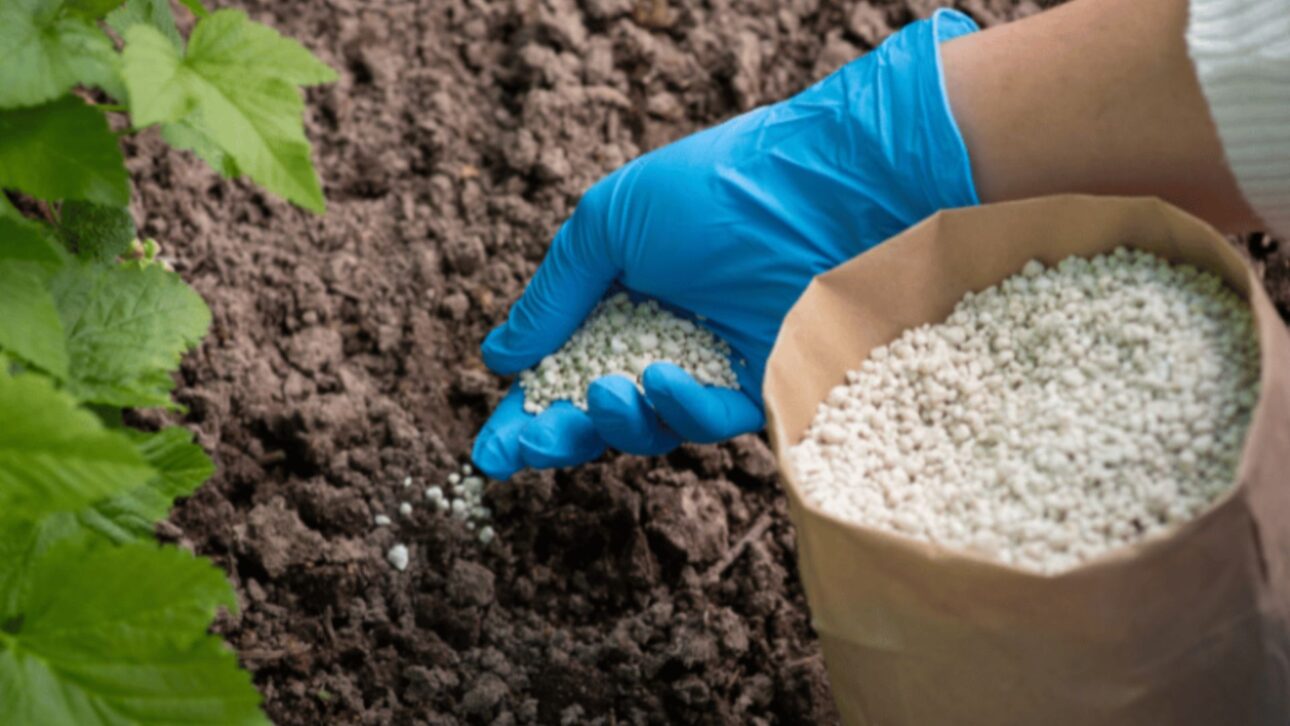
Brazilian data, however, shows a different scenario from the picture presented by Moscow. For the first time in history, China surpassed Russia and became the largest supplier of fertilizers to Brazil, according to the CNA Input Bulletin of November 2025 and data from the Foreign Trade Secretariat, Secex. Between January and October, Chinese exports to Brazil grew by about 51%, while Russian exports advanced by 5.6%.
China’s share in Brazilian fertilizer imports jumped from 5% in 2016 to 23% in 2025, according to a report by Itaú BBA. The rapid advance, concentrated in ammonium sulfate and nitrogen and phosphorus formulations, created logistical bottlenecks, with ship queues and an average wait of up to 60 days at the Port of Paranaguá. Even so, the CNA itself classifies Russia as a strategic supplier, which helps explain why Moscow is pushing not to lose ground in the Brazilian fertilizer market.
Why Brazil Depends So Much on Imported Fertilizers
External dependence is the backdrop of the entire negotiation, as Brazil imports about 85% of the fertilizers it uses, according to the National Association for Fertilizer Dissemination, ANDA. In the case of potassium, an essential input for soy, corn, and coffee, more than 90% comes from abroad. This fragility exposes agribusiness to price fluctuations and geopolitical decisions made far from the fields.
The reasons are structural and longstanding, involving the exit of large companies from the sector and the high cost of local production. Vale sold its phosphate operations to Mosaic, from the United States, in 2018, and Petrobras divested nitrogen fertilizer plants, while the high price of natural gas makes national production expensive, costing up to US$ 14 per million BTUs compared to US$ 2 to US$ 4 in the United States and Russia, according to Gazeta do Povo. The National Fertilizer Plan, launched in 2022, aims to reduce dependency from the current 85% to a range of 45% to 50% by 2050, a goal that experts consider far from being achieved.
War, sanctions, and the pressure from the United States
According to Tv Brics, The resumption of dialogue between Brazil and Russia carries the weight of recent geopolitics. The bilateral commission had been suspended in 2015 and was to be resumed in 2022, but the step was postponed by Jair Bolsonaro’s government due to Russia’s invasion of Ukraine. Since then, Western sanctions on Belarus have practically halted Brazilian purchases of fertilizers from that country, while imports from Russia continued, albeit with slower deliveries.
More recently, the threat of tariffs and secondary sanctions from the United States on those who trade with Moscow has come into play. Analysts interviewed by the press warn that this risk could affect both agribusiness and other Brazilian sectors, reinforcing the debate on sovereignty and food security. The topic is sensitive and accommodates opposing views, ranging from the defense of partner diversification to criticism of dependency on countries under geopolitical tension.
What this chess game changes for Brazilian agribusiness
In practice, diversifying suppliers increases supply resilience but does not eliminate Brazil’s vulnerability. Replacing part of the Russian dependency with Chinese inputs reduces concentration from a single source, while creating new risks related to exchange rates, logistics, and commercial tensions with China. For the producer, what ultimately matters is the price delivered to the farm and the guarantee of delivery within the planting window.
The new cooperation plan with Russia is, above all, a commercial and diplomatic move, not a solution to the structural bottleneck. As long as national fertilizer production does not advance, Brazil will remain dependent on a few suppliers and exposed to the international board. The competition between Russia and China for the Brazilian market is likely to continue, with national agribusiness at the center of the game.
The reunion between Brasília and Moscow shows that Russia remains relevant for Brazilian agribusiness, even without being the largest fertilizer supplier. China took the lead in 2025, but the 85% dependency on imported inputs keeps Brazil tied to the decisions of distant powers. Without progress in domestic production, supply security will remain a vulnerability for the country.
And you, should Brazil prioritize national fertilizer production or expand agreements with Russia and China to ensure supply? Share your opinion, respecting different views on the topic.