





 Portuguese
  English
  Spanish
 3 min of reading


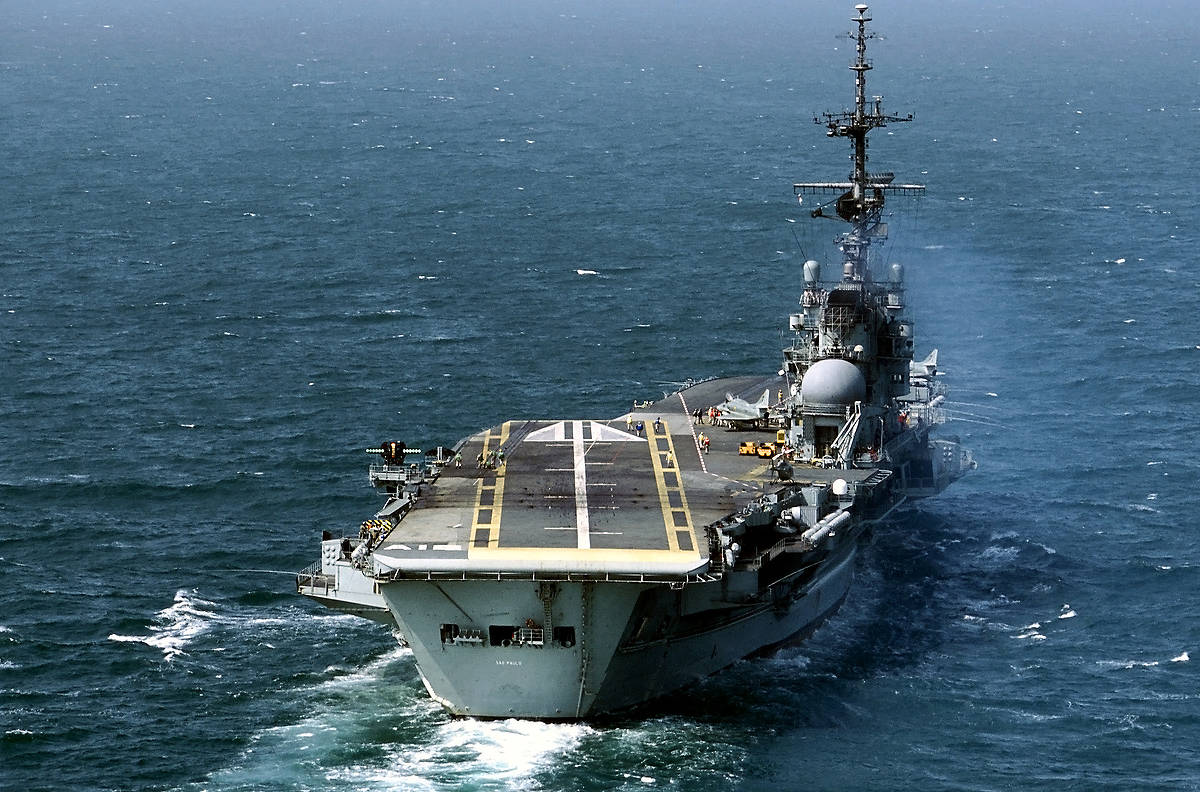
The Measure Makes It Clear That The Union Is Responsible for Ensuring Access to Maritime Ports, While Brazil Is Responsible for Any Waste That Ends Up There
To ensure that the ex-aircraft carrier NAe So Paulo, from the Brazilian Navy, can dock and undergo repairs at the Port of Suape, in Pernambuco, before being taken to the SOK shipyard in Turkey, MSK Maritime Services & Trading has filed a motion for a stay with the Federal Regional Court of the 5th Region (TRF of the 5th Region) this Sunday (18.12).
Although all vessels built until January 1, 2011, contain asbestos in their structure and have not been banned from docking in Suape, the request aims to overturn the injunction granted to the State of Pernambuco that prevents the docking/arrival of the ship. This is in direct opposition to the determination of the Brazilian Navy.
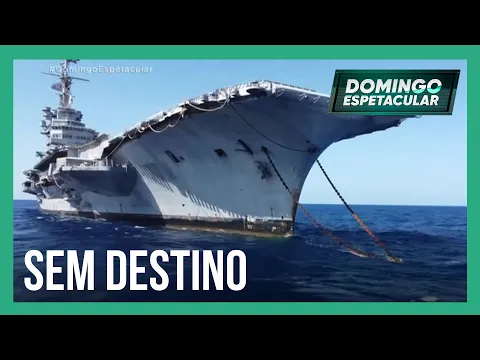

According to the company’s legal document, the Navy, and not the State of Pernambuco or the Port of Suape, has authority to decide on maritime ports and determine the vessel’s destination because of Brazil’s international legal obligation to accept the return of waste exported under the Basel Convention, which was incorporated into Brazilian law through Decree No. 875/1993.
-
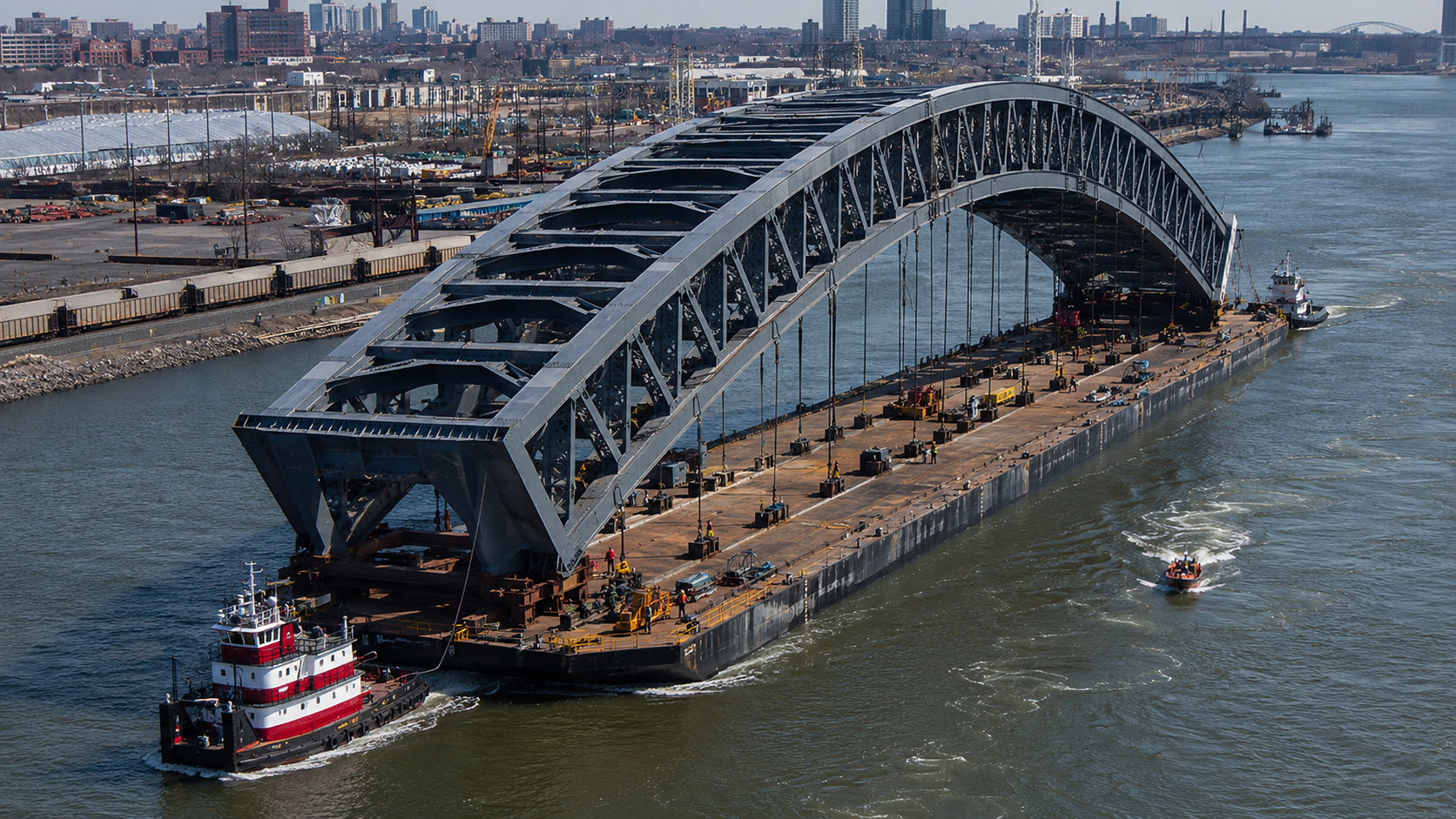
While old bridges still span railways around the world, in the United States a 2,300-ton structure was assembled off-site and transported by barge along the Hudson River to replace a century-old bridge.

-
Egypt builds a $5.5 billion monorail over Cairo with beams weighing 80 to 100 tons lifted by mobile cranes, while streets need to be blocked to erect nearly 100 km of suspended train.
-
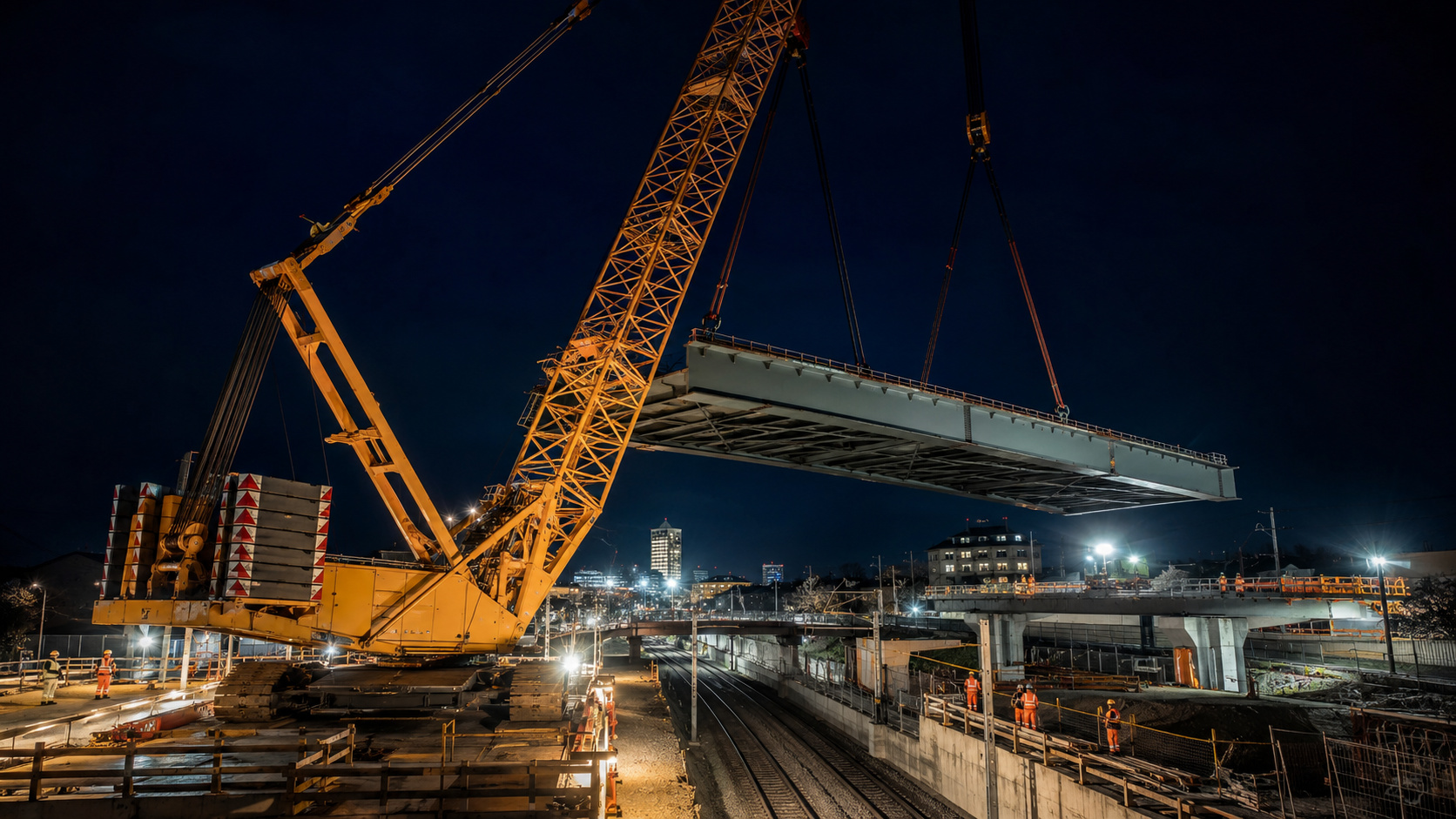
While the city slept in Switzerland, a 255-ton bridge was lifted in the dark by a 1,000-ton crane in a nighttime operation with millimeter precision.
-
Near Amsterdam, a construction project next to the A9 highway placed 19 concrete beams in sequence on the same day, with pieces up to 31.5 meters and 60.5 tons.


Ban on the Use of Asbestos in Suape
MSK argues in its request for equal treatment from the judicial authorities and the Port of Suape that the injunction, which prevents the docking of a ship that has sailed without complications in Brazilian waters for many years, is causing further harm to the environment, as it keeps a vessel in need of repairs burning fuel offshore, increasing risks to marine fauna and flora.
According to Zilan Costa e Silva, a lawyer specializing in maritime law, “if the injunction prohibiting disembarkation is maintained, it is necessary for the ban to be extended to all vessels built before 2011, with the captain of each being personally responsible for reporting the levels of asbestos present in their vessel,” under penalty of facing criminal charges for disobeying a court order. He states, “extending the obligation equally to all is a matter of equality,” since everyone is responsible for the same damage to the port and marine life.
Please Remember The Incident
The aircraft carrier NAe So Paulo served the Brazilian Navy for 20 years. In 2020, the Turkish company SK purchased the ship with the intention of dismantling and recycling it at a shipyard abroad in an eco-friendly manner. The ship had to turn back and return to Brazil when it was already en route to Turkey.
Since October 2022, when it was prohibited by the Federal Court from entering the ports of Pernambuco, the decommissioned aircraft carrier has been floating about 30 kilometers off the state coast. The ship needs to remain at the Turkish port for maintenance and periodic inspections before it can set sail again. MSK and SK are still waiting for updates from the competent authorities about where the ship will be docked.
And what exactly does Maritime Law have to say about the matter?
- Ships Built Before July 1, 2002
Ships built before July 1, 2002 may have asbestos but must be maintained in accordance with the International Convention for the Safety of Life at Sea (SOLAS) and MSC/Circ. 1045 Guidelines for the Maintenance and Monitoring of Asbestos-Containing Materials On Board.
- Vessels Built Between July 1, 2002, and January 1, 2011
In December 2000, SOLAS was revised. Asbestos-containing materials are now prohibited from being re-installed on ships according to the revised regulations described in Chapter II-1 (Construction – Structure, subdivision, and stability, machinery and electrical installations).
Sections 4-5 of the Regulations stipulate that any newly installed asbestos-containing materials used in the construction, machinery, electrical installations, or equipment of a Party to the Convention must comply with the standard.
- Ships Built After January 1, 2011
All new asbestos installations on ships were made illegal by the 2009 SOLAS Amendments (resolution MSC. 282(86)). On January 1, 2011, these rules came into effect.





Be the first to react!