Portuguese
  Spanish


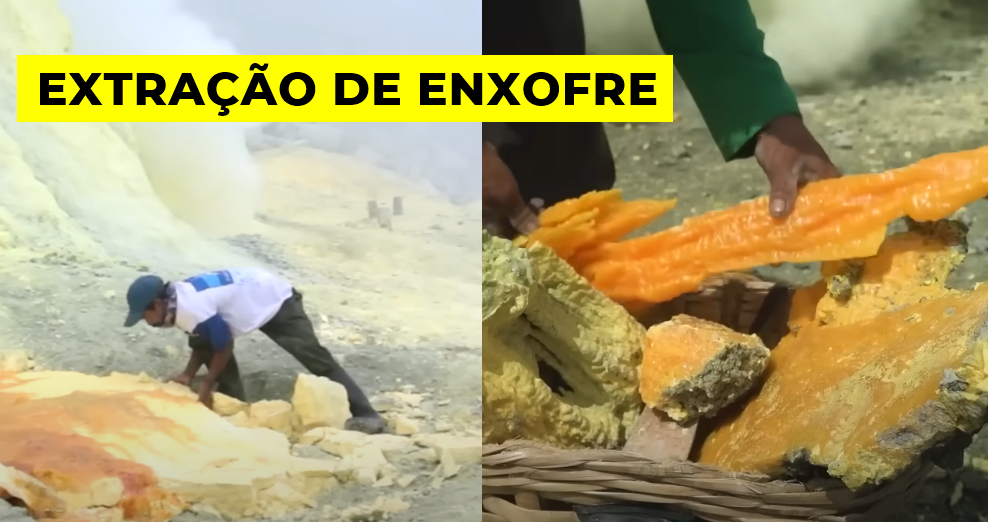

Sulfur Miners Risk Their Lives in Toxic and Unsafe Environments Without Protection Equipment to Earn Extremely Low Wages.
The environment, filled with toxic gases that sting the eyes and burn the lungs, seems uninhabitable. Yet, since 1968, sulfur miners have faced these extreme conditions daily. They descend into the crater of the active volcano to extract what is called “devil’s gold.”
This exhausting and dangerous routine has also become a controversial tourist attraction, raising questions about ethics, survival, and exploitation.
Mount Ijen houses one of the last active sulfur mines in the world. Miners begin their journey around two in the morning. They trek the slopes of nearly 2,800 meters high, under the darkness, to the crater of the volcano. There, surrounded by toxic smoke and intense heat, they extract blocks of hardened sulfur.
-
China could reduce iron ore imports from 80% to 50% of consumption by 2030, while its share in global steel production falls from 52% to 46%, in a shift that could reshape the global market, says CMRG.

-
Brazil is sitting on one of the largest lithium reserves in the world, in the Jequitinhonha Valley, but national mining has almost become an appendage of China: 97% of the metal’s export goes to a single country, which also dominates refining.
-
Iron ore falls to 762 yuan in China as real estate sales decline and steel production hits lowest level since 2018
-
Brazil has minerals, clean energy, and a waiting market, but it could miss a billion-dollar opportunity if it doesn’t speed up the race for green minerals, while the steel industry seeks to reduce emissions.


Each worker carries between 68 and 90 kilograms of sulfur in baskets, making the arduous climb twice a day. According to a report from Insider, many workers do not live beyond 50 years.
Despite the danger, sulfur mining continues to be one of the highest-paying professions in the region. The miners, respected in their communities, take pride in their physical strength and the fundamental role they play in the local economy.
Moreover, the report stated that the company pays by the weight of the load. Workers earn about 9 cents per kilogram. In two trips, workers can make up to 17 dollars a day.
The Fascination of Blue Flames and the Acid Lake
While sulfur miners face inhumane conditions, hundreds of tourists flock to Mount Ijen during the early hours. They seek to witness the natural phenomenon of the iconic blue flames, visible only at night.
Another attraction is the turquoise lake in the 800-meter crater, whose acidity is so intense that it can dissolve metal. This lake is the largest acid lake on Earth, a mesmerizing and dangerous spectacle.
However, this stunning beauty conceals serious risks. Exposure to toxic gases is harmful, both for workers and visitors.
The hostile environment turns Mount Ijen into a place where tourism and danger coexist, generating debates about the impact and responsibility of tourism in high-risk areas.


Tourism or Voyeurism?
Mount Ijen is not just a natural destination, but also a stage for a controversial tourist practice. During peak season, more than a thousand tourists a day climb the mountain.
Many ask the miners to pose for photos in exchange for small tips. This behavior has drawn criticism, labeled by some experts as “poverty tourism” — the commodification of human suffering.
Despite the criticisms, tourism has the potential to boost economic development. In East Java, the tourism industry employs about 200,000 people.
Mining tourism, like that at Mount Ijen, can have a multiplier effect on the local economy. Hotels, restaurants, shops, and transportation benefit from the influx of visitors, generating income and job opportunities.
Working Conditions and Health Risks in Sulfur Extraction
Even with the economic potential of tourism, the risks faced by miners remain alarming. Most lack protective equipment, such as masks and gloves, essential for preventing the inhalation of toxic gases. Many prefer to work without protection, as using these items can hinder task execution.
Short-term exposure to high concentrations of sulfur dioxide can be fatal. Prolonged exposure can lead to serious respiratory problems. The lack of resources for safety equipment exacerbates the situation, making the work even more dangerous.
Ethical tourism experts suggest that visitors avoid photographing miners without permission. This would help reduce the objectification of these workers and promote a more respectful and conscious interaction.
Natural Risks and Continuous Monitoring
The future of Mount Ijen as a tourist attraction and mining site is uncertain. Indonesia is located in the Ring of Fire, an area of intense seismic and volcanic activity.
This region contains 75% of the world’s active volcanoes and 90% of global earthquakes. About five million Indonesians live and work near active volcanoes, taking advantage of the fertility of the volcanic soil for agriculture.
The most significant eruption of Mount Ijen occurred in 1817. Witnesses reported dense ash that blocked the sun and acid that contaminated watersheds, causing severe damage to nearby communities. Currently, Indonesian and international scientists continuously monitor the volcano’s activity, looking for ways to mitigate future risks.
The release of the acid lake from the crater, in the event of an eruption, could have devastating consequences. The imminent danger reinforces the need for effective monitoring and preventive measures.
Latest Information
After the incident in March 2018, when Mount Ijen released toxic gases that resulted in the evacuation of hundreds and hospitalization of 30 residents, authorities temporarily banned access to the crater for tourists and miners.
However, this restriction was later lifted, allowing the resumption of sulfur mining and tourism activities in the region.
In April 2024, a 31-year-old Chinese tourist died after falling into the crater of Mount Ijen while trying to take a photograph.
This tragic incident led authorities to strengthen safety policies in the park, including stricter restrictions on access near sulfur mining areas. Reports from visitors indicate that since then, security measures have been intensified, limiting tourists’ proximity to the sulfur mines.
Currently, both sulfur mining and tourism remain active at Mount Ijen, with stricter safety protocols in place to protect workers and visitors.