






 Portuguese
  Spanish


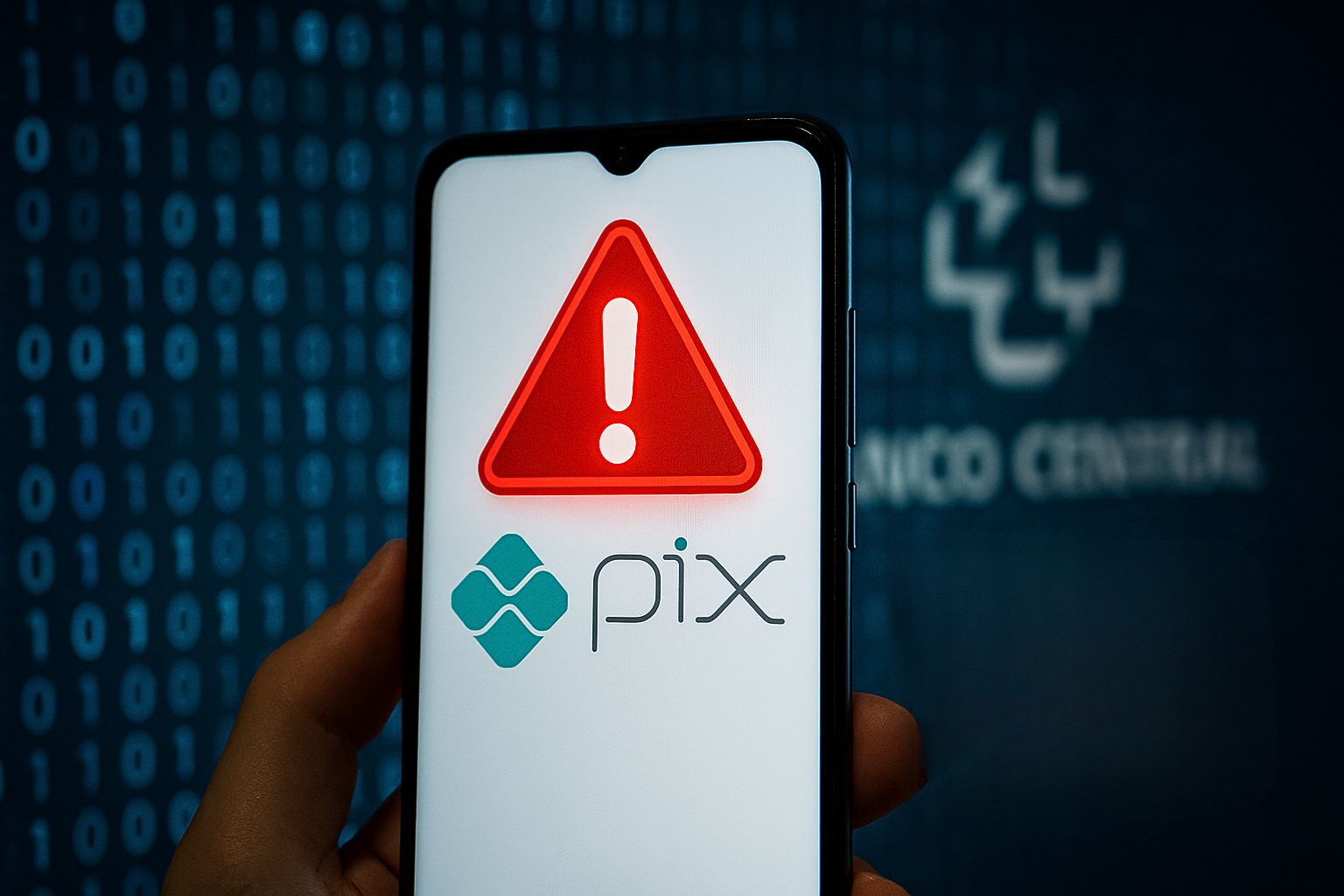


Central Bank Clarifies That Recent Failures in Pix Occurred Due to Vulnerabilities in Banks and Fintechs, Not in the Central System of the Autarchy. Security Remains Under Monitoring.
The recent failures recorded in transactions via Pix have reignited concerns about the security of instant payments in Brazil. With millions of daily operations and over 150 million registered users, any instability raises concerns. However, according to the Central Bank (BC), the problem lies not in the central system of the tool, but in the financial institutions participating in the network.
Central Bank Denies Structural Failures in Pix
During a public event, the Director of Administration of the Central Bank, Rodrigo Alves Teixeira, stated that the incidents reported in recent weeks were not caused by failures in the Pix system.
According to him, the attacks originated from security vulnerabilities in banks, fintechs, or technology providers, and not in the infrastructure maintained by the BC.
“The Pix system remains secure and stable. The observed failures came from vulnerabilities in some participants, not from the Central Bank’s structure,” Teixeira stated.
ARTICLE CONTINUES BELOWSee also
China Tightens Control on Antimony, Driving Prices from $22,000 to Nearly $40,000 per Ton as U.S. Rushes to Bolster Strategic Reserves

BlackRock Freezes $1 Billion in Brazilian Renewable Energy, Impacting 1.5 GW of Planned Projects and Highlighting Investor Concerns Over Infrastructure Bottlenecks Cutting Up to 25% of Solar and Wind Generation
Labor Shortage: Despite Record Average Salary, 90% of Brazilian Bar and Restaurant Owners Struggle to Hire Key Roles Like Sushi Chefs and Head Cooks

Supermarket Deli Counter Attendants in Brazil Could Earn Over $2,100 Monthly by 2026, Plus Benefits Package


The director explained that Pix was developed with stringent cybersecurity protocols and underwent various technical audits before being expanded for national use. “Participating institutions have specific responsibilities regarding the storage and protection of user data,” he stated.
How Security Failures Occur
According to experts, the recently reported failures involve social engineering attacks, phishing, and breaches of banks and financial intermediaries’ systems.
These vulnerabilities allow criminals to access customer information and, in some cases, carry out fraudulent transactions.
The Central Bank reinforced that the architecture of Pix follows international standards of encryption and multi-layer authentication, which prevents direct intrusions into the central system.
Therefore, the incidents are related to poor cybersecurity management by private institutions, and not to the system operated by the BC.
Shared Responsibility
Although the Central Bank operates the Pix infrastructure, the system works in a network, with more than 800 connected financial institutions. Each participant is responsible for protecting their customers’ information, which includes measures such as strong authentication, fraud detection, and constant server updates.
The BC director emphasized that the agency continuously monitors security data and can impose sanctions on institutions that present significant failures.
In parallel, the central bank has been increasing its requirements for participants, aiming to reduce risks and enhance transparency.
Reinforcement in Regulation and Next Steps
The Central Bank announced that new digital security rules are being developed for the coming months. Among the measures being considered are mandatory biometric verification protocols, unified encryption standards, and rapid response plans for incidents.
Additionally, the agency confirmed that it continues to work on Drex, the future digital real, which will be integrated into the instant payment ecosystem.
The new system, according to Teixeira, will bring additional layers of security and serve as a basis for decentralized financial transactions.
“Drex will be an extension of Pix’s innovation, featuring distributed ledger technology, maintaining a focus on security and public trust,” the director stated.
Growth and Challenges of Pix
Since its launch in 2020, Pix has revolutionized the Brazilian financial system. The service registers over 5 billion transactions per month, with transaction values exceeding R$ 2 trillion.
However, the success also attracts the attention of digital criminals seeking vulnerabilities in the authentication systems of institutions.
For experts, the popularization of Pix poses a dual challenge: ensuring security without compromising speed. Many of the most recent attacks exploit human errors, such as clicking on fake links or improperly sharing personal data.
Security Remains a Priority
Despite recent incidents, the Central Bank reinforced that Pix continues to be one of the most secure payment systems in the world, operating with availability above 99.9%.
The institution states that user trust is a priority and will continue to monitor the ecosystem to prevent new incidents.
“It is important for the public to understand: Pix is not vulnerable in itself. Security depends on the entire ecosystem — from the Central Bank, the institutions, and the users,” Teixeira concluded.
The statement from the Central Bank tries to contain the growing distrust among users and investors.
While financial institutions reinforce their defense protocols, the BC reaffirms its role as the guardian of the national digital infrastructure. Even in the face of attacks, experts agree that Pix remains solid — but its popularity requires constant attention and cooperation among all agents in the financial system.


