





 Portuguese
  English
  Spanish
  4 min of reading


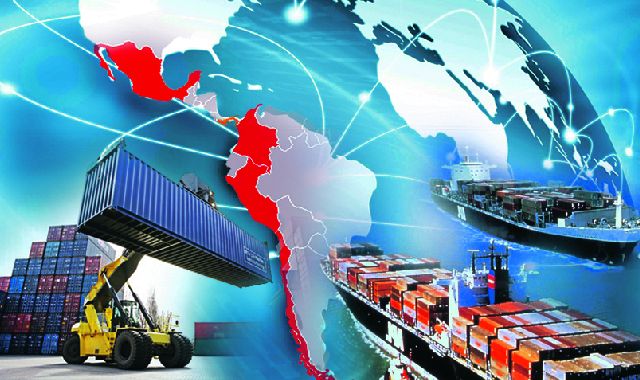
For The Exporting Businessman, It Is Important To Be Attentive To The Various Taxes, Fees And Other Costs That Must Be Paid.
Selling your products outside Brazil is a priority for many companies, especially manufacturers. However, if they decide to export to other nations, they will incur additional expenses beyond those already budgeted for manufacturing.
The business owner must initially set aside some stock for export sales. Exporters need to know how to differentiate the different types of storage, according to Helmuth Hofstatter, CEO of Logcomex, a company that provides technology for international trade through a comprehensive end-to-end platform that assists managers in planning, monitoring, and automating their global supply chain operations. The CEO warns that “storage can often be considered the villain of the business, which can surpass the cost of the items themselves.”
Stock Costs Can Be More Expensive Than The Product Itself
The product itself is the stock, or storage. So, generally speaking, the longer something is stored, the less valuable it becomes. That’s why Helmuth has the idea that “idle stocks are idle money.”
-
Bank makes a mistake and creates a transfer order of €222 million for a retiree after an employee dozes off on the keyboard.

-
Those who live in the countryside can open a franchise starting from R$ 5,000: the list includes 15 digital businesses, home office, and local services that aim to transform small towns into a path for income, proximity to customers, and less competition in the Brazilian market.

-
Rare honey from the Bahian hinterland attracts scientific attention after a study released in 2026, boosts the local economy, and may help in disease prevention.

-
Dove transforms the Brazilian bath into a prize hunt by hiding golden bars in soap packages and promising R$ 50,000 to those who find them.


However, the storage space is necessary to actually keep the item around. In application, this requires a large, well-ventilated warehouse with separate storage areas for volatile and perishable items. Although they are interconnected ideas, they serve distinct purposes.
Most terminals used for storage are privately owned, thus there is no universal standard or cost table that applies to all ports and airports, and the total storage value varies depending on the number of days the cargo is stored and the mode used.
The CIF (Cost, Insurance, and Freight) value of the products is used as the basis for calculation and is charged to the cargo owners, as bulk cargo represents more than half of the movement in ports. Therefore, it is important to verify the distribution of storage prices by state.
The CEO of Logcomex cites storage time as another factor that exporters should consider. The Free Time, the period of time in which the importer does not have to pay this price but can keep the equipment (which can vary from 5 days to 30 days), is listed in the booking. The importer should therefore negotiate with the terminal and the shipping company.
Demurrage or Overstay occurs when a tenant keeps a storage unit longer than their reservation allows. Unlike storage, demurrage is calculated daily from the day after the container arrives at the destination port until the day of its return. Prices per container can range from US$ 75 to US$ 460. When chartered, it can cost more than US$ 20,000 per day.
To reduce storage fees, the best way is to find a freight forwarder that has pre-existing agreements with certain terminals. If items shipped by sea take too long to clear customs, he says, “one solution is to relocate the shipment to a secondary zone.”
It is the importer’s responsibility to know the full scope of transportation expenses before the exporter ships the goods. Furthermore, because the shipment cannot be processed until the taxes are paid. Five different types of import taxes are charged by the federal government: There is the ICMS at the state level, the Siscomex Usage Fee, the Freight Surcharge for Merchant Marine Renewal (applied only to sea transportation), and the Import Price Index (IPI), Product Information System (PIS), Cooperative Financial Information System (COFINS), and Transportation Usage Service (TUS).
Transport Beyond National Borders
One of the most important aspects of any import or export transaction is the cost of international freight, so any foreign trade specialist should be familiar with this value. When talking about maritime freight, the primary means of transport in Brazil, Hofstatter argues that the situation gains even more relevance.
Executives estimate that air freight can be up to 10 times more expensive than maritime freight. However, in maritime cargo transport, it may be necessary to have a delivery time exceeding two months, depending on the country of origin.
Freight (maritime freight), fuel (bunker), and peak season prices are all components of international maritime freight (peak season). Helmuth warns: “Freight has exceeded US$ 14,000 due to the maritime transport issue and the coronavirus outbreak.”
Learn more about Logcomex solutions for calculating maritime freight here.






Be the first to react!