






 Portuguese
  Spanish
 3 min of reading
  1 comment





Challenges Faced by Offshore Workers in Obtaining the T-HUET Course Required by OPITO and Proposed Solutions
The pursuit of qualification in the offshore sector, especially regarding the T-HUET course (Helicopter Underwater Escape Training for Tropical Waters), has become a significant concern for professionals wishing to enter or return to the field, particularly in the oil and gas industry led by Petrobras in Brazil and other companies you can find the list here.
The requirement for this course by OPITO (Offshore Petroleum Industry Training Organisation) has highlighted the difficulties faced by thousands of workers, particularly those currently unemployed and those from distant states of Rio de Janeiro, such as the Northeast.
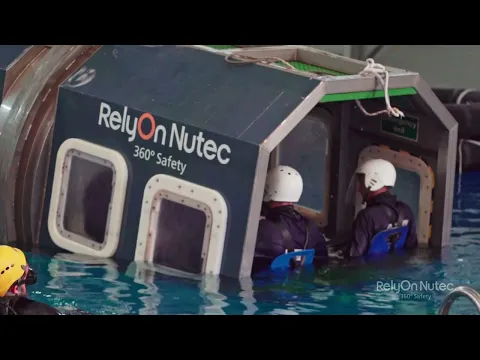
For those who do not know or have never seen what this type of training is like, RelyOn Nutec Brazil has made a training video available. Check it out below:
-
Oil production grows in Rio, but reserve replacement raises a warning sign

-
Petrobras is expected to complete the drilling of the Morpho well in the Foz do Amazonas in August 2026, the first well in the Equatorial Margin, an oil frontier that the ANP estimates at more than 30 billion barrels and could redraw the map of Brazil.

-
Oil returns to the center of concerns with tension between the US and Iran

-
IEA reduces forecast for global oil demand in 2026 after impacts of the Middle East crisis




Associated Costs and Impacts for Workers
The obstacles are not only academic or professional but also financial. The costs to obtain the T-HUET certificate include, but are not limited to, airfare, lodging, meals, and the course fee itself.
These accumulated costs can be prohibitive for many wishing to work in Petrobras’s offshore sector, especially when considering an unemployed worker trying to return to the market, despite the city having tried to offer free courses some time ago to minimize this process. For example, a worker from the Northeast faces significant expenses just to get to the course location, in addition to lodging and meals during their stay, not to mention the cost of the course itself.
Monopoly and the Need for Collective Action
The perception of a monopoly in the offering of the T-HUET course is one of the main concerns. This not only limits the options available for workers but also contributes to keeping costs high. The call to action involves not only the affected workers but also companies, unions, and other stakeholders in the sector. Mobilization through social media and other communication channels is seen as a vital strategy to tackle this situation.
Call for Structural Changes
A proposed solution is to increase the number of institutions certified by OPITO to offer the T-HUET course. This would not only increase geographical accessibility but could also introduce healthy competition that would tend to reduce costs for workers. Decentralizing training would allow professionals from different regions of Brazil to have easier access and at lower costs, mitigating the financial and logistical barriers currently faced.
The issue of access to the T-HUET course in Brazil is complex and involves various factors that go beyond availability and cost. It is crucial to have a collaborative approach involving all stakeholders, including OPITO, Petrobras, training companies, workers, and their representatives.
The goal should be to facilitate access to the necessary training to ensure not only the safety of offshore workers but also the sustainability and competitiveness of the Brazilian oil and gas sector. Through joint efforts and a shared willingness to address these issues, it is possible to find solutions that benefit all involved and keep the Brazilian oil and gas industry strong and resilient.








É a máfia do Lula 🦑