






 Portuguese
  Spanish


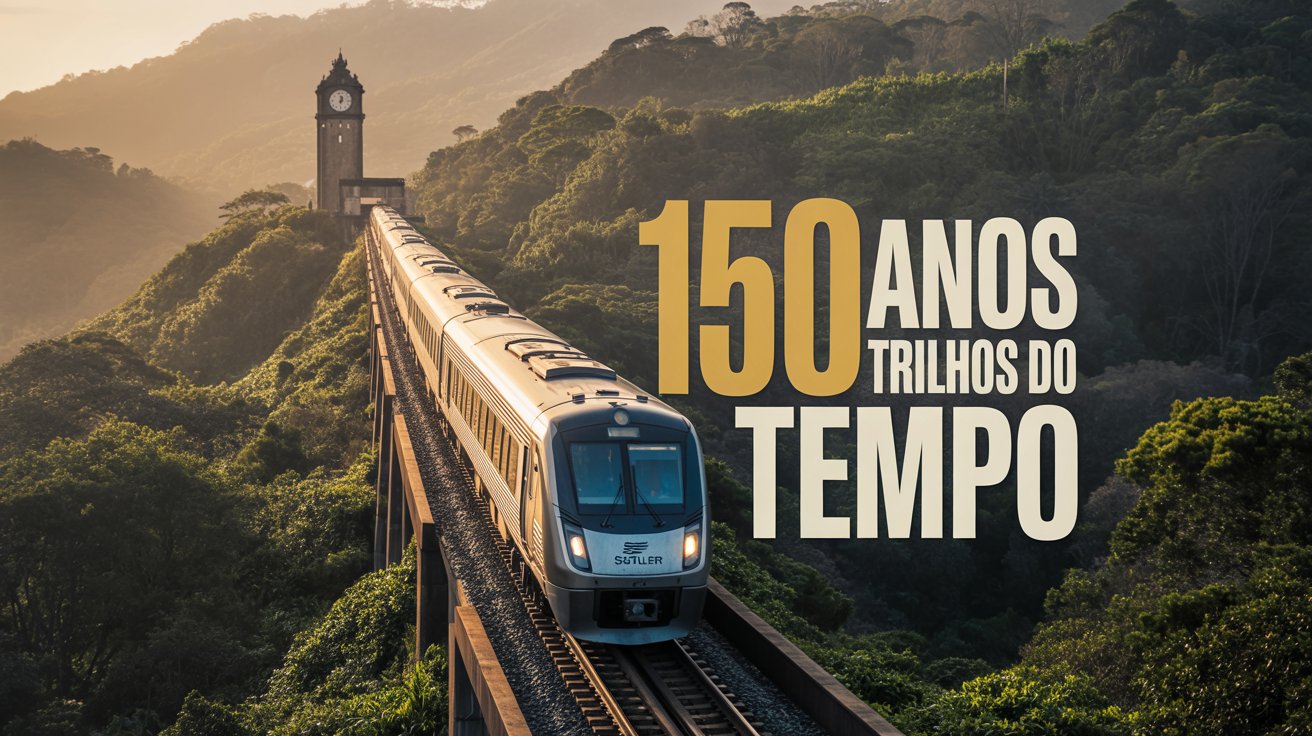


The First Paulista Railway, the São Paulo Railway, Completes Over 150 Years of Continuous Operation, Maintains the Rack-and-Pinion Traction System, and Has Received Millions in Modernization Investments, Preserving Logistic Importance and Historical Value in the State of São Paulo.
The São Paulo Railway, inaugurated in 1867, was the first railway in the state and has been operating continuously since the 19th century, connecting the interior of São Paulo to the Port of Santos over 139 km of extension.
Throughout its history, the Santos–Jundiaí axis supported coffee exports and later solidified as one of the busiest cargo corridors in the country, now under the management of a cargo concessionaire.
From Coffee to Strategic Logistics Corridor
Created with the mission of reducing transport costs and integrating agricultural production with the coast, the line delivered results aligned with the promise of then-President of the Province, José Antônio Saraiva.
-
Esperanza’s Bamboo Barrier in Oaxaca Redirects River and Reduces Erosion by 85% in Five Years

-
Family Builds Homemade Wind Turbine to Power Off-Grid Home, Video Reaches 555,000 Views on Ngô Thị Huyền’s Channel
-
Indian Brand Creates Sneakers from Recycled PET Bottles and Discarded Tires, Repurposing Over 1 Million Bottles and Raising $4 Million for Expansion

-
Brazilian Innovator Uses 3D-Printed Device to Cool Two Rooms with One Air Conditioner




The stations attracted commerce, industry, and labor, boosting neighborhoods and entire municipalities around the tracks.
As the decades passed, its vocation changed in profile, but not in relevance: the railway remained essential for the flow of supplies and industrial goods, preserving a central role in São Paulo’s logistics.
Historical Route and Current Operation
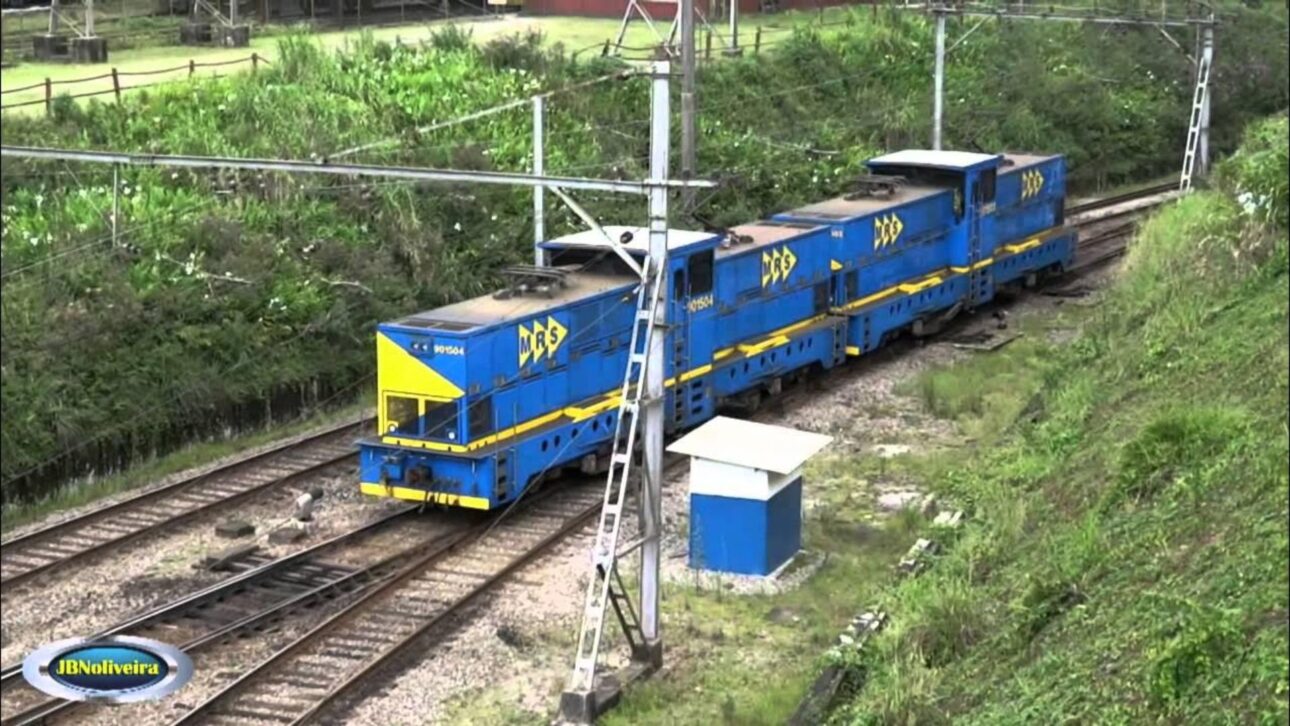
The trunk line between Santos and Jundiaí crosses the capital and ascends the Serra do Mar through a stretch of singular engineering.
After the end of the British concession post-war, the line became known as the Santos–Jundiaí Railway, and since the privatization of the federal system in the 1990s, the corridor has been operated for cargo by a private operator.
The operational importance of this axis is due both to its service to the Port of Santos and to its junction with other networks, redistributing ores, grains, steel products, and containers.
The Challenge of the Mountains and Rack-and-Pinion Traction
The most critical point of the route is concentrated over approximately eight kilometers in the Serra do Mar, between Raiz da Serra and Paranapiacaba, where the incline reaches 10%.
To overcome this gradient, the railway uses the rack-and-pinion/adhesion system, in which a cogwheel on the locomotive engages a third rail also equipped with teeth, ensuring traction and braking in extreme conditions.
This solution, conceived in the 19th century and modernized over time, remains a key component of the daily operation for the ascent and descent of loaded trains.
Investments in Modernization and Capacity
In recent years, around R$ 445 million have been invested in modernizing the Paulista corridor, focusing on the bottleneck at the mountains and access to the port.
A significant portion of this amount included the purchase of seven Stadler locomotives, custom-made for the line’s gradient profile, in addition to duplicate track works, yard improvements, bridges, and signaling and operational systems.
These integrated interventions have increased the capacity and reliability of train flows, directly impacting the supply to terminals and industries.
Power and Engineering in Ramp Operation
Designed to operate at 3 kV DC and in intensive mode, the Swiss locomotives have a total power of 5 MW and combine adhesion traction and rack-and-pinion.
Highlighted gains include the increase in tonnage per trip, higher speed on the incline, and better performance in regenerative braking, aspects that help optimize the occupancy of the track and reduce specific consumption under equivalent conditions.
In practice, the fleet replaced older machines that no longer met the requirements for volume and availability on the stretch.
Operational Effect and Greater Predictability
In addition to the reinforcement of rolling stock, the reengineering of processes and the improvement of control systems have helped reduce cycle times and improve the predictability of movement windows.
The improvement is particularly noticeable in the mountains, where train formation, coordination with terminals, and track occupancy management require millimeter synchronization.
The combination of greater power, adhesion guaranteed by the rack-and-pinion, and fine-tuning of scheduling makes the flow less susceptible to unplanned stops, allowing better use of windows for railway access to Santos.
Historical Heritage and Preservation
Although the economic vocation is the engine of the operation, the corridor holds recognized historical value.
In 2004, the Clock Tower of Paranapiacaba underwent restoration funded by the concessionaire, a project that reinforced the preservation of the railway heritage of the English village — a symbol of the railway’s implementation in the 19th century.
Over the last few years, new conservation projects have been announced for heritage sites linked to the old system.
Tradition, Engineering, and the Future of the São Paulo Railway
Even after more than a century and a half, the old São Paulo Railway retains attributes that explain its operational longevity.
The route connects industrial areas and consumption centers to an internationally reachable port, with sufficient railroad capillarity to articulate flows from various origins.
The technological curve of rolling stock and control systems adds resilience to an infrastructure that has never been trivial due to geography.
Overall, it is an asset that combines tradition, specific engineering, and continuous investment, maintaining its status among the most relevant logistics structures in the country.
Next Steps and Operational Challenges
The improvement agenda points to the maintenance of the permanent way, modernization of systems, and punctual capacity adjustments for port access.
Meanwhile, the rack-and-pinion operation continues to require specialized teams, rigorous maintenance programs, and traffic planning compatible with the ramp profile.
The sustainable performance of the corridor depends on preserving this balance: high standard tracks, adequate rolling stock, and security procedures adjusted to the terrain, especially in the Serra do Mar.
With technology on its side and history as a reference, how far can the oldest railway in São Paulo advance in efficiency without compromising the unique characteristics that have allowed it to remain active to this day?




Reportagem totalmente tendenciosa, não conta a verdadeira história da ferrovia, como contam parece que sempre foi cremalheira e no início não era, não podemos esquecer do sistema funicular, que não existe nada igual no mundo e é tratado como lixo
Pena que não há investimento no valor histórico. As máquinas do antigo funicular, que poderia ter um potencial turístico histórico, está abandonado há décadas, se deteriorando no meio da mata atlântica. Máquinas incríveis que poderia ser um museu a céu aberto.
Amei o informativo.
Aliás…
São Paulo é máquina e…
o resto é vagão.
Quem puxa TD é SÃO PAULO!!!
Sem novidades, São Paulo sendo São Paulo.Sem ele o Brasil estaria a deriva.