Portuguese
  Spanish


Fifteen Brazilian Marines from the 2nd Marine Infantry Battalion, the Humaitá Battalion, spent 25 days aboard the amphibious helicopter carrier Dixmude of the French National Navy during Operation Caraïbes, held between May 12 and 22 on the islands of Martinique, Marie-Galante, and Guadeloupe in the Caribbean. According to information from the Navy News Agency, the Brazilian Marines participated in training for weapon handling, rifle shooting, utility swimming with obstacles, marches, and joint amphibious landing with troops from the 3rd Marine Infantry Regiment of France.
Fifteen Brazilian Marines have just completed a 25-day operation on three Caribbean islands alongside troops from the French National Navy, aboard an amphibious helicopter carrier that serves as a floating base for combat and landing operations. The Brazilian Marines from the Humaitá Battalion worked together with the Embarked Tactical Group of the 3rd Marine Infantry Regiment, training from weapon handling and rifle shooting to utility swimming with obstacles, amphibious landing, and attacking fortified positions on the islands of Martinique, Marie-Galante, and Guadeloupe.
The operation, named Caraïbes, went beyond physical exercises. The Brazilian Marines also participated in presentations about the structure, equipment, and operational capabilities of the French Embarked Tactical Group, conducted by the liaison officer and the commander of the Brazilian platoon. Corvette Captain Bruno Dutra, head of the Brazilian detachment, assessed that “the participation allowed familiarization with French doctrine and tactics and contributed to the integration between the Forces, increasing the interoperability capacity between Brazil and France”.
What the Brazilian Marines trained in the Caribbean
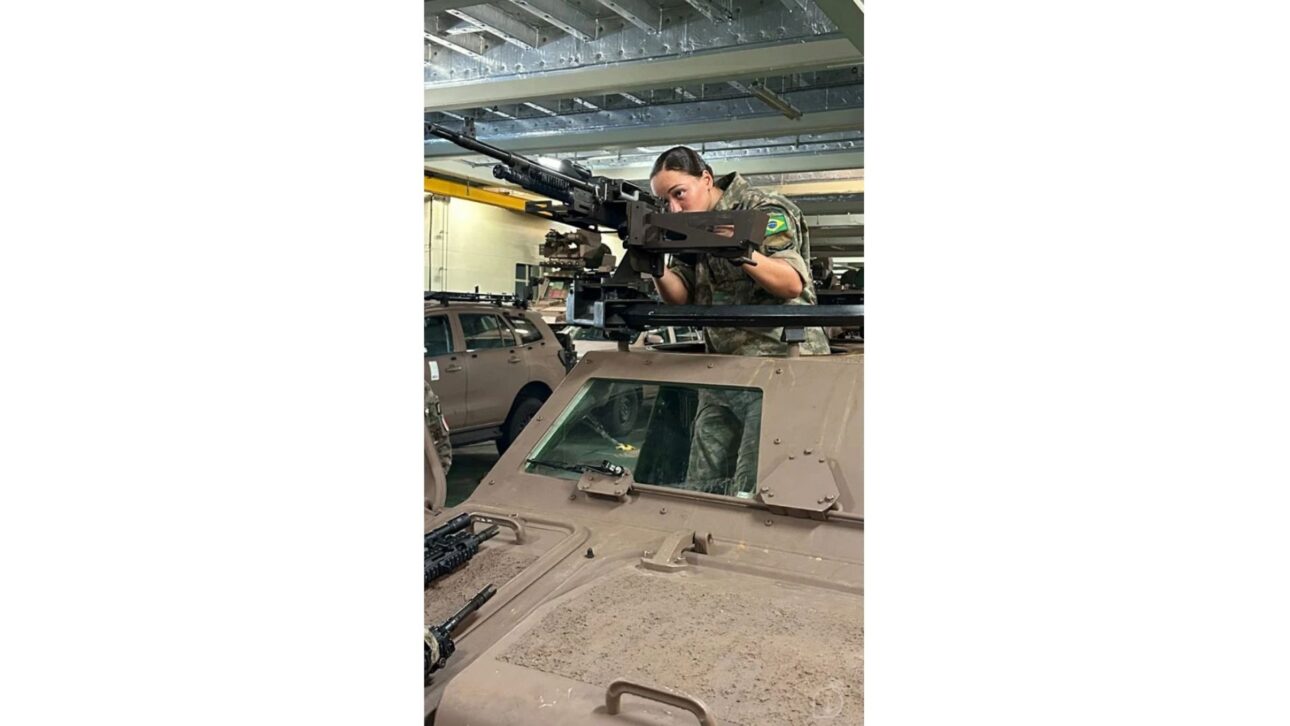
The training program included activities that simulate real amphibious combat scenarios. The Brazilian naval fusiliers conducted individual and collective weapon handling, rifle shooting sessions, utility swimming with obstacles simulating crossings in a hostile aquatic environment, and marches in tropical terrain.
-
U.S. Military Intervention Risk in Brazil Raises Alarm, Highlights National Sovereignty Amid Tensions Over Washington’s Terrorist Designation of PCC and Comando Vermelho

-
Brazilian Air Force’s Sole KC-30 Aircraft Completes Strategic Mission to Spain for 105mm Anti-Tank Ammunition for Leopard 1A5 Tanks

-
Brazilian Air Force Seeks to Acquire More Gripen Fighter Jets
-
U.S. Air Force Launches Air-to-Air Missile Project with Range of Up to 1,850 km for Indo-Pacific Operations



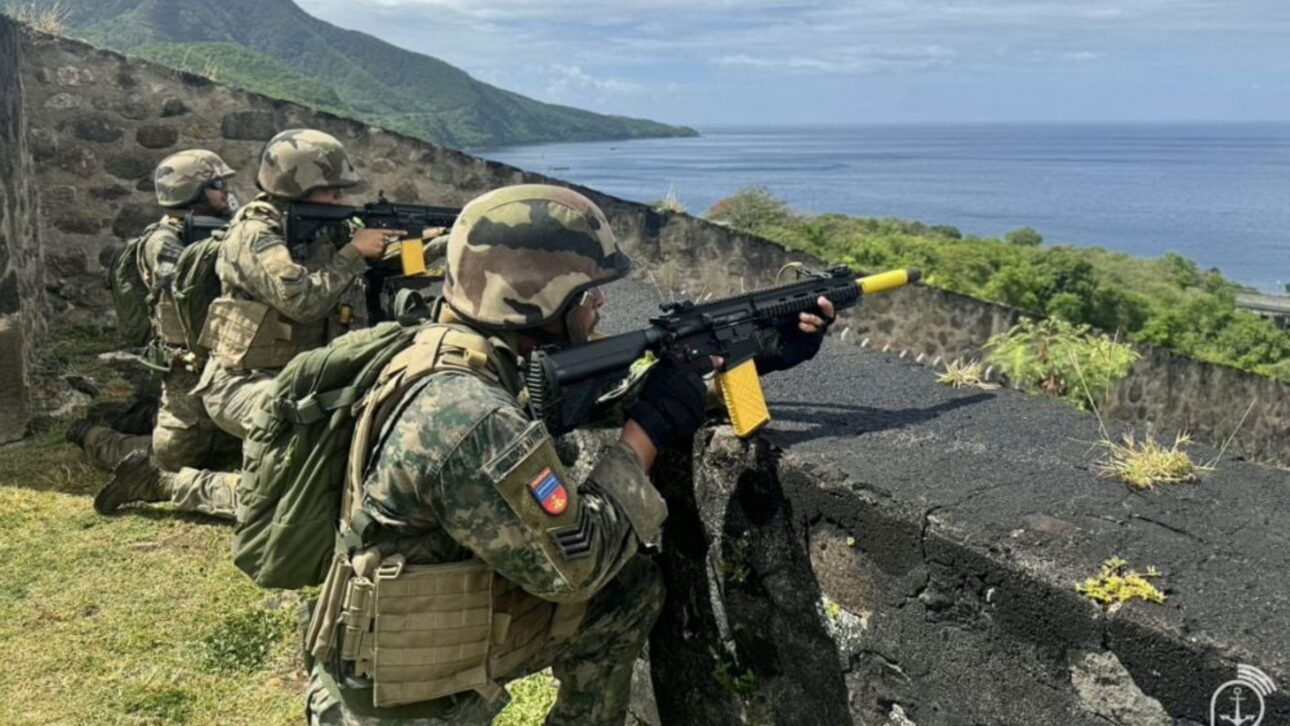
The highlight of the operation was a joint amphibious landing with French troops to execute a complete simulated operation. The Brazilian naval fusiliers departed from the helicopter carrier Dixmude in assault boats, reached the beach, and executed maneuvers of land progression and attack on fortified positions, all coordinated with the French troops who are already proficient in this type of operation in the Caribbean islands.
The helicopter carrier Dixmude and the floating base
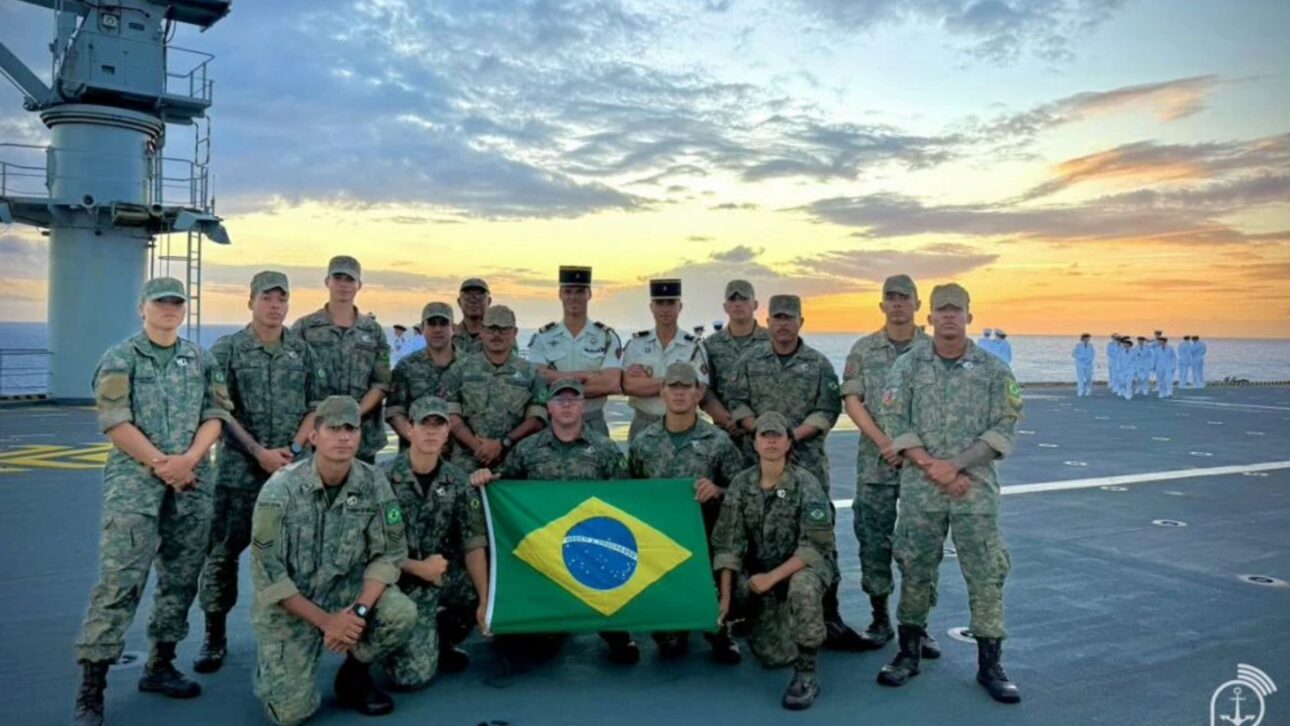
The Dixmude is an amphibious assault ship of the Mistral class, capable of transporting troops, helicopters, and armored vehicles. The Brazilian naval fusiliers remained embarked on this ship for 25 days, experiencing the operational routine of a helicopter carrier that functions as an advanced base for force projection on any coastline.
For Brazilian marines, the experience of boarding a foreign ship for an extended period is rare and valuable. The routine on board includes planning operations, equipment maintenance, physical conditioning, and integration with crew members of different cultures and languages. The Humaitá Battalion, based in Rio de Janeiro, usually operates from Brazilian ships, and the opportunity to board the Dixmude expanded the understanding of doctrines and procedures that Brazil does not routinely practice.
The three islands where Brazilian marines operated
The activities took place in Martinique, Marie-Galante, and Guadeloupe, French overseas territories in the Caribbean. Martinique, with its capital in Fort-de-France, served as the main base of the operation and starting point for the movements to neighboring islands, where training scenarios were set up.
The choice of three different islands allowed Brazilian marines to train in varied terrains, from landing beaches to dense vegetation areas inland. For France, keeping troops ready to operate in the Caribbean is a permanent necessity, as the overseas territories require defense capability and response to natural disasters. For Brazil, which shares a maritime border with French Guiana, interoperability with the French Armed Forces has direct strategic relevance.
What Operation Caraïbes means for Brazil
The participation of Brazilian marines in operations with NATO countries’ navies reinforces the joint action capability that Brazil can offer in international missions. The exchange of knowledge about doctrine, tactics, and equipment is the main operational gain, because it allows the Brazilian Marine Corps to incorporate practices that have been tested in real scenarios by forces with recent combat experience.
Soldier Helena Marins, from the Humaitá Battalion, was one of the participants in the operation, demonstrating the growing female presence in the combat troops of the Brazilian Navy. The exercise strengthens the ties between two navies that share not only a border but also strategic interests in the South Atlantic and the Caribbean, regions where the naval presence of both countries is essential for maritime security and combating drug trafficking.
Did you know that Brazilian marines trained amphibious landing in the Caribbean alongside the French? What impresses you the most: the 25 days on board, the attack on fortified positions, or the joint amphibious landing? Tell us in the comments.