





 Portuguese
  English
  Spanish
  4 min of reading
  0 comments


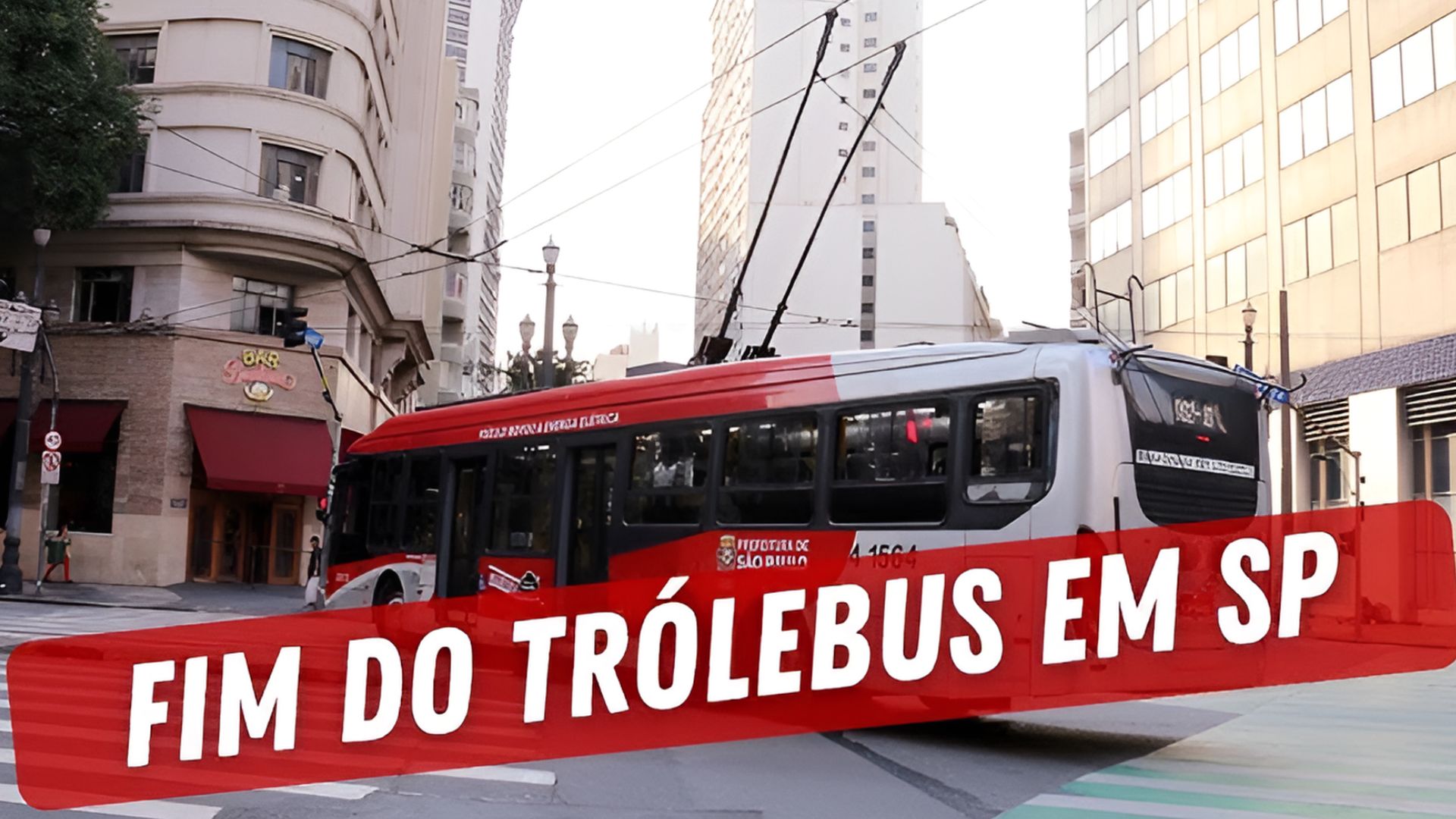
Electric Trolleybus Gains International Spotlight While Facing Uncertainties and Debates About Its Future in São Paulo, Revealing Environmental Impacts, Technological Advances, and Success Stories Around the World.
The future of the trolleybus system in São Paulo remains uncertain after statements from Mayor Ricardo Nunes, who characterized the modal as “old, outdated, and problematic.”
Despite the possibility of deactivation, the international scene shows that the trolleybus still plays a relevant role in urban mobility policies, being used today in over 40 countries and around 260 cities worldwide, as highlighted in the GLOBAL TROLLEYBUS FIGURES 2025 report from the International Association of Public Transport (UITP).
History of the Trolleybus in São Paulo
The journey of the trolleybus in São Paulo officially began on April 22, 1949, with the creation of the Municipal Collective Transport Company (CMTC) and the operation of line 16 Machado de Assis, initially with imported vehicles.
-
São Paulo hides beneath the asphalt a project worth R$ 1.1 billion with 44.6 km of underground cables, energy from Itaipu, and a silent mission: to reinforce the ABC region of São Paulo.

-
Refrigeration technicians become a rare commodity in Brazil: the lack of qualified labor is already affecting air conditioning, supermarkets, hospitals, industries, and data centers, while salaries exceed R$ 4,400 in CLT positions, and the billion-dollar sector rushes to train new professionals.

-
After spending more than $4 million on a plot of land that remained vacant for over a decade, Dallas approved a village with 50 micro-homes for homeless veterans, rent-free housing, a community center, and support next to a veterans’ hospital.
-
Brazilian Army had R$ 1.5 billion planned for operations, but a Defense budget freeze halted actions at the borders against drugs, illegal mining, and factions.



Since then, the modal has undergone transformations marked by technological advances, periods of expansion, and moments of crisis.
In 1958, the need for maintenance led to the development of the first national trolleybus, with about 85% of its components produced in Brazil, marking the beginning of the nationalization of urban electric transport.
In the 1960s, high costs led CMTC to manufacture its own vehicles, a solution that allowed the system to continue operating.
In the 1970s, the impact of the oil crisis prompted the launch of the Sistran Plan, a project for new exclusive trolleybus corridors.
However, of the four planned phases, only two were completed.
The most significant growth occurred in the 1980s, with the inauguration of the Avenida Paes de Barros corridor in Mooca, and later the 9 de Julho corridor, connecting the Santo Amaro Terminal to Praça da Bandeira.
In 1994, the foundation of São Paulo Transporte S.A. (SPTrans) split the operation among three companies, which invested in fleet renewal and line modernization.
In 1997, with the implementation of the BRT (Bus Rapid Transit) system, it was expected that bi-articulated trolleybuses would be used in exclusive corridors, but the final choice fell on diesel and hybrid buses, resulting in the Expresso Tiradentes.
The peak of the system was recorded in the year 2000, when the city had 555 trolleybuses distributed across 26 lines, transporting on average 154,000 passengers per day.
However, starting in 2002, the modal began to shrink: lines in the north and south zones were gradually deactivated, and several vehicles were sold as scrap, even with a few years of use.
The restructuring of the system only occurred in 2007, after the celebration of an emergency contract that allowed for fleet renewal and maintenance of operations.
Currently, according to SPTrans data, 201 trolleybuses operate on nine lines concentrated in central, southern, and eastern regions of the São Paulo metropolitan area.
Although reduced, the modal still represents an important alternative for clean transportation in the city.
Trolleybus in the International Scenario
Contrary to the argument of obsolescence, trolleybus systems continue to operate and expand in cities like Vancouver (Canada), San Francisco, Philadelphia, Dayton, and Seattle (United States), Milan and Cagliari (Italy), Sofia (Bulgaria), Shanghai and Guangzhou (China), as well as dozens of other urban centers.
Brazil, which once operated 14 trolleybus systems, now only keeps the São Paulo network (capital and ABD corridor) active, while the Santos system has remained dormant since the COVID-19 pandemic.
Environmental Impacts and Benefits of the Trolleybus
The discussion about the future of the trolleybus in São Paulo involves environmental, social, and economic issues.
According to SPTrans, the operation of the 201 trolleybuses avoids the emission of approximately 14,300 tons of carbon dioxide (CO2), 38 tons of nitrogen oxides (NOx), and 390 kilograms of particulate matter annually, contributing to the reduction of air pollution.
These outcomes gain relevance in light of global commitments to combat climate change and the increasing demand for electric mobility solutions.
Modernization and Future of the System
The modernization of the trolleybus system is pointed out by experts as an alternative to align São Paulo with international trends in sustainable transportation.
Ongoing projects foresee the implementation of fully electric green corridors and the adoption of vehicles with IMC (In Motion Charging) technology, allowing battery recharging during the journey while connected to the overhead wire, reducing the need for cables and chargers in garages.
The integration between trolleybuses, electric buses, Light Rail Vehicles (LRVs), and other modes is seen as an efficient strategy to promote greater sustainability and efficiency in urban mobility.
The deactivation of the system, advocated by the current municipal administration, could mean not only the loss of a consolidated transport mode but also the waste of public investments made over more than 76 years.
The removal of trolleybuses would position São Paulo against the trend of cities that embrace electromobility as a response to environmental challenges and the need to offer clean alternatives for public transportation.
Trolleybus and Global Trends in Electric Mobility
Amid the debate over the end of the trolleybus, the topic is gaining increasing relevance as it involves sustainability, innovation, and commitment to future generations.
The dilemma of whether to maintain the modal in operation remains open, especially in the global context where cities from different continents are betting on the trolleybus as an essential part of 21st-century urban mobility.
In this scenario, what paths should São Paulo choose to ensure a more sustainable, efficient mobility aligned with international trends?


-

1 person reacted to this.