Portuguese
  Spanish


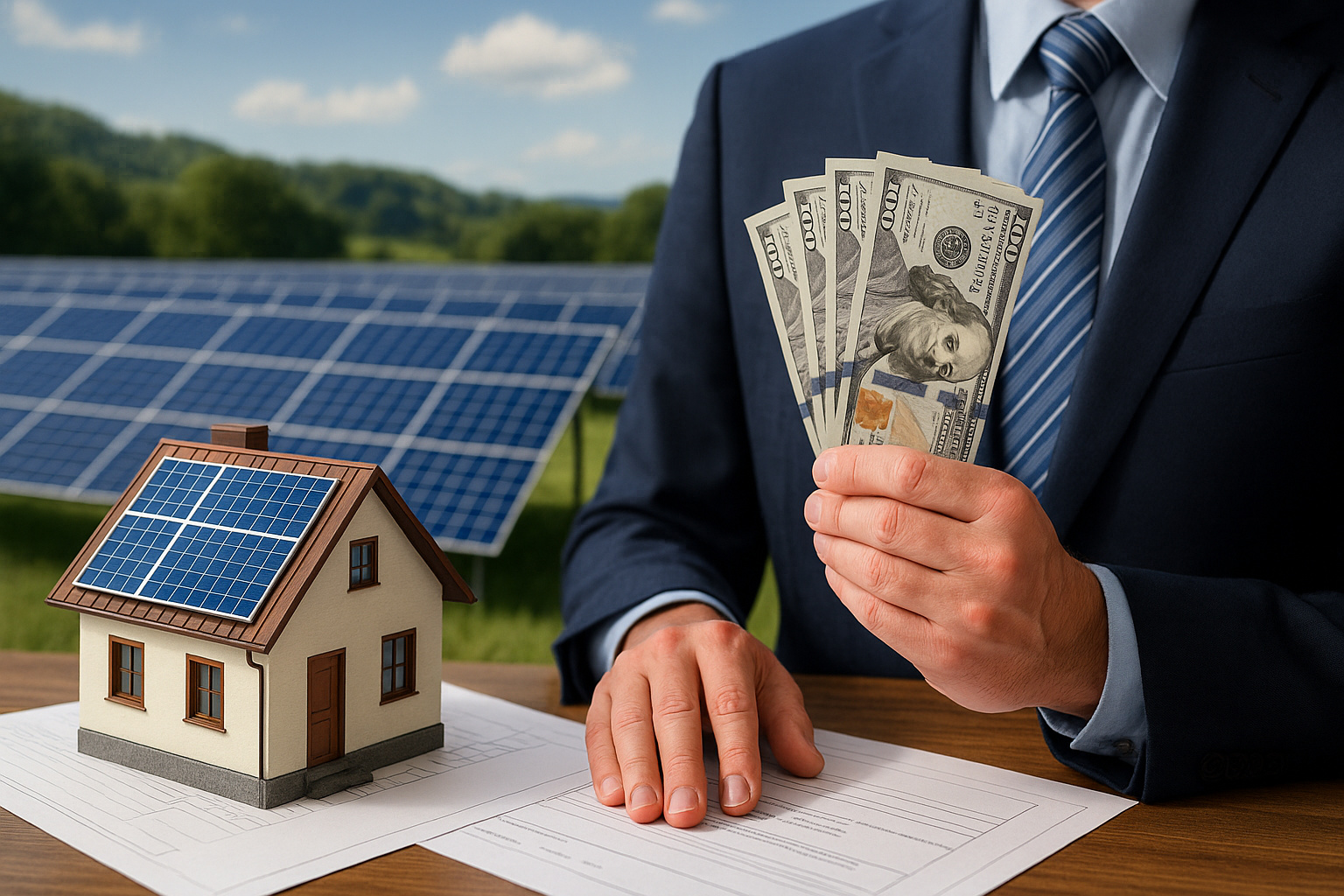

Discover How Solar Energy Financing Can Enable Your Photovoltaic System, Reduce Bills, and Ensure Energy Independence with Savings and Sustainability.
Currently, the search for sustainable alternatives for energy generation is growing significantly in recent decades.
Among them, solar energy stands out as one of the most promising sources, both from an environmental and economic perspective.
However, despite its numerous advantages, many people still face an initial obstacle: the cost of investment.
-
Fired during apartheid and with a little borrowed money, an electrician started with a borrowed truck and transformed electrical services into a group connected to energy, real estate, and infrastructure in South Africa.

-
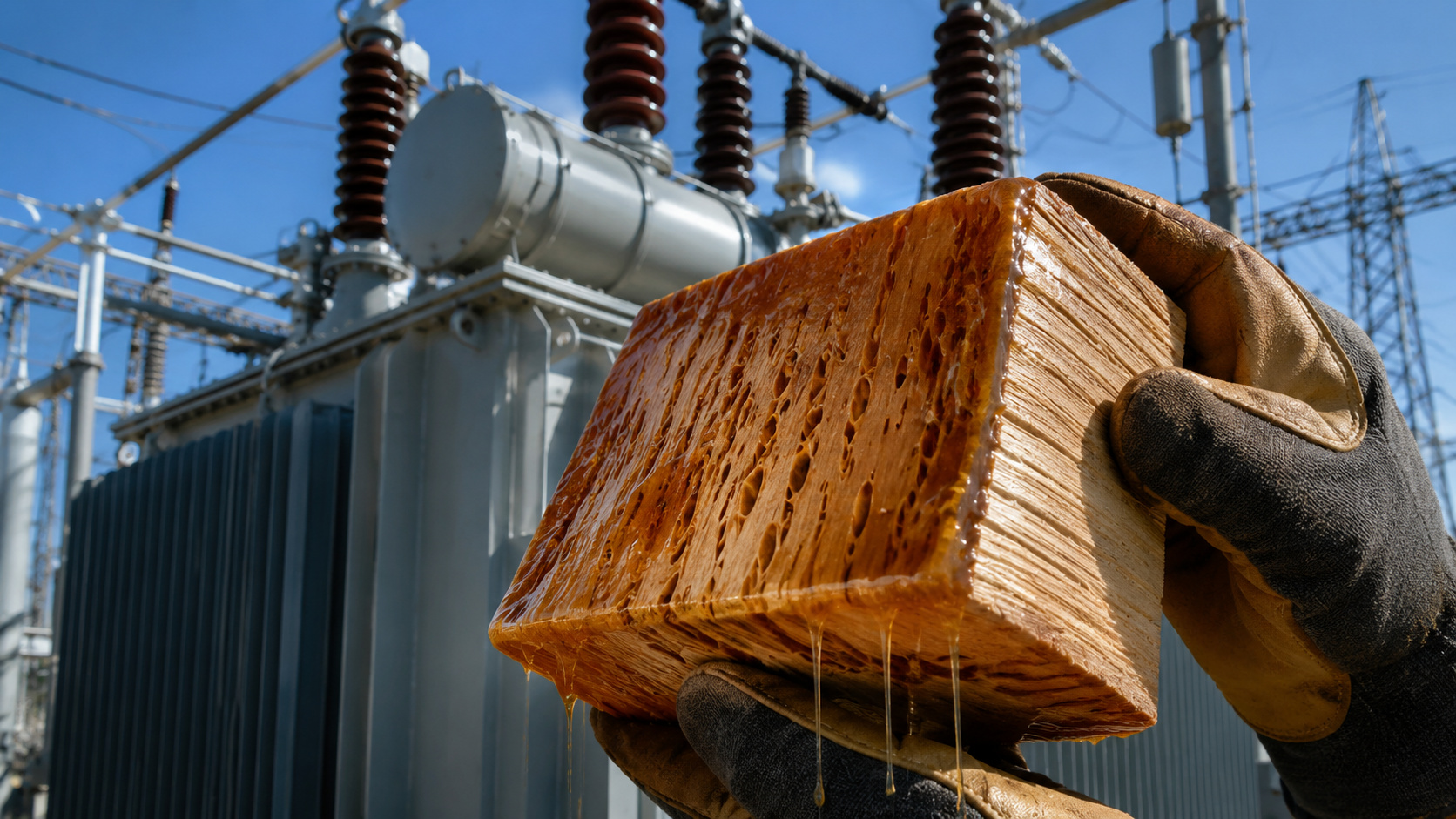
Wood has ceased to be just a construction material in Yale research and has become insulation for electrical transformers that face intense heat, aging, and increasing pressure from the renewable energy-powered grid.
-
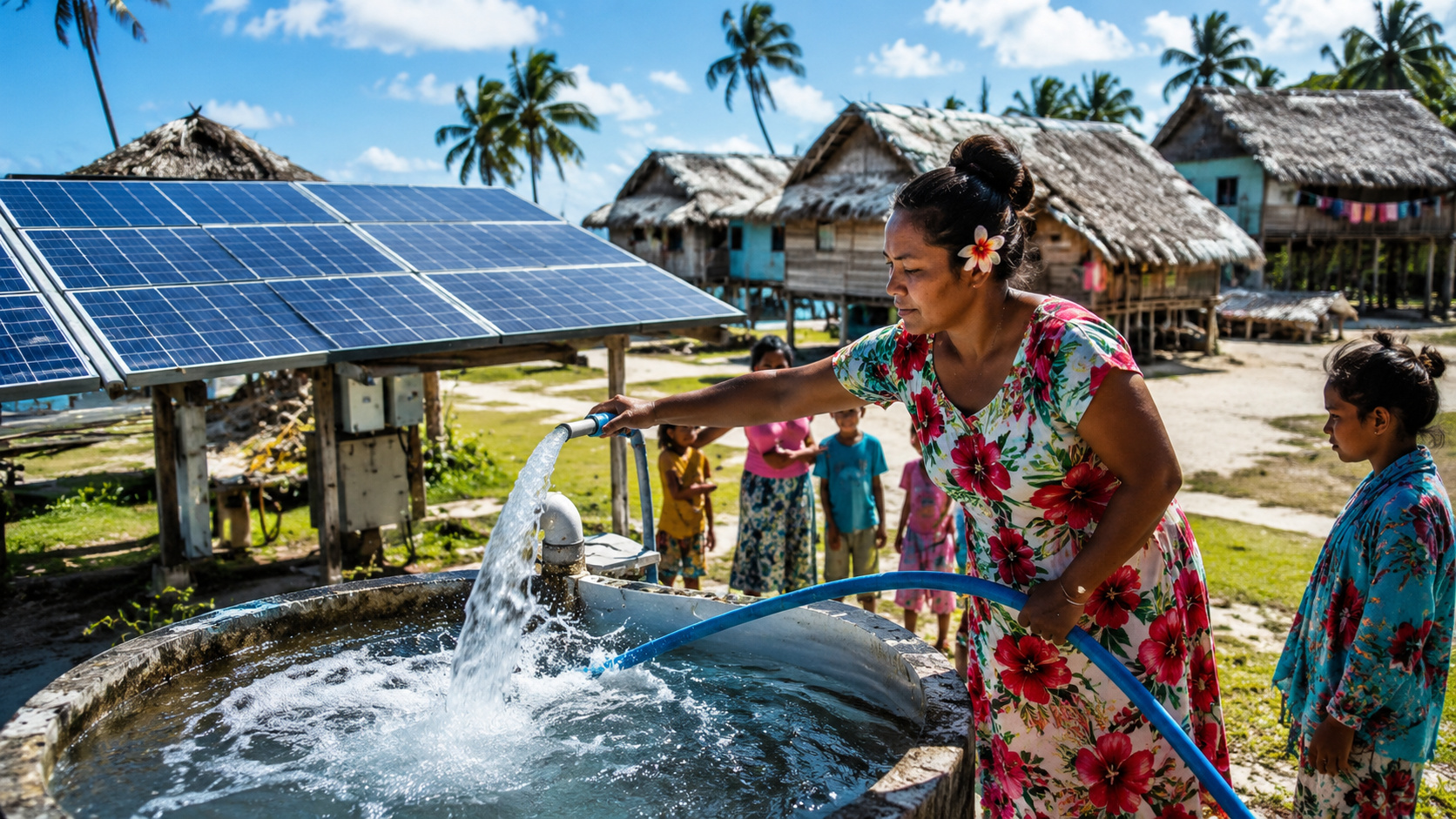
More than 1,000 residents of a remote island in Kiribati now have clean water and electricity with solar systems operated by the community itself.
-
Ceará brings together 7 giants and R$ 66 billion to transform Pecém into the largest green hydrogen hub in Brazil, with final decisions expected by the end of 2026.


Therefore, solar energy financing appears as an increasingly accessible solution for those who wish to reduce their electricity bill while also contributing to the environment.
Solar energy financing allows individuals and businesses to install photovoltaic systems even without having the total investment amount available upfront.
This way, it facilitates access to technology, allowing for payment over time and enabling the savings generated on the electricity bill to help cover the monthly financing installments.
In practice, it transforms the electricity bill into a payment for an asset that brings immediate returns.
Moreover, with advancements in technology, the costs of equipment, such as solar panels and inverters, have been decreasing year after year, making the investment even more attractive.
Many people who previously viewed solar energy as a high expense now see it as a smart savings solution in the medium and long term.
Furthermore, there is a positive impact on property value, as homes and businesses with solar systems tend to be more valued in the market.
The Evolution of Solar Energy Financing
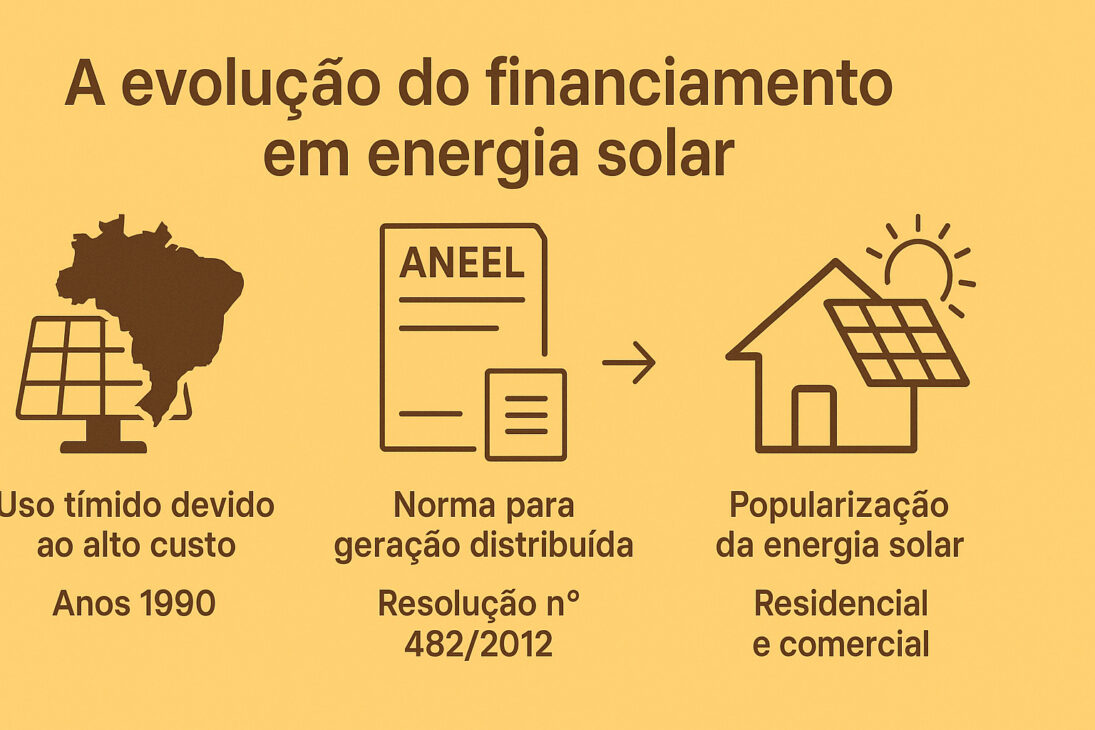
Historically, the use of solar energy as an electric source started timidly in Brazil, mainly due to the high cost of equipment and the lack of incentives.
According to data from the Ministry of Mines and Energy, during the 1990s, solar energy was still underexplored and limited to specific applications, such as remote areas and telecommunications systems.
However, the significant transformation occurred in 2012, with the Normative Resolution No. 482 from the National Electric Energy Agency (ANEEL).
As explained on the ANEEL website, this regulation established the rules for distributed generation, allowing consumers to generate their own energy and compensate for excess energy fed back to the grid.
This historical milestone opened the way for the popularization of residential and commercial solar energy in Brazil. From then on, the technology became accessible to a broader audience.
As interest in solar energy grew, the costs of panels decreased. Financial institutions began to see business opportunities, offering specific credit lines for this investment.
Initially, these financing options were mainly available at public banks, such as Banco do Brasil and Caixa Econômica Federal. According to information from these institutions, this was a way to stimulate the renewable energy market in the country.
Gradually, other financial institutions, fintechs, and cooperatives began to offer credit lines, increasing competition and improving conditions for consumers.
Moreover, environmental awareness and the popularization of renewable energies globally also influenced this growth.
According to the International Energy Agency (IEA), Brazil has one of the largest solar potentials in the world, which reinforces the importance of financing to harness this abundant resource.
Therefore, the favorable scenario, combined with public policies and technological innovation, has made solar energy financing a viable and growing option for different consumer profiles.
How Solar Photovoltaic Financing Works
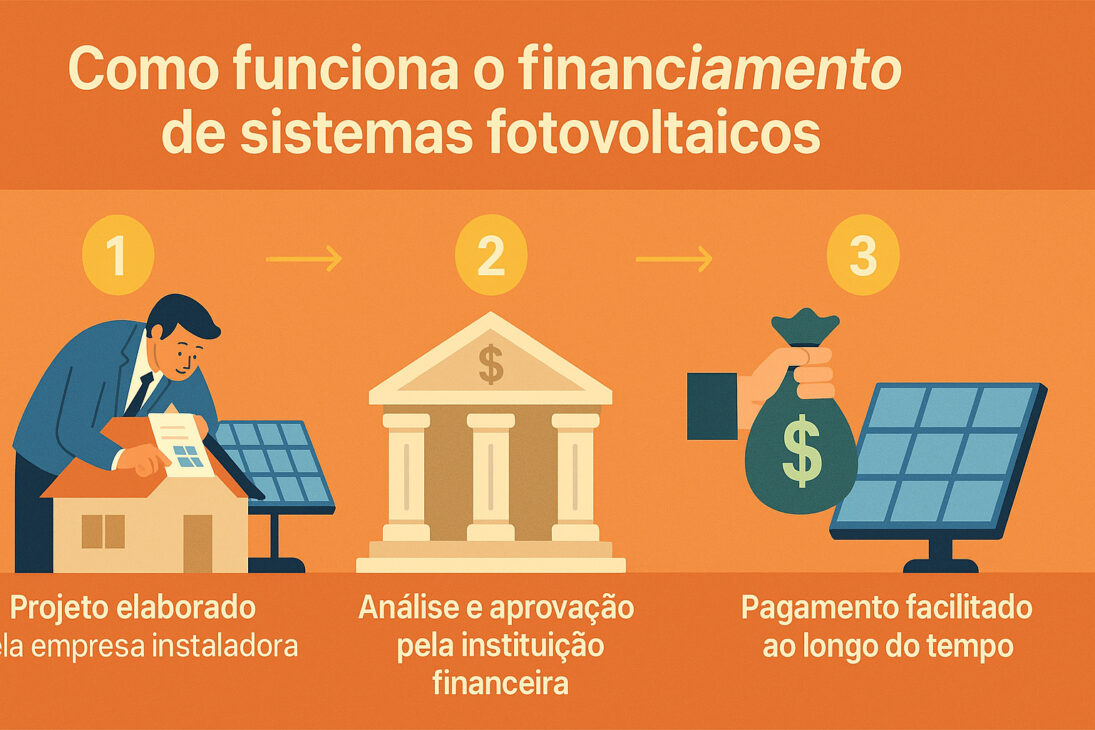
Solar energy financing works similarly to other credits for durable goods.
Initially, the consumer presents a project developed and approved by an installation company, which assesses energy consumption and the characteristics of the property to define the total system cost.
After that, the financial institution analyzes the client’s profile and evaluates the feasibility of the financing.
According to information from Banco do Brasil and Caixa Econômica Federal, the terms vary between 24 and 84 months, potentially extending to 120 months in special cases.
The interest rates offered are competitive, generally lower than those of traditional personal loans.
Additionally, according to reports from the institutions themselves, many financing lines allow for a grace period of up to 6 months, enabling the consumer to start saving on the electricity bill before paying the installments.
Another important point, according to the Federal Revenue, is that financing typically covers all system costs: equipment, design, installation, approval, and preventive maintenance.
This facilitates financial planning and reduces risks during implementation.
Furthermore, in some cases, government programs and tax incentives, as guided by the Federal Revenue, help reduce the final cost, encouraging the adoption of renewable energy in the country.
Qualified installation companies often assist consumers in obtaining these benefits, reducing bureaucracy and making the process simpler.
Advantages of Choosing Financing
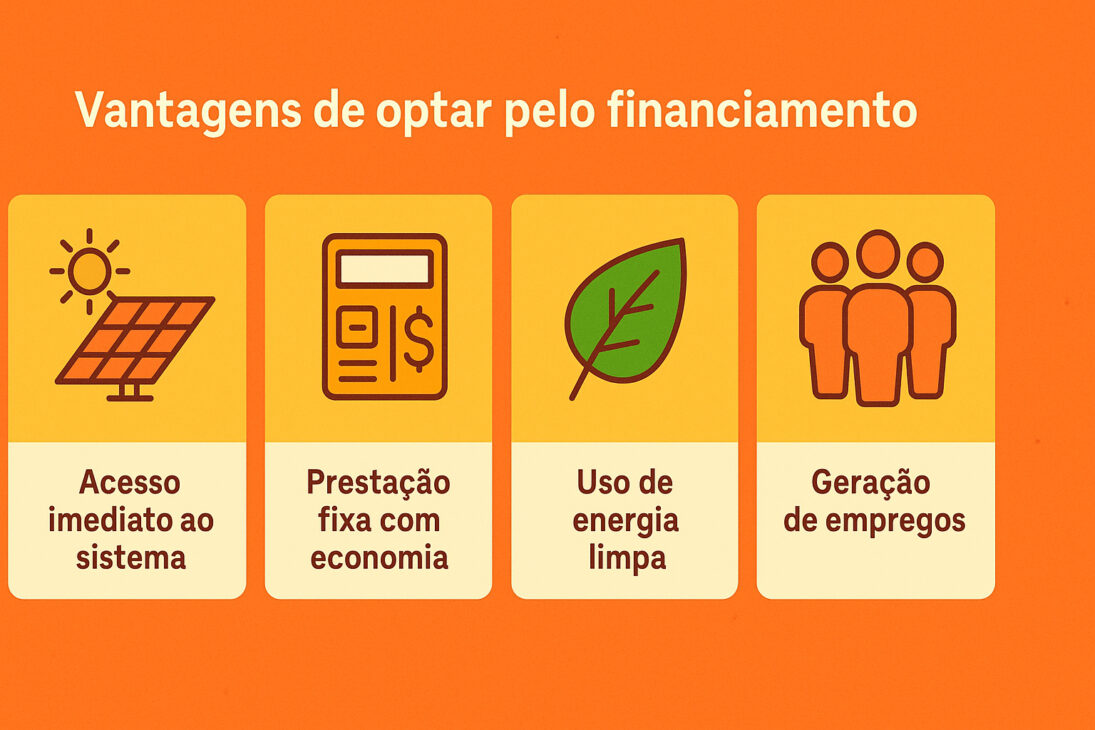
Solar energy financing offers several advantages for those looking to transition to this clean source.
First of all, immediate access to the system even without the total amount available upfront.
According to the National Institute of Energy Efficiency (INEE), the average return on investment, or payback, ranges between 3 and 6 years, depending on the region and consumption.
Moreover, the consumer exchanges a variable expense (the electricity bill) for a fixed monthly payment, which makes financial control easier.
Since the system has a lifespan of between 25 and 30 years, according to data from ANEEL, after the financing ends, the generation of energy continues to benefit the user at no additional cost, resulting in significant savings.
From an environmental perspective, financing expands access to clean energy, accelerating the energy transition in Brazil.
The more consumers adopt this solution, the greater the reduction in greenhouse gas emissions and the lower the dependence on non-renewable sources.
Additionally, the growth of the sector generates local jobs and stimulates sustainable economic development, as reported by the Ministry of Labor and Employment.
Challenges and Points of Attention
Despite the advantages, financing requires attention and careful analysis. One of the biggest considerations is choosing the company responsible for installation.
The project must be precise and the equipment must have the appropriate certifications, according to recommendations from the National Institute of Metrology, Quality and Technology (Inmetro).
Errors in sizing can compromise the system’s efficiency and reduce the expected return.
Moreover, it is essential to compare the available credit lines.
Some banks offer better rates for clients with a financial relationship, while fintechs provide faster and less bureaucratic processes.
Therefore, it is worth conducting simulations at various institutions to find the best conditions.
It is also essential to analyze all fees and charges embedded in the contract to avoid surprises. Consulting a financial specialist can help understand the real impact on the budget.
Finally, it is important to remember that financing does not eliminate the need for regular maintenance of the system. Durability and efficiency depend on continuous inspections and technical care.
The Future of Solar Energy Financing
With technological advancement and the strengthening of the renewable energy market in Brazil, financing is likely to become more accessible and attractive.
The popularization of hybrid systems, which combine photovoltaic generation with batteries, is expected to expand credit options and further encourage consumers.
Additionally, public policies and government incentives, according to the Ministry of Mines and Energy, may again boost the sector.
The encouragement of distributed generation helps relieve pressure on the national electrical system, reduces losses in transmission, and promotes conscious energy use.
Finally, as demonstrated by research from the IEA, sharing positive user experiences creates an important multiplier effect in the market.
Word of mouth, combined with increasing awareness, makes financing an increasingly popular option for those looking to combine savings, sustainability, and energy independence.