Portuguese
  Spanish


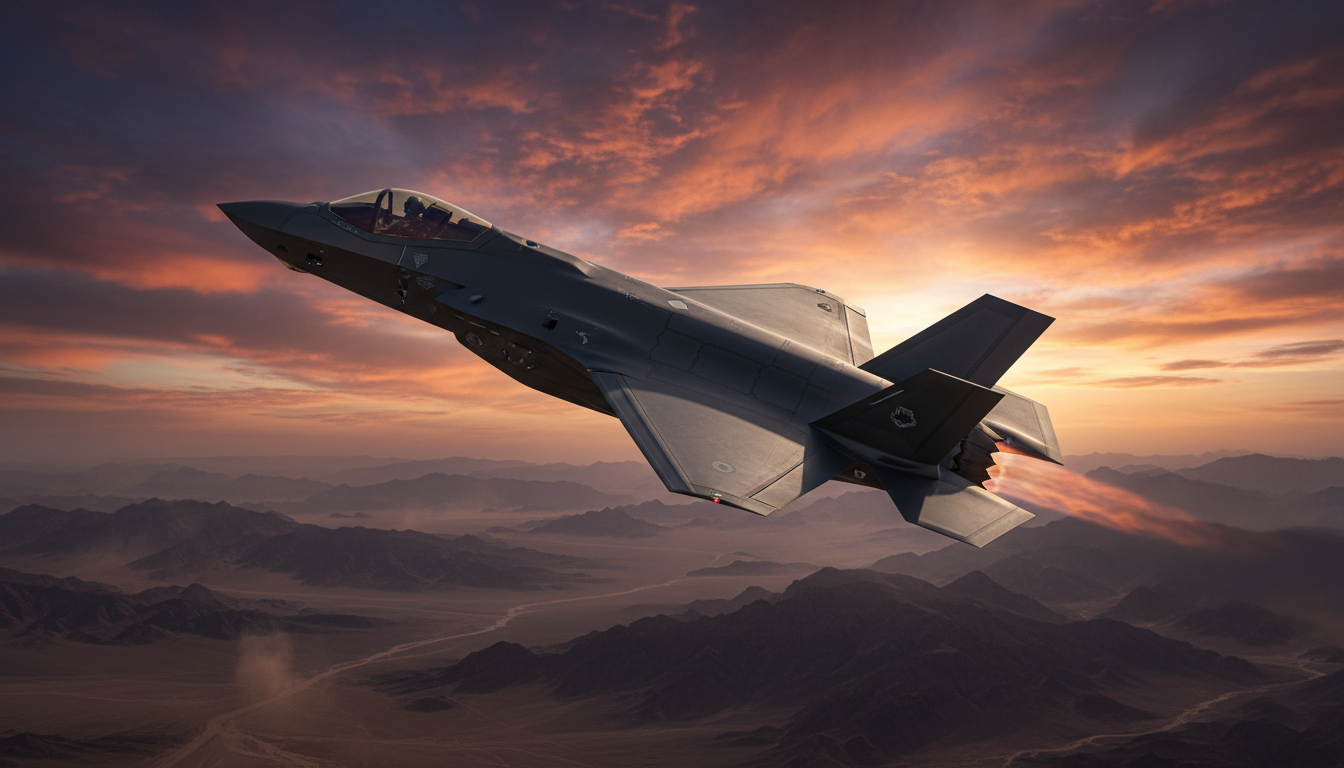

For the first time in history, an F-35 shot down a manned fighter in real combat — the target was a Russian jet manufactured for Iran, and the pilot ejection happened over the skies of Tehran
On March 4, 2026, amidst the joint military operation “Epic Fury” by the United States and Israel against Iranian targets, an Israeli Air Force stealth fighter F-35I Adir intercepted and shot down an Iranian Yak-130 jet over the skies of Tehran.
According to Defense News, it was the first downing of a manned aircraft by an F-35 in the entire history of the program. And for the Israeli Air Force, it was the first time since 1985 that an Israeli fighter shot down an enemy plane.
The combat lasted a few seconds. Recordings made from the ground in Tehran captured the moment the jet was hit — and the two crew members were seen ejecting before the crash.
-
Berries, Strawberries, and Blueberries Could Transform Agriculture in Northeastern Brazil, New Tests Reveal

-
Danish Resident Discovers Six Viking Gold Bracelets Weighing 762.5 Grams, Third Largest Gold Treasure in Denmark

-
Over 200 Cities in Southern Brazil on Storm Alert as Cyclone Near Uruguay Brings Heavy Rain, Hail, and Winds Up to 100 km/h

-
Archaeologists Discover 2,300-Year-Old Beer in Sealed Bronze Vessel from Ancient Chinese Tomb




The target didn’t expect to be attacked — it was hunting drones
The Yak-130 is an advanced training jet manufactured by Russia. Iran uses it as a light combat aircraft, capable of interception and ground attack missions.
At the time of the downing, the Iranian Yak-130 was flying a drone defense mission — attempting to intercept the drone swarms that were part of Operation Epic Fury.
The irony is brutal. The plane that was hunting drones was shot down by a fighter it probably didn’t even see.
The F-35 is practically invisible to conventional radars. Its radar cross-section is comparable to that of a golf ball. For the Yak-130 pilot, the F-35 simply didn’t exist on the screen until it was too late.

The most expensive fighter in history proves its worth in combat
The F-35 Lightning II program is the most expensive weapons project in United States history, with a total estimated cost of US$ 1.7 trillion over its lifespan.
For years, critics questioned whether the investment was worth it. The aircraft suffered from delays, software defects, engine problems, and budget overruns that dragged on for two decades.
But on March 4, 2026, over the skies of Tehran, the F-35 finally did what it was designed to do: enter hostile airspace undetected and eliminate the target before it knew it was being hunted.
For the program’s defenders, it was the validation they had been waiting for 20 years.
Operation Epic Fury: the context of the first kill
The downing of the Yak-130 occurred during “Epic Fury”, a joint military operation between the United States and Israel against Iranian military installations.
The operation involved hundreds of aircraft, drones, and cruise missiles attacking targets across Iran. Israeli and American F-35s penetrated Iranian air defenses to destroy missile bases, command centers, and nuclear facilities.
While F-35s operated over Iran, Royal Air Force British F-35Bs intercepted Iranian drones over Jordan — also marking the first targets destroyed by the British F-35 in combat.
It was the largest demonstration of stealth capability in real combat since the aircraft’s introduction in 2015.

41 years without shooting down a plane — until now
The last time the Israeli Air Force shot down an enemy aircraft in aerial combat was in 1985, during clashes over Lebanon.
Since then, conflicts have changed. Israel fought against Hezbollah rockets, Hamas drones, and Iranian ballistic missiles. But not against manned aircraft.
Classic air-to-air combat — fighter against fighter — seemed a relic of the Cold War. Until an Iranian Yak-130 took off on the wrong day.
For Israeli pilots, the kill is an institutional milestone. For the global defense industry, it is the confirmation that aerial combat between manned aircraft is not over — it has merely changed technology.
It’s not just a fighter — it’s a flying “quarterback”
The F-35 was not designed just to shoot down planes. It is a sensor fusion platform that operates as the brain of the entire air operation.
With AESA radar, 360-degree infrared sensors, and real-time communication capabilities with satellites, drones, and other aircraft, the F-35 sees the entire battlefield before any other aircraft in the air.
During Epic Fury, F-35s not only fought — they coordinated attack packages of dozens of aircraft, designated targets for cruise missiles, and provided real-time intelligence to command centers.
Lockheed Martin called this the “sensor, shooter, quarterback” transformation — the aircraft detects, attacks, and coordinates simultaneously.

What the first kill means for the future of air warfare
The March 4 combat changes the strategic calculus for any country facing the United States or its allies.
The F-35 proved it can penetrate the air defenses of a nation-state, operate over the enemy capital, and engage targets undetected.
For nations like China and Russia, which invest billions in S-400 and S-500 anti-aircraft systems, the message is clear: if Iran couldn’t see the F-35, who else could?
The defense industry’s response is already visible. Sixth-generation fighter programs are accelerating. Autonomous combat drones are being developed as F-35 “wingmen.”
Aerial combat is not over. It has evolved. And on March 4, 2026, over Tehran, the future of air warfare became clearer — and more terrifying — than ever.
The remaining question is: if a single F-35 can shoot down a fighter over a nation’s capital undetected, what does that mean for the concept of airspace sovereignty?