






 Portuguese
  Spanish


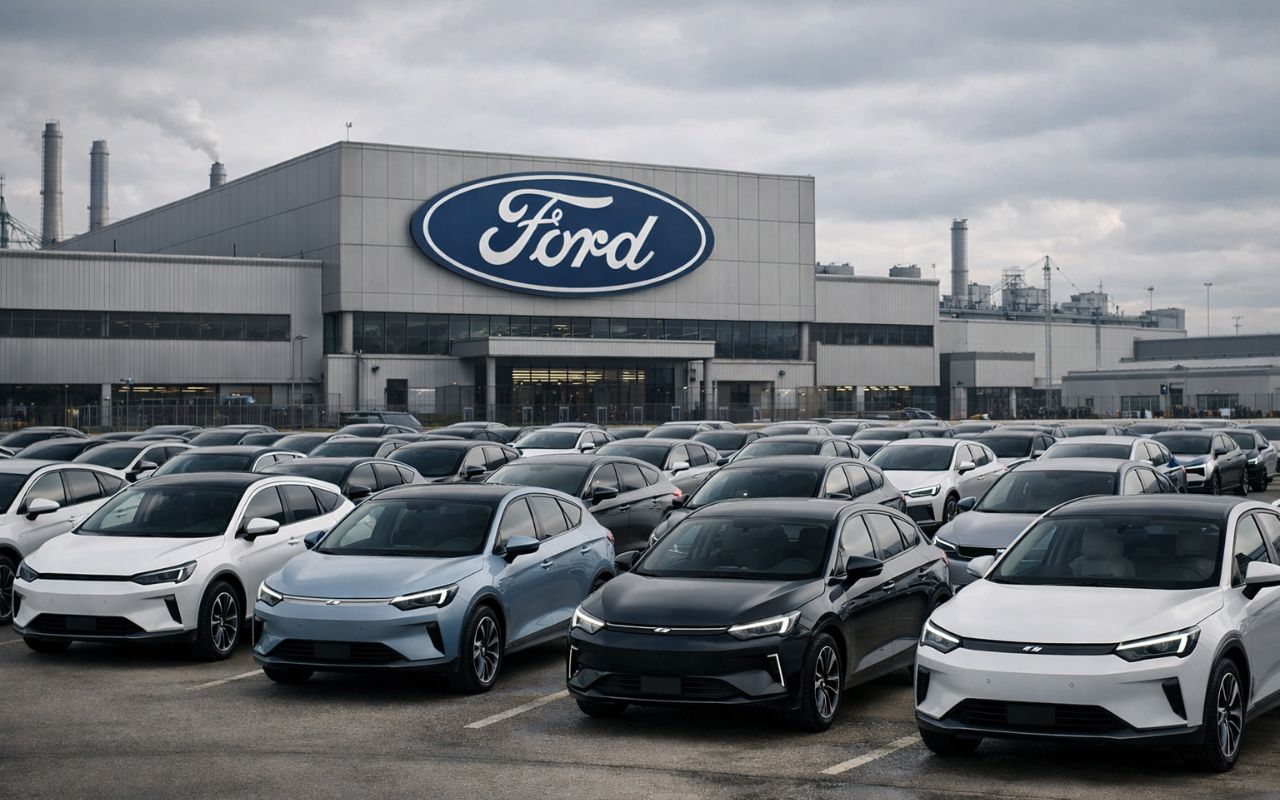


Ford Studies Using Its Factories to Produce Chinese Cars to Mitigate Tariff Impact on Imports and Strengthen Its Competitiveness in the Global Automotive Market.
Ford is negotiating with Chinese manufacturers to utilize idle capacity in its factories and reduce the impact of tariffs on imported vehicles, in a move that could reshape its global production strategy.
Sources indicate that discussions between the American automaker and Asian companies, particularly Geely, have been ongoing for months and involve the possibility of manufacturing Chinese cars at Ford’s European facilities, mitigating tax costs and optimizing underutilized facilities.
The rapprochement between the two parties occurred amid pressures from global markets and the technological competitiveness challenges that Ford faces against the rapid expansion of the Chinese automotive industry.
-
Sales of Brazil’s Cheapest Electric Car Halted Before First Deliveries: E-Motors Suspends Emova Easy Due to Import Tax Increase and Rising Freight Costs

-
Nissan Discontinues Qashqai SUV Amid Cost-Cutting, Chinese Competition, and Product Line Review

-
BYD Patents Revolutionary System Using Computer Vision to Detect Animals Under Cars Before Starting, Preventing Tragedies

-
Study Reveals Why Cars Are More Expensive to Produce and Buy in Brazil Compared to Mexico, Highlighting Taxes, Logistics, and Industrial Costs as Key Factors.




Ford Seeks Alternatives amid Tariffs
The presence of high tariffs on imported vehicles has pressured international manufacturers to reorganize their operations.
In Ford’s case, the strategy involves making room in its own factories, such as the one in Valencia, Spain, to produce Chinese vehicles, thereby reducing the need to pay high duties on cars imported directly from Asia.
This move represents a significant change for Ford, which traditionally manufactures its cars under its own brand or through established joint ventures.
The initiative points to closer collaboration with Chinese players, who hold an increasing share of the global electric vehicle and advanced automotive technology market.
Valencia as the Epicenter of New Production
The Ford plant in Valencia, Spain, has been one of the focal points of these negotiations. With production below maximum potential and idle capacities, the factory becomes a strategic asset for the American automaker.
Assembling Chinese cars there would not only exempt the vehicles from import tariffs in the European Union but also increase the utilization of installed capacity.
In discussions with Geely, the idea is to integrate part of the production of models developed by this company into Ford’s European facilities, benefiting from the logistical and tax advantages that local production offers.
Technological Cooperation as a Bargaining Chip
In addition to simple production allocation, the agreement between Ford and Chinese manufacturers may encompass technology exchange and joint development.
Chinese manufacturers, such as Geely, have advanced rapidly in assisted driving systems and vehicle connectivity — areas where Ford seeks to evolve to compete with global rivals.
This potential cooperation occurs in a context where Ford acknowledges that, in certain segments, Chinese automakers are ahead in innovation.
The company’s CEO has previously stated that China’s leadership in automotive technology represents a significant challenge for traditional brands.

Political Pressures and Regulatory Barriers
Despite the potential business benefit, Ford‘s strategy faces political and regulatory resistance in various regions.
In the United States, for example, there are specific restrictions on the use of vehicle communication technologies from China, considered sensitive for national security reasons.
This context creates a complex scenario in which the automaker needs to balance economic interests with issues of technological sovereignty and security, especially in important domestic markets like the U.S.
The Impact for Ford in the Global Market
Adopting Chinese cars in its production lines could bring advantages to Ford, such as reducing tax costs, improving factory utilization, and strengthening its presence in European markets.
However, this strategy also raises debate about brand identity, technological dependence, and competitiveness against traditional competitors and new entrants.
Experts comment that similar moves between European and Chinese automakers are already underway, with examples of partnerships between major manufacturers and Asian brands aimed at circumventing tariffs and strengthening market positions.
Broader Global Automotive Landscape
Ford’s plan to adjust its production does not occur in isolation. The global automotive industry still feels the effects of high tariffs, trade conflicts, and fierce competition, especially in the race for electric vehicles and cutting-edge technology.
In several countries, Western manufacturers are reassessing strategic alliances and exploring new forms of collaboration to reduce costs and accelerate technological development.
In this context, Ford’s evaluation of manufacturing Chinese cars in its factories reflects not only a response to tariffs but also a broader movement to adapt to a new industrial reality, where partnerships and flexibility can determine competitive advantage in the global automotive market.
Source: Automotive News


