






 Portuguese
  Spanish
  3 min of reading
  0 comments



Ford Announces It Developed A Platform For Affordable Electric Cars To Compete With Tesla And Chinese Manufacturers In The Affordable Electric Car Market.
Ford revealed to the market this week that it has been working on the confidential development of a platform for affordable electric cars after two years of work. CEO Jim Farley announced a team operating outside Ford’s main facilities, creating a flexible platform for compact vehicles, promising not only diversity in models but also a foundation for software and services. With the priority of tackling the price barrier in the current market, Ford aims to offer electric options below US$ 30,000, primarily to compete with Tesla.
Ford’s New Platform For Compact And Affordable Electric Cars
Ford surprised the market by revealing the development of a dedicated platform for affordable electric cars.
During a results teleconference, CEO Jim Farley shared the strategy of a team that worked outside Ford’s main facilities over the past two years on the project.
-
Two new 300cc models from QJ Motor are expected to arrive in Brazil as SBM to target the CB 300F and shake up the low-displacement market, with more power and liquid cooling than Honda.

-
Camaro may reappear in 2027, but not as you remember: Chevrolet prepares the return of the icon with four doors, manual transmission, and an extreme performance version to face the new era of sports cars.

-
Is the BYD Song Pro worth it? The Anderson Sincero channel says it doesn’t exceed R$ 140,000, and the price dropped by R$ 47,000, reinforcing the depreciation of the plug-in hybrid in the Fipe table.
-
Caoa Changan CS75 arrives for R$ 199,990 with 4.77 m in length, a trunk of up to 1,620 liters, 8-speed Aisin transmission, 180 hp, 37.2 inches in screens, and Zero Gravity seat with massage.


This team, as highlighted by Farley, not only developed a platform for various types of compact electric vehicles but also created a foundation for the implementation of software and services on the platform.
This approach represents an important shift in Ford’s investments, now focusing primarily on smaller electric vehicles.
How Ford Plans To Compete With Tesla In The Affordable Electric Car Market
Affordable pricing is one of the main challenges currently in the market for the mass growth of electric cars.
Currently, most battery-powered vehicles have a premium price, limiting options for consumers with tight budgets.
Ford recognizes this challenge and is directing its investments to find solutions. Thus, the company’s new electric car platform will offer electric alternatives priced below US$ 30,000.
When analyzing Ford’s current portfolio, it is evident that none of the offered electric models fall into the “affordable” category.
The Mustang Mach-E SUV has a starting price of approximately US$ 43,000, while the basic F-150 Lightning exceeds US$ 55,000.
Even with more expensive options, Ford’s electric vehicle sector has not achieved profitability in recent years, recording a loss of US$ 4.7 billion in 2023.
Therefore, the landscape of cheaper electric cars could be a good bet for Ford in the coming years.
In this same scenario, Tesla has been planning to launch a vehicle for US$ 25,000 for years. Recently, Elon Musk, Tesla’s CEO, announced that the next generation of its more economical vehicle platform will enter production in 2025.
Now, Ford recognizes the importance of cutting costs to compete not only with Tesla but also with Chinese manufacturers, who are betting on this scenario.
Thus, the automaker’s new electric car platform should focus on a lower price to grow in the market.
See: Tests Between Tesla Vs Ford
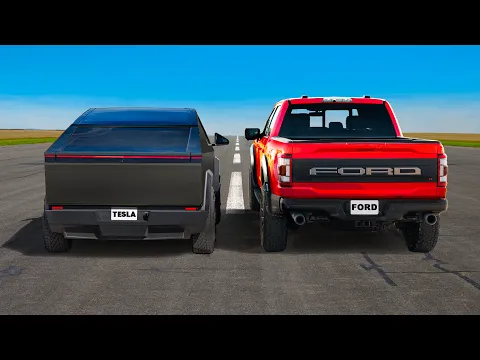

Source: INSIDEEVs


Be the first to react!