Portuguese
  Spanish



Award recognizes 16 companies in six categories and reinforces strategic partnership in the offshore drilling supply chain
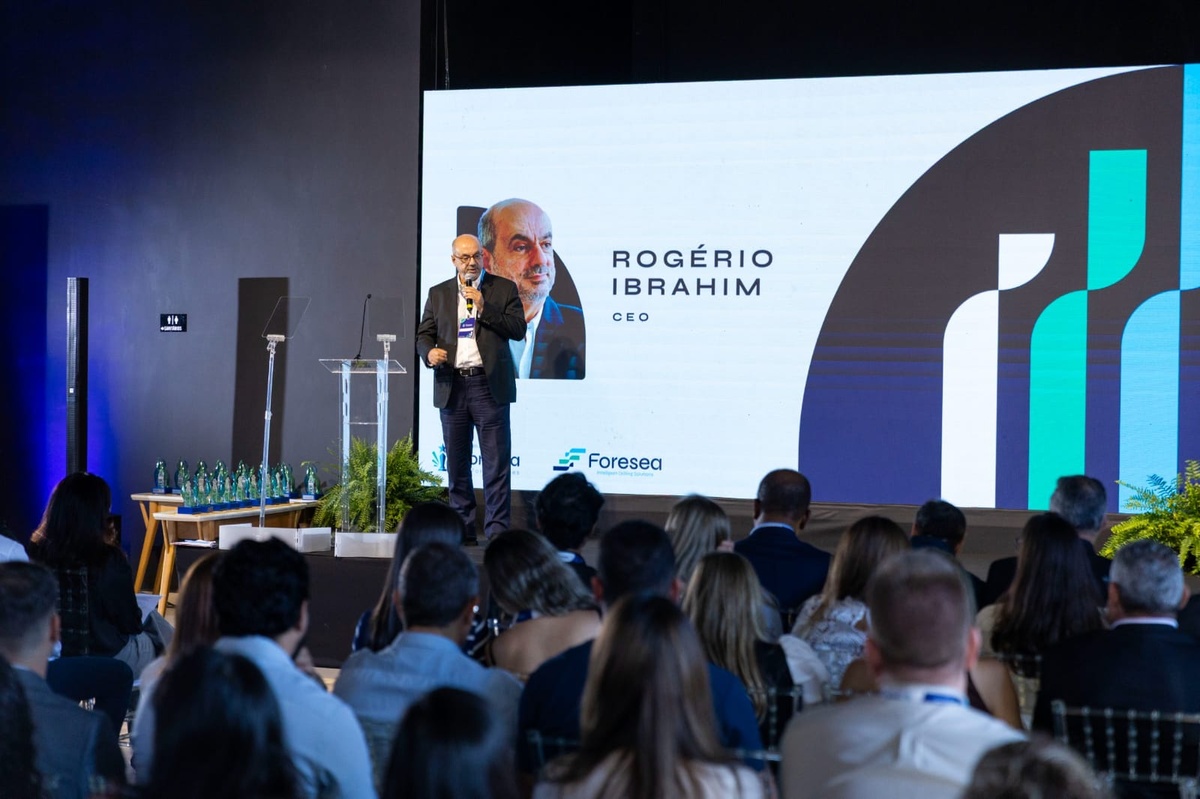
Initially, Foresea, a reference in offshore drilling, announced, on April 15, 2026, the winners of the 3rd Foresea Supplier Award. Furthermore, the ceremony took place in Macaé (RJ) and was broadcast live. At the same time, 16 companies were recognized in six strategic categories.
In addition, according to Foresea itself, around 1,150 companies from Brazil and abroad maintained business relationships with the company in 2025. Therefore, all competed based on rigorous technical criteria. Still, only the best performances were awarded.
Recognition strengthens partnerships in the sector
In this sense, during the event, CEO Rogério Ibrahim highlighted that the company’s exceptional performance in 2025 was a direct result of partnerships. Additionally, he emphasized that trust-based relationships were prioritized over the years.
-
With a record production of nearly 3 million barrels per day, Petrobras resumes importing diesel in July, highlighting the bottleneck in Brazilian refining.

-
Qantas and Airbus Invest in Company Aiming to Convert Unsorted Household Trash into Jet Fuel

-
Brazil’s ANP Opens 86 New Oil Blocks in the Equatorial Margin, Expanding the Amazon River Mouth Frontier

-
OPEC+ Boosts Oil Supply by 188,000 Barrels per Day in July 2026, Leading to Price Drop from $112 to $89 per Barrel in Under Two Months

On the other hand, the executive stated that the award was created to value good practices. Thus, according to him, the initiative also establishes foundations for new joint challenges. Therefore, integration with suppliers is continuously strengthened.
Moreover, each winning company received a trophy and certificate, presented during the ceremony. At the same time, the event increased the visibility of the recognized companies within the oil and gas supply chain.
Technical criteria guided rigorous evaluation
Complementarily, the evaluation was conducted based on performance indicators. According to Caroline Mozer, executive manager of Supplies, several criteria were considered.
Among them, Health, Safety, and Environment (HSE), as well as integrity, were highlighted. Additionally, aspects such as:
• Quality of services provided
• Organization and compliance
• Meeting deadlines
• Risk management
• Legal adherence
Thus, the analysis ensured transparency and standardization. At the same time, the criteria reinforced the commitment to operational excellence.
Winning companies by category
Therefore, below are the awarded companies:
Onshore Services
• 1st: ASA Brasil Serviços Ltda
• 2nd: Macaé Navegação Comércio e Serviços Marítimos Ltda
• 3rd: M&I Electric Brazil Sistemas e Serviços em Energia Ltda
Offshore Services
• 1st: Baker Hughes do Brasil Ltda
• 2nd: Maersk H2S Safety Services Brasil
• 3rd: RCQ Ensaios e Testes Hidrostáticos Ltda
Materials – spot
• 1st: All Supplies Ltda
• 2nd: Cosan Lubrificantes e Especialidades S.A.
• 3rd: Tridan Soluções Elétricas Ltda
Materials – contract
• 1st: Terra Mar Distribuidora de Medicamentos Ltda
• 2nd: Oceânica Uniformes
• 3rd: RBC Comércio & Serviços Onshore e Offshore Ltda
Technology
• 1st: T.O Services
• 2nd: Caprock Comunicações do Brasil Ltda
• 3rd: Nexa Tecnologia Ltda
Sustainability in the supply chain
• Baker Hughes do Brasil Ltda

Operational structure reinforces Foresea’s leadership
Finally, Foresea highlighted its robust structure in the sector. Currently, the company operates with its own fleet consisting of the rigs ODN I, ODN II, Norbe VI, Norbe VIII, and Norbe IX.
In addition, all units have active contracts. At the same time, the company maintains international certification APIQ2, which ensures quality and efficiency standards.
Consequently, the company claims to have one of the highest operational uptime rates in the market. Thus, performance is sustained by practices aligned with ESG.
Therefore, the company reinforces its commitment to safety, the environment, and governance, while strengthening strategic relationships. In light of this, how can continuous recognition impact the competitiveness of the sector in the coming years?