






 Portuguese
  Spanish


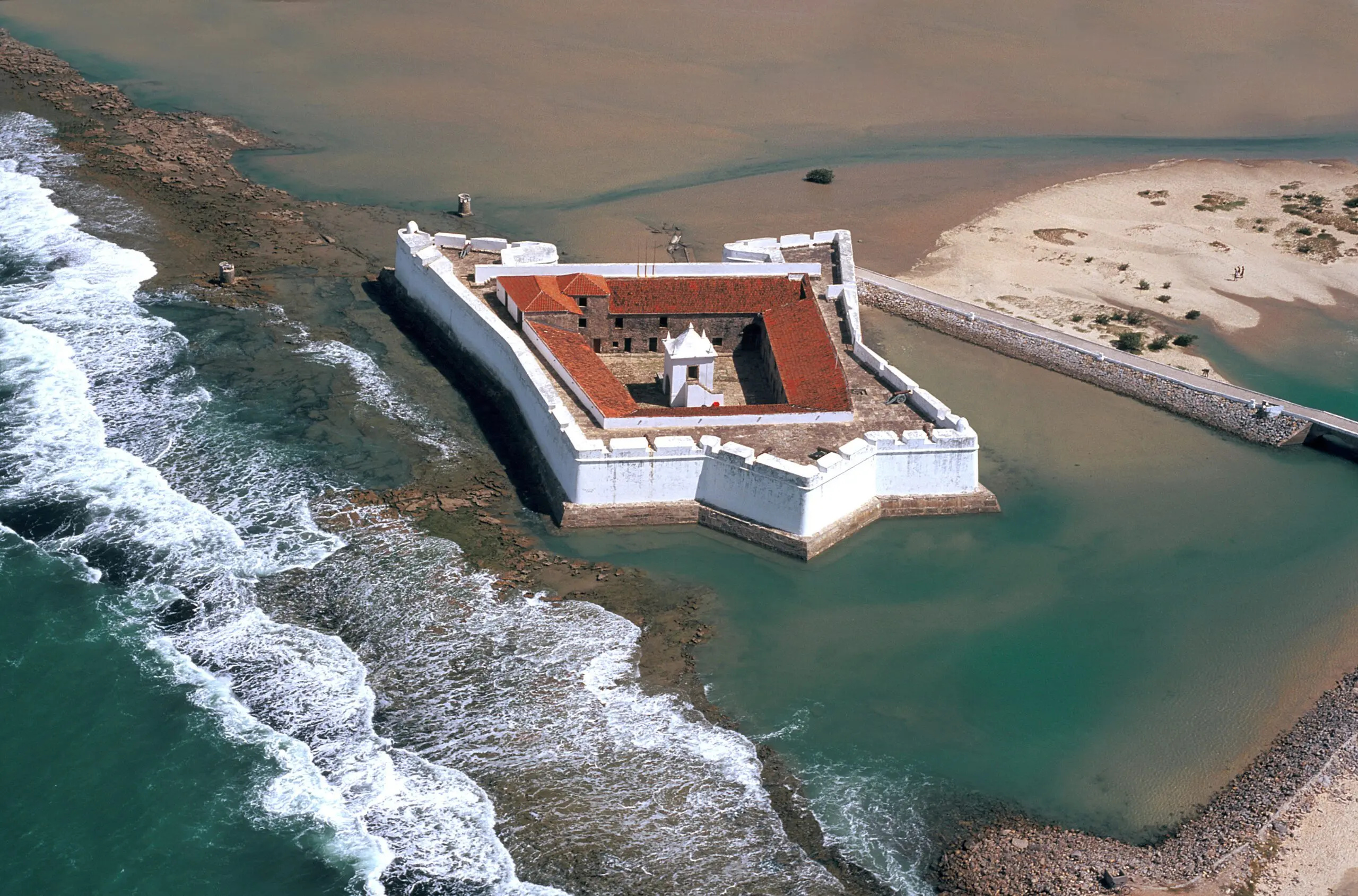

Raised in 1598 with stone, lime, and whale oil, the Forte dos Reis Magos resists for more than 425 years against the sea and the wind in Natal, challenging modern engineering with its durability.
On the banks of the Potengi River mouth, where the Atlantic meets the Potiguar coast, stands a construction that defies time, climate, and even the logic of current engineering. The Forte dos Reis Magos, a founding landmark of the city of Natal and one of the first major military endeavors by the Portuguese in Brazil, began in 1598, when the country was still taking shape, and Europe was vying for every inch of the South American continent. Made of stone, lime, and organic materials – including whale oil, common in coastal works of the time, the fort stands firm for more than four centuries, even when exposed daily to sea spray, intense winds, and floodwaters.
The history of Brazil is etched into its walls. Initially built under the guidance of engineer priest Gaspar de Samperes, and later improved by military architect Francisco Frias de Mesquita, the monument is not just a witness to battles and occupations, but also a living proof that ancient techniques, when combined with natural materials and a precise reading of the terrain, can exceed structural expectations even today. In a country marked by modern buildings that sometimes suffer premature wear, the Forte dos Reis Magos remains practically intact, imposing itself as a historical sentinel against time, nature, and marine corrosion.
Strategic Foundation and Military Construction Technique
The choice of location for its construction was not random. Positioned exactly at the mouth entrance, the fort served as a lookout point and defense against foreign invasions and corsair attacks, common in the 16th century.
-
The Secret U.S. Underwater Network That Tracked Soviet Submarines for Decades Now Used for Science

-
7-Year-Old Girl Rejects Lollipop, Questions Sugar’s Impact on Teeth, and Launches Sugar-Free Brand Now in 25,000 U.S. Stores

-
Scientists Find Regular Activity Can Mitigate Alzheimer’s Impact, Even in Genetically High-Risk Individuals, Offering Strong Evidence for Cognitive Protection and Healthy Aging

-
Exploring Nazareth: Uncovering the Historical Setting of the Annunciation, Not Proving a Biblical Miracle


Its star-shaped design, a typical solution of Renaissance fortification engineering, served both to extend the cannon firing range and to absorb impacts from enemy projectiles, reducing structural damage.
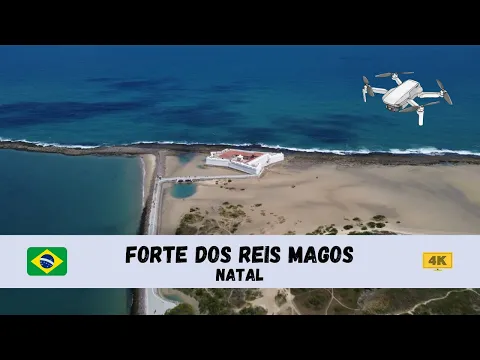

The use of thick masonry with local limestone, bonded with mortar made of lime and whale oil, created a compound resistant to water and corrosion.
Unlike modern structures that rely on metal reinforcements susceptible to rust, the fort relied on natural materials and massive density.
The chemical bond of lime with organic compounds provided flexibility and sealing, allowing the construction to breathe and adapt to humidity and heat cycles.
More than a military fort, the structure is an example of climatic reading and constructive strategy. The angular positioning regarding winds and water flow helped dissipate wave impacts and reduce moisture accumulation, ensuring the structure remained stable even under extreme conditions.
Four Centuries of Sea, Wind, and History
Few Brazilian constructions have faced such severe conditions for so long. The fort has seen cycles of Portuguese and Dutch occupation, endured constant sea salt, tropical storms, and decades of neglect until its revitalization in recent decades. Still, it stands solid, with its thick walls practically intact.
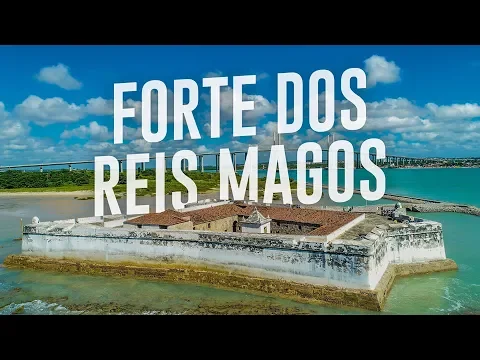
While contemporary buildings often deal with leaks, oxidation, and premature deterioration, the walls of the Forte dos Reis Magos resist as though they were erected to last centuries – and they were.
The colonial period demanded permanent solutions, and the use of natural materials, structural density, and slow curing lime techniques created a monolith that remains alive.
The comparison with modern works reveals an interesting irony: in the quest for speed, lightness, and economy, modern engineering frequently revisits ancient solutions, such as the use of hydrated lime in restorations and the recovery of traditional building knowledge. The fort not only tells a story but also teaches.
Between War, Faith, and the Birth of Natal
Built at a time when Portugal needed to consolidate its presence in the Northeast, the Forte dos Reis Magos represents the beginning of Natal. It functioned as a military post, naval supply base, and territorial landmark, ensuring dominance over the coastline and control of navigation along the Potengi River.
The name refers to the day of its foundation, January 6 – Three Kings’ Day – reinforcing the symbolic and religious influence of the time. Inside, chapel, accommodations, storage, cisterns, and armories were organized to make the fort self-sufficient.
The presence of areas for storing fresh water and food helped sustain long resistances in times of conflict.
During the Dutch occupation in the 17th century, the fort was expanded and reinforced, and part of this architecture remains visible today. Each layer tells a phase of the country’s military and political history.
A Living Heritage and the Lesson of Ancestral Architecture
Despite urban transformations around it, the fort preserves the original landscape: sea in front, river to the side, and constant winds shaping the Potiguar coastline. Its permanence inspires debates about the efficiency of colonial construction techniques and their relationship with the climate.
While reinforced concrete struggles against sea spray and time, the fort stands firm thanks to the sophisticated simplicity of natural materials and careful reading of the environment.
The growing interest in bioarchitecture, lime as a binder, and vernacular solutions reinforces the feeling that, by looking back, we find answers for the future.
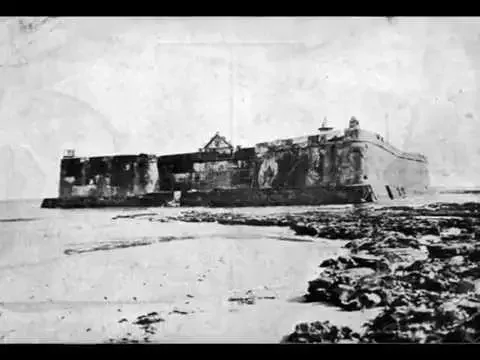
Today, the Forte dos Reis Magos is a historical monument, tourist attraction, and center of study. It reminds us that resistance is not just about brute force but about constructive intelligence, symbiosis with the environment, and a deep understanding of matter.
In the end, as one walks through its stone passages and observes the ocean that tries, day after day, to invade its walls without success, an inevitable question arises: in a country that seeks modernity at any cost, what can we still learn from a monument raised over four centuries ago that continues to defy time with the serenity of one who has never rushed to endure?


