Portuguese
  Spanish


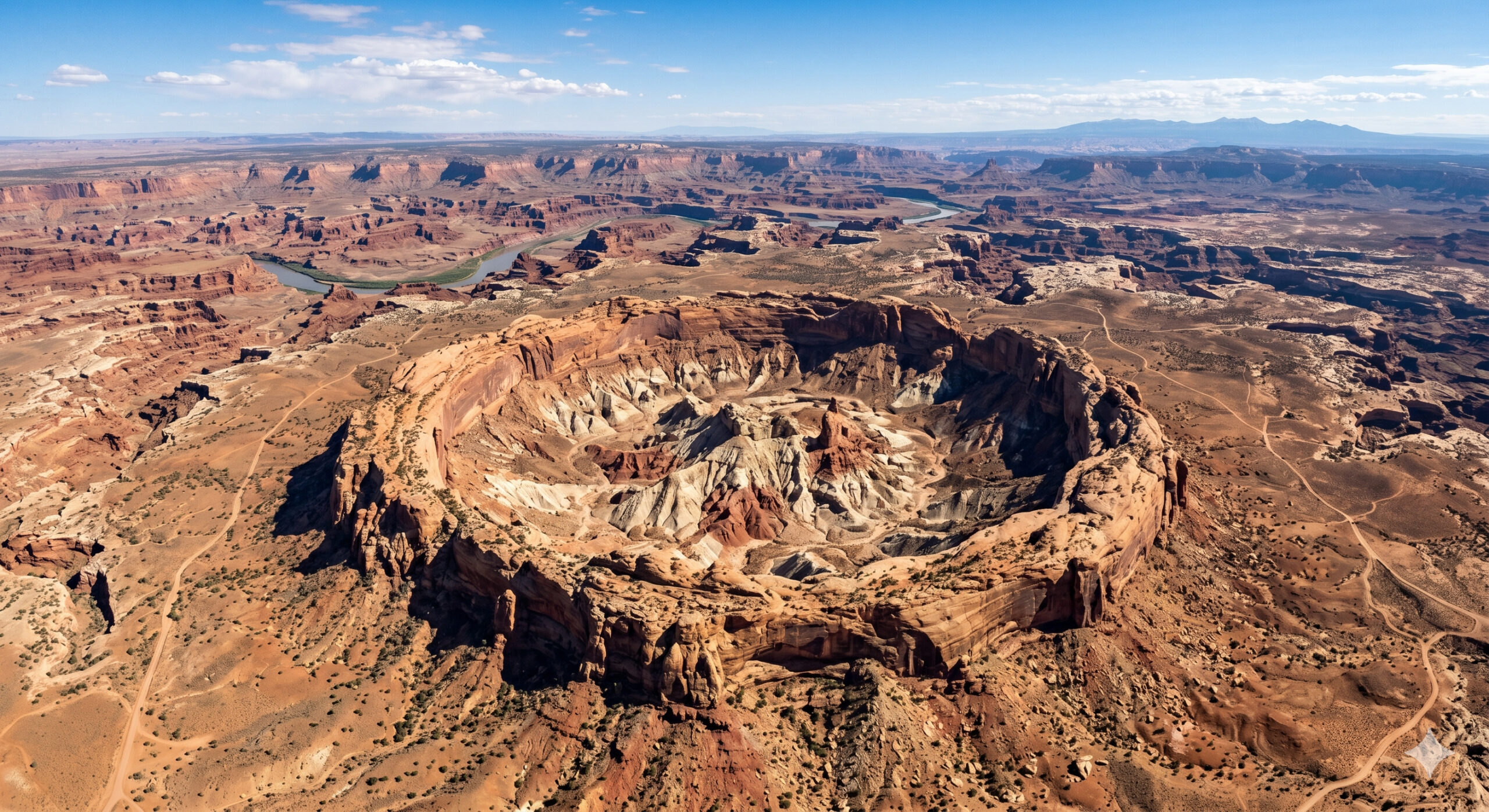


Circular formation of 5.5 km in Utah intrigues scientists for decades and appears from space as a “target” perfect among canyons.
In a text published by the NASA Earth Observatory on July 23, 2007, the Upheaval Dome, located in Canyonlands National Park in the state of Utah, appears as one of the most unusual geological formations in the United States. With about 5.5 kilometers in diameter, the structure forms a circular design that resembles a “target” in the midst of the reddish canyons of the desert, drawing attention not only for its rare shape but also for the uncertainty surrounding its origin.
The NASA Earth Observatory itself describes the site as a circular feature marked by deformed rock layers arranged in rings, a visual pattern that has fueled scientific debate for decades. In an interpretive panel updated by the National Park Service on November 11, 2024, the park states that the site remains a geological mystery: researchers are still discussing whether the formation was caused by a meteorite impact or by an underground salt dome, although more recent evidence supports the impact hypothesis.
This conflict of interpretations has turned the Upheaval Dome into one of the most interesting examples of how geology can present answers still open even in widely studied locations.
-
She spent 73 years breathing inside an iron lung, survived the aftereffects of polio, and became the last woman in the United States dependent on the equipment before dying at 78 years old.

-
Brazilian students created a $1 filter using pine bark, cotton, and 3D-printed parts to clean cassava wastewater, reduce the toxicity of a hazardous waste, and transform contaminated water into biofertilizer.

-
Astronaut from Artemis II steps down after mission to the Moon and decision surprises after a record of 406,771 km, a historic 10-day journey, and an unprecedented achievement for Canada.

-
A fossil kept for years in a small museum in Montreal concealed 450-million-year-old soft tissue, a discovery that has only happened once before in history.


What makes the Upheaval Dome so different from other formations
The uniqueness of the Upheaval Dome lies in its geometry and the way the rock layers are organized. Unlike the typical relief of the region’s canyons, which follows linear erosion patterns, the site presents a highly defined circular structure.
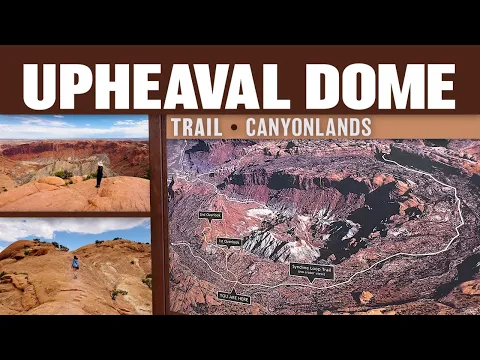

At the center of the formation, there is an elevated core made up of rocks that appear to have been pushed upward, while concentric rings form around it that descend towards the edges. This arrangement creates a striking visual contrast when viewed from above, especially in orbital images.
This radial and symmetrical pattern is unusual in purely erosive formations, which led researchers to initially consider the meteorite impact hypothesis as the main explanation.
Furthermore, the scale of the structure reinforces scientific interest. With its 5.5 km in diameter, the Upheaval Dome is large enough to be clearly visible from space, but small enough to allow detailed field studies.
Meteorite impact hypothesis gained strength in the first analyses
For years, the main explanation for the origin of Upheaval Dome was that of a meteorite impact. This hypothesis is based on common characteristics of impact craters, such as:
- Well-defined circular structure
- Presence of a raised central core
- Intense deformation of rock layers
In craters formed by impact, it is common for the energy released by the collision to cause underground material to be projected upward, creating a kind of “central peak,” while the edges form rings around it.
The Upheaval Dome exhibits several of these elements, which led this theory to dominate scientific discussions for a long time.
However, over the decades, new studies began to raise doubts about this interpretation.
Alternative explanation points to underground movement of salt
A second hypothesis, which gained strength with the advancement of geological research, suggests that the Upheaval Dome may have been formed by a process known as salt diapirism.
In this type of phenomenon, layers of salt present underground — lighter and more plastic than the surrounding rocks — can slowly move upward over millions of years. This movement can deform the upper layers, creating elevated and circular structures.

In the case of Utah, it is known that the region has significant underground salt deposits, which makes this explanation plausible from a geological standpoint.
According to this theory, the visible “target” today would be the result of the subsequent collapse of this elevated structure, after the salt had dissolved or shifted over time.
This hypothesis explains some characteristics that do not fit perfectly into the impact model, such as the clear absence of certain minerals typical of meteorite collisions.
Evidence is still inconclusive and keeps the debate open
Despite decades of study, neither of the two hypotheses has been able to fully explain all the characteristics of the Upheaval Dome.
Research has already identified signs that support each of the interpretations, but also revealed important gaps:
- Some signs of deformation suggest impact
- Others indicate internal movement of material
- There is no definitive consensus on the presence of typical impact materials
This set of contradictory evidence is what keeps the scientific debate open to this day. NASA itself acknowledges that the site continues to be a subject of study and discussion, demonstrating that, even on a well-mapped planet, there are still structures whose origin is not completely understood.
Space view reinforces the visual impact of the formation
When observed from satellites, Upheaval Dome stands out impressively in the arid landscape of Utah.
While the surrounding canyons exhibit irregular lines and erosion typical of rivers and winds, the circular structure emerges as a clear visual anomaly, almost geometric.
This contrast is what makes the formation frequently compared to a “target” drawn in the middle of the desert, especially in images captured by NASA’s orbital sensors.
Moreover, the reddish coloration of the surrounding rocks, typical of the region, further intensifies the prominence of the structure, creating a visual effect that reinforces the perception of something “out of the natural pattern.”
Site became a reference for geological studies and scientific tourism
In addition to academic interest, Upheaval Dome has also become an important point for scientific and educational tourism within Canyonlands National Park.
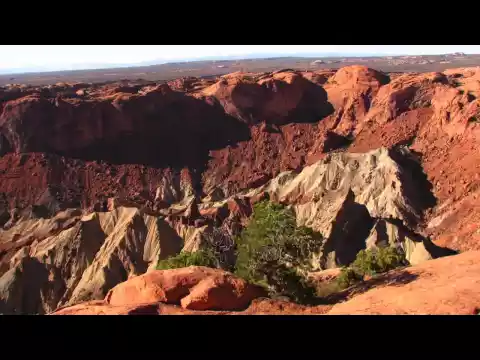
The site features trails and viewpoints that allow observation of the structure from different angles, facilitating the understanding of its shape and scale.
For geologists, the region serves as a true natural laboratory, where it is possible to study processes such as:
- Deformation of sedimentary rocks
- Erosion over millions of years
- Dynamics of underground structures
This combination of accessibility and scientific complexity makes the site unique within the North American geological landscape.
Structures like this show that there are still mysteries on Earth
The case of the Upheaval Dome reinforces a fundamental idea: even with advanced technology and decades of research, there are still natural formations whose origin is not completely understood.
This happens because geological processes can involve multiple factors over millions of years, making it difficult to accurately reconstruct the events. The Upheaval Dome is a clear example of how the Earth still holds structures that challenge definitive explanations, even when they are exposed and accessible.
Do you believe that the “target” in Utah was born from an impact or from subterranean forces?
The existence of two strong and conflicting hypotheses makes the Upheaval Dome a rare case in geology.
On one side, the idea of a cosmic impact that would have shaped the region instantaneously.
On the other, the hypothesis of a slow and subterranean process that deformed the landscape over millions of years.
In light of this, the reflection remains: did this structure arise from a violent event coming from space or from an invisible process that occurred beneath our feet for millions of years?