Portuguese
  Spanish


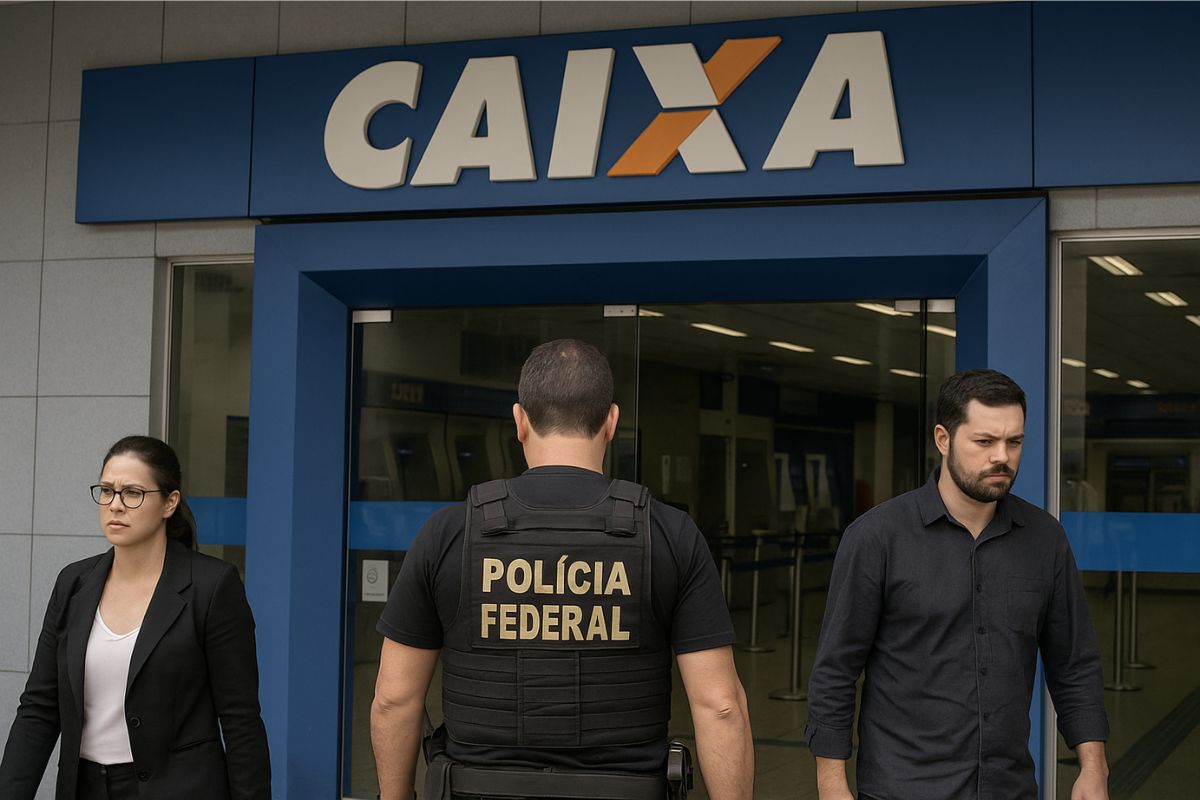

Box at the Center of Scandal: R$ 11 Million Was Diverted with Help from Employee. Federal Police Executes Warrants in DF and Goiás
The Federal Police took action this Tuesday (11) in an operation that promises to shake up the backrooms of Caixa Econômica Federal and reveal the details of a million-dollar scam. According to the investigations, a employee of Caixa itself was allegedly involved in a scheme that diverted over R$ 11 million from customers’ accounts using the instant transfer system Pix.
The scam drew attention due to the method of operation: funds were withdrawn from accounts without the holders’ consent and transferred to shell accounts, a classic strategy used to hide the trail of money. The Federal Police states that part of these funds also ended up on online betting sites, suggesting an attempt to launder the stolen money.
Operation in Two States and the Role of the “Conteiros”
This Tuesday’s action, informally named within the corporation as part of a series aimed at combating digital frauds, targeted seven addresses in the Federal District and Goiás, where search and seizure warrants were executed. The main targets are the so-called “conteiros”, people who open bank accounts and then sell these accesses to criminals — a practice that has become a crucial link in electronic fraud.
-
Corn ethanol attracts R$ 23 billion in 21 new plants and prepares for a nearly 50% jump in Brazilian production by 2027, even with high interest rates.

-
A newly opened terminal in the middle of the Amazon has begun transporting soy and corn through Amapá, eyeing the queue of ships that is congesting the ports in the South.
-
Tesla injected an additional $250 million into the German factory, doubled the battery cell target, and opened its own production line for startups.
-
A 180-meter ship with a deck the size of a football field was christened to carry 25,000 tons of giant energy modules around the world.


According to a statement released by the Federal Police, this “sale of accounts” has become a profitable business for those looking to make quick money without directly engaging in crime. But in practice, it is precisely these accounts that receive the funds diverted from victims, facilitating transactions and making tracking difficult.
“This ‘easy profit’, with the commercialization of account openings to receive fraudulent transactions, enables the occurrence of electronic banking frauds that victimizes countless citizens,” declared the Federal Police.
Investigation Started Within Caixa Itself
The investigation began from an internal report from Caixa, which identified unusual transactions in customer accounts. The main suspect is a bank employee who allegedly acted directly in diverting the funds via Pix. The identification of an employee of the financial institution raises further questions about the level of access and the gaps in security systems of public banks.
The 15th Federal Criminal Court of the Judicial Section of the Federal District authorized a series of strict measures: breaking of bank, tax, and data confidentiality, as well as the seizure of assets from those investigated, up to the amount of R$ 11,111,863.13, which corresponds to the estimated total loss.
Investigated Crimes and Context of Banking Frauds
The suspects may face a serious list of crimes, including:
- Criminal Association
- Qualified Theft via Fraud
- Use of False Documents
- Money Laundering
- Ideological Falsehood
- Peculato-Theft
These types of crimes have become increasingly common in Brazil, especially with the popularization of Pix, which, although a practical and secure tool when used correctly, opens up space for quick frauds, due to the speed of transfers and the difficulty of reversing funds.
In 2024, the Central Bank had already issued a warning about the increase in frauds via Pix and highlighted the importance of secure practices and strengthening authentication systems in banks. The agency itself maintains a public panel on financial frauds, accessible at this official link.
Criminals’ Bet on Digital Anonymity
Cybersecurity experts point out that the use of shell accounts and online betting is a classic attempt to “clean the money”, that is, to make the traceable origin of the funds difficult. With international platforms and digital wallets operating in cryptocurrencies, the work of authorities becomes even more complex.
According to Luiz Farias, a cybercrime expert at Fundação Getúlio Vargas (FGV), “criminals have become as sophisticated as banking technologies, taking advantage of the gaps between security and convenience.”
What Does Caixa Econômica Say?
So far, Caixa Econômica Federal has not officially commented on the employee’s involvement but confirmed that it has cooperated with the Federal Police since the beginning of the investigation. The bank also emphasized that affected customers will be reimbursed based on the individual analysis of each case.