Portuguese
  Spanish


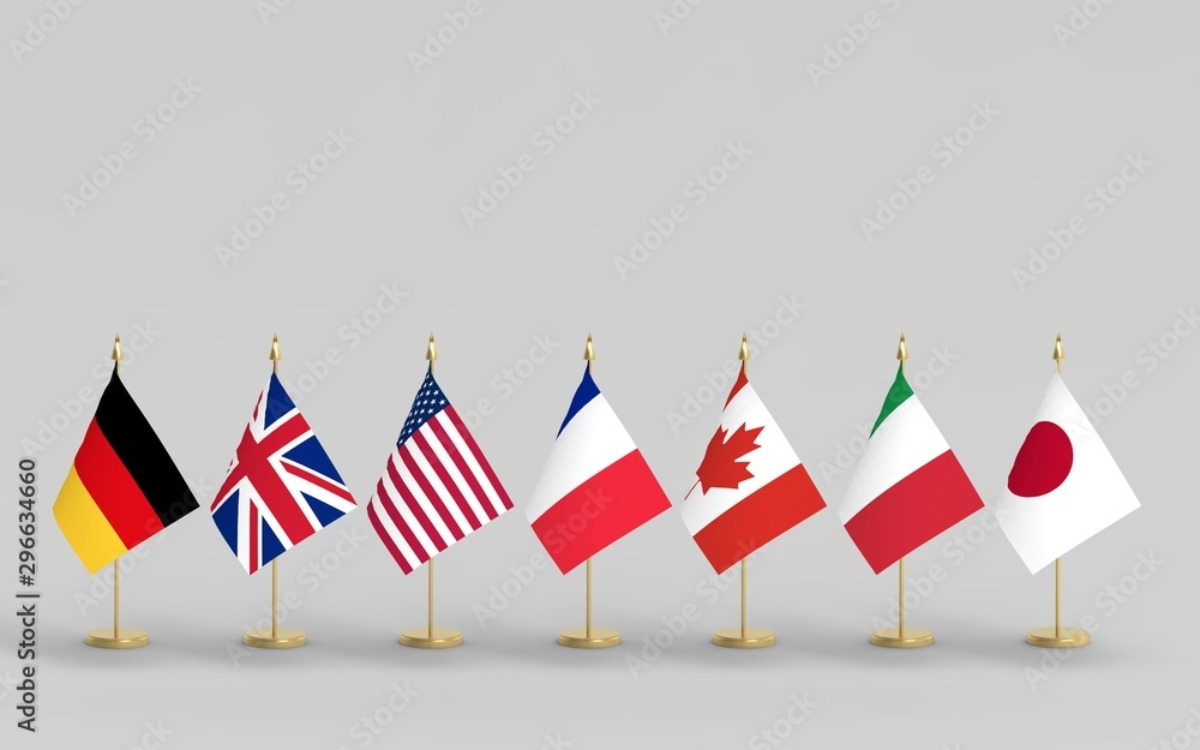

The G7 Is Committed to Eliminating Oil Imports from Russia, the White House Said in a Statement This Sunday (05/08)
According to the White House, the G7’s stance on depriving the import of Russian oil will have a negative impact on President Vladimir Putin’s economy and will deprive him of the necessary funding to support his war effort.
The statement issued by the White House regarding the ban on Russian oil imports imposed by the G7 does not specify the commitments made by the G7 members, which are France, Canada, Germany, Italy, the United Kingdom, Japan, and the United States, which held the third meeting of the year this Sunday, 08. The meeting was conducted via videoconference and included the participation of Volodymyr Zelensky, President of Ukraine.
The choice of the date for the G7 meeting to discuss the deprivation of Russian oil imports is very symbolic, as Europeans commemorate the end of World War II in Europe on May 8 and also on the eve of a military parade in Russia on May 9, when the Soviet Union defeated Nazi Germany.
Measures Taken by the G7
The Western G7 countries have so far shown very close coordination in their announcements of sanctions against the Russian capital, Moscow. However, they are not progressing at the same pace when it comes to Russian oil and gas. The United States, which was not the largest buyer of Russian oil, has already banned its imports. The G7 member states of the European Union, pressured to implement the measure, continue discussions and intense meetings this Sunday, 08, to establish a ban on Russian oil, as the EU is heavily dependent on Russia.
-
Half of Brazilians Prefer Lower Taxes with Private Health and Education, While 44% Opt for Higher Taxes for State-Provided Services, Datafolha Survey Reveals

-
Brazil’s Most Expensive Toll Rises to R$ 40.60 on Route from São Paulo to the Coast, Nearly Matching Bus Fare to Santos

-
As Brazil Expands Social Welfare, Survey Reveals 40% Blame Poverty on Laziness, While 58% Cite Lack of Opportunities

-
China Tightens Control on Antimony, Driving Prices from $22,000 to Nearly $40,000 per Ton as U.S. Rushes to Bolster Strategic Reserves




European Union Negotiates Extension of Oil Embargoes
The EU has been negotiating with some of its member countries the chance to postpone new oil embargoes on Russia, as many EU countries have a strong dependence on oil from Moscow.
For Hungarian Prime Minister Viktor Orbán, the ban on oil imports would bring significant economic losses for EU countries. Hungary’s Foreign Minister, Peter Szijjarto, also reported that it would be a great challenge to operate the country’s economy without oil from Russia.
United States Announces New Sanctions Against Russia
The United States has established new measures against Russia. These measures impact media and access of Russian companies and resources involved in consulting and accounting activities in both the United States and British big firms.
With the inclusion of Channel One Russia, Russia-1 TV station, and NTV Broadcasting Company, Washington prohibits any American company from funding Russian stations through advertising, marketing, or even the sale of equipment.
According to a White House official who requested anonymity, no U.S. company should engage in funding Russian advertisements.
Other measures taken by the United States included the termination of audit, management, consulting, and marketing services, all resources used to manage multinational companies, as well as the prohibition of Russian oil imports. These measures were taken to avoid sanctions or conceal improperly acquired wealth, the same source reported.
The source also emphasized that, although Europeans have close labor relations with Russia, the United States and the United Kingdom, on the other hand, dominate the entire services sector, namely the “Big Four,” the four pillars of world-class auditing and consulting, which are EY, Deloitte, PwC, and KPMG.
Washington also announced new restrictions on the export of U.S. items to Russia, covering all major products ranging from excavators and oil to ventilation systems and boilers.
It also established and imposed visa restrictions on around 2,600 Russian and Belarusian citizens and sanctions against officials of Sberbank and Gazprombank.