Portuguese
  Spanish


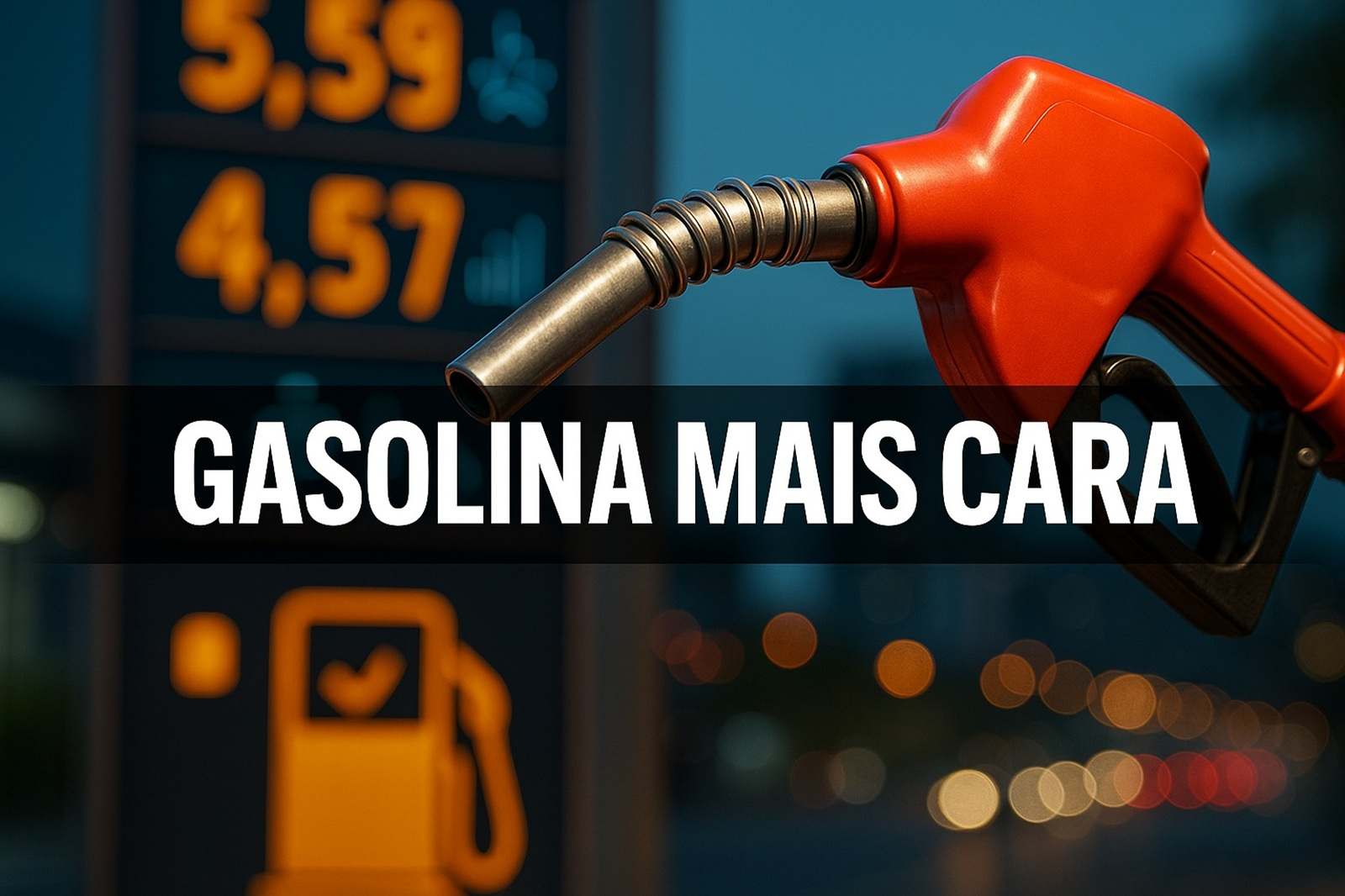


Gasoline Will Increase by R$ 0.10 Per Liter Starting January 2026 with ICMS Increase; Diesel and Cooking Gas Will Also Rise.
The National Council of Fiscal Policy (Confaz) published in the Official Gazette of the Union the decision to increase the ICMS on gasoline, diesel, and cooking gas starting January 2026.
The measure directly affects consumers and can have an impact on the entire economy.
Increase Defined by Confaz
In the case of gasoline, the tax amount rises by R$ 0.10 per liter, reaching R$ 1.57.
-
As Brazil’s Tax Revenue Hits $2 Trillion in First Half of the Year, Questions Arise About Allocation and Usage Criteria

-
King Charles III Discloses British Royal Family Finances, Revealing Million-Dollar Tax and How Public Funds, Historic Estates, Wind Farms, and Duchies Sustain a Billion-Dollar Monarchy

-
Brazil to Open $100 Million Military Theme Park Featuring Tank Rides and Immersive Experiences
-
Brazilian Multinational WEG to Supply 600 Motors for World’s Largest Lithium Reserve at Thacker Pass, a $2.2 Billion Project in Nevada Funded by U.S. Department of Energy


Diesel will have an adjustment of R$ 0.05 per liter, reaching R$ 1.17. Cooking gas will cost R$ 1.05 more per cylinder.
This will be the second consecutive year of tax increase.
In February 2025, there was already an increase, which shows continuity in the rate adjustment policy.
Justification for the Increase
According to the National Committee of Secretaries of Finance, Finance, Revenue, or Taxation of the States and the Federal District (Comsefaz), the decision considers the average monthly prices published by the National Petroleum Agency (ANP).
The evaluated period was from February to August 2025, compared to the same interval in 2024.
Therefore, the calculation takes into account the variation recorded in the market, which ensures, according to the secretaries, balance in state revenue.
Expected Economic Impact
As fuels function as a key price, the effects of the ICMS increase tend to spread to other sectors. This happens because gasoline, diesel, and cooking gas influence transportation, logistics, and daily household consumption.
Moreover, experts remind that adjustments in this segment tend to put pressure on inflation.
It is worth noting that Petrobras abandoned, at the beginning of the government of Luiz Inácio Lula da Silva, the policy of international parity.
Previously, fuels were adjusted based on the price of oil and the variation of the dollar.
Now, price formation follows a different criterion, but the state tax will again weigh on the population’s expenses.