






 Portuguese
  Spanish


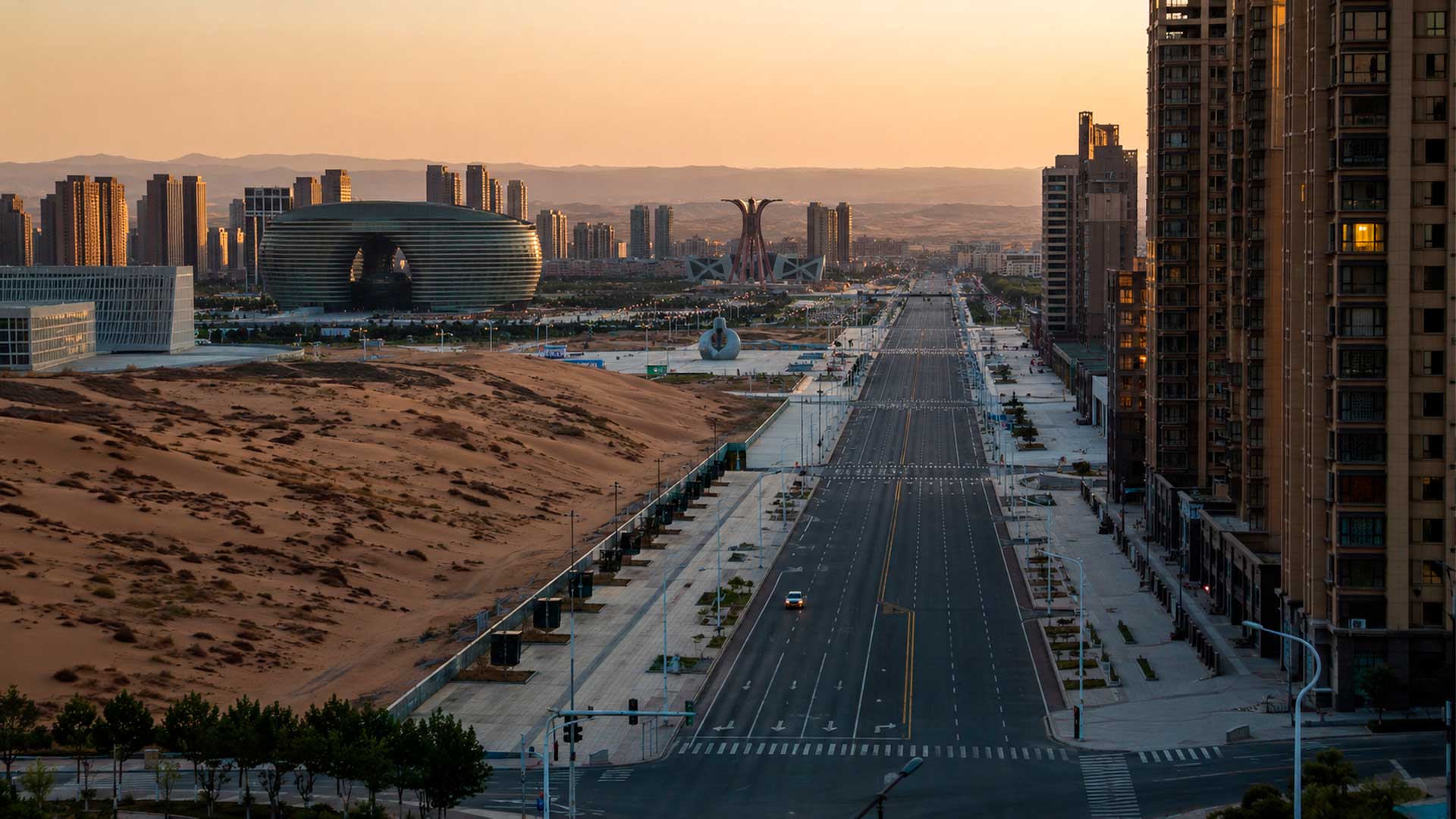

Built at an accelerated pace in Inner Mongolia, Kangbashi had wide avenues, museums, theaters, and public buildings before having enough residents to occupy its neighborhoods. The Ordos district was planned to accommodate up to 1 million people, but it recorded only 28,000 inhabitants in 2010.
Kangbashi was born as a city too ready for a population that did not yet exist. In northern China, in an area connected to the city of Ordos, the local government built wide avenues, monumental squares, administrative buildings, libraries, theaters, and residential complexes at a speed that drew attention outside the country.
The problem appeared when the cranes left and the windows remained dark. In 2010, the structure had been designed for up to 1 million residents, but the district had only 28,000 permanent residents, according to data released at the time.
The nickname “ghost city” came from this brutal difference between concrete and everyday life. There was no shortage of buildings, but there was a lack of supermarkets, enough schools, hospitals, more dynamic transportation, street commerce, and practical reasons for families to leave Dongsheng, the former urban center of Ordos.
-
Mother and Daughter Convert Small Garage into Full Apartment to Save Money and Stay United

-
Woman Leaves Restaurant Job to Become a Builder in Brazil, Launches Her Own Construction Brand “Construcida”

-
Mother and Daughter Turn Abandoned Warehouse Find into Million-Dollar Business in the U.S., Uncovering 25,000 Caps, 10,000 Sneakers, and Rare Apparel from Nike, Adidas, and Puma
-
After Nearly 30 Years at Beto Carrero, Elephant Baby Begins New Life at Sanctuary in Brazil’s Mato Grosso


Today, the story is less simple. Kangbashi is still far from the initial plan, but it is no longer just an empty setting. Recent data from the district government indicate 131,300 permanent residents, as well as schools, parks, public offices, hotels, tourist areas, and new urban services.
The wealth of coal made it possible for an entire city to come off the drawing board in a few years


The origin of Kangbashi is linked to the growth of Ordos in the early 2000s. The Inner Mongolia region holds large reserves of coal and natural gas, and the exploitation of these resources generated a wave of public revenue, real estate appreciation, and political confidence.
As reported by a study published in the journal Sustainability, Ordos had reserves of 149.6 billion tons of coal, a volume equivalent to about one-sixth of China’s reserves, in addition to 700 billion cubic meters of natural gas. This money helped finance urban expansion on a scale rare even by Chinese standards.
The municipal government decided to create the Qingchunshan Development Zone in 2000. In 2004, the area was renamed Kangbashi, and construction gained momentum. The idea was to alleviate Dongsheng’s space limitations and create a new political, cultural, and administrative center for Ordos.
The plan seemed logical on paper. There was money, available land, public ambition, and an economy fueled by coal. The mistake was believing that infrastructure alone could attract residents at the same pace as the construction.
The district had a museum, library, and avenues before having a neighborhood routine
According to China Daily, Kangbashi received investments of 17 billion yuan over six years to transform an area of dunes into a planned metropolis, with futuristic public buildings, museums, libraries, theaters, squares with sculptures, and residential buildings. The report, published in 2010, noted a stark contrast between the scale of the city and the actual number of inhabitants.
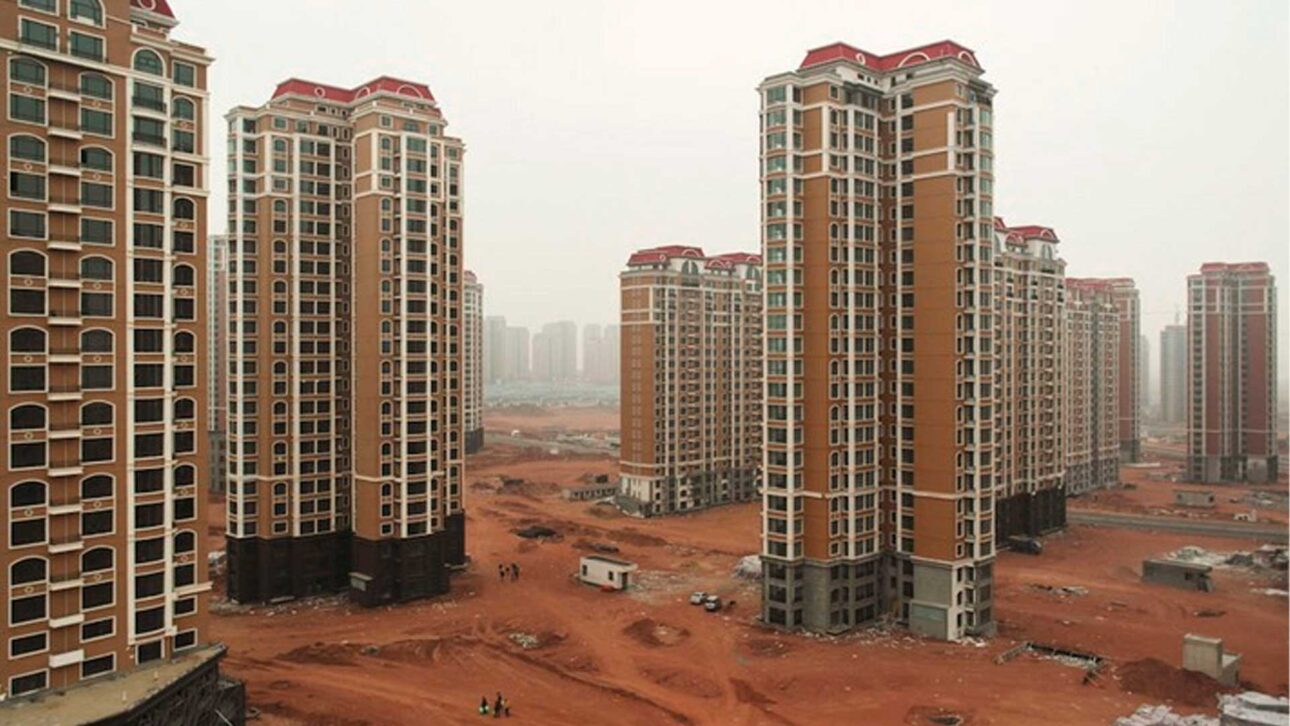
The city had the appearance of a modern capital but still did not function like a common city. A teacher interviewed in the report stated that upon arriving in 2007, she had difficulty even finding where to buy food. The scenario helps to understand why Kangbashi became a case studied in urbanism, economics, and public planning.
The architecture reinforced the image of a spectacular city. The Ordos Museum, designed by MAD Architects, was completed in 2011 with an irregular metallic shape inspired by the region’s arid landscape. The building became one of the visual symbols of the attempt to create cultural identity even before consolidating urban life around it.
But a city cannot sustain itself with monuments alone. Without strong commerce, everyday services, and nearby jobs, many residents remained connected to Dongsheng. Some apartments were purchased as investments, not as residences, leaving entire neighborhoods looking empty at night.
The nickname of ghost city grew because there was too much concrete and too few people
Kangbashi became internationally known because it encapsulated a recurring criticism of the Chinese model of urban expansion. The city demonstrated the risk of building large residential areas, avenues, and public buildings before there was a real demand to occupy them.
The China Story Project, linked to the Australian National University, described Kangbashi as one of the richest “ghost cities” in China. The text points out that many residents and public officials continued to live in the old center and only commuted to work because the new district still lacked shops, conveniences, and consolidated services.
This gap fueled images of wide streets with almost no cars, empty squares, and residential towers with few lights on. To outsiders, Kangbashi seemed like an abandoned city. To those living there, the reality was more gradual, with families trying to transform a state project into a place of everyday life.
Urban researchers also warn that the label “ghost city” can oversimplify the case. The problem was not a total absence of residents, but under-occupation, real estate speculation, and a mismatch between planning, market, and the real needs of the population.
Schools, offices, and services helped light up the windows of the new city
The recovery of Kangbashi did not come from a single project. It progressed gradually, with the transfer of public offices, opening of schools, expansion of medical services, and incentives for property purchase. The strategy was to create concrete reasons for families to stay, not just visit or work during the day.
The local government also invested in education as an attraction tool. Better schools led parents to consider moving to the district, especially families of civil servants, teachers, and workers linked to state-owned enterprises. This type of occupation creates daily movement, opens space for neighborhood commerce, and reduces the sense of emptiness.
According to the Kangbashi District government, in an institutional page updated on April 14, 2026, the area has 372.55 km², 4 subdistricts, 21 communities, and 131,300 permanent residents. The same body defines Kangbashi as the political, cultural, scientific, and educational center of Ordos.
The number is still far from the dream of 1 million inhabitants, but it changes the reading of the case. Kangbashi did not become a bustling metropolis, but it no longer fits the frozen image of 2010, when almost everything seemed ready and almost no one was around.
Would you live in a city planned from scratch, with modern buildings and wide streets, but still in the process of gaining commerce, neighborhood, and routine? Leave your comment and tell us if Kangbashi seems like a planning mistake, a long-term bet, or a bit of both.


