






 Portuguese
  Spanish


GPS Monitoring Revealed Extensive Movements After Release in Open Area of the Moroccan Desert, Showing How Mhorr Gazelles Underwent an Intensive Exploration Phase Before Establishing in Specific Territories in a Conservation Project Monitored by Researchers.
A group of Mhorr gazelles began to move in open areas of the desert in southern Morocco after a reintroduction process carried out without physical fences.
Scientific monitoring showed that, after release, some of the animals traveled long distances before settling in specific areas, with recorded movements of up to 50 kilometers.
Reintroduction in Open Area in Southern Morocco
The reintroduction took place in the Safia region, a desert area selected for the project because it meets environmental conditions compatible with the species and has low human interference.
-
Man Compensated After Being Charged Property Tax for Over 30 Years Post-Sale, Court Upholds Decision in Southern Brazil

-
Mediterranean Storm Uncovers 1,800-Year-Old Roman Marble Columns Near Israel, Revealing Ancient Shipwreck and Insights into Imperial Architecture

-
Pregnant Woman Gives Birth Minutes After Seeking Help at Roadside Station in Brazil; Family’s Decision and Quick Action by Novo Litoral Team Touch Hearts

-
Brazilian Farmer Turns Life Around with Papaya: At 67, He Leases Land, Harvests 3.2 Tons Monthly, and Earns Up to $3,000 Selling the Fruit He Once Found Too Expensive



The initiative was monitored by researchers who used telemetry collars on some of the animals, allowing continuous tracking of movements, territory use, and patterns of residence over time.
Mhorr Gazelle and the Threat History
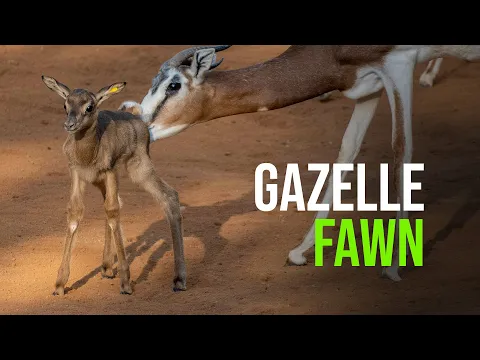
The Mhorr gazelle is a subspecies of the dama gazelle classified as critically endangered.
Adapted to arid and semi-arid environments, it historically occupied large areas of North Africa.
The progressive reduction of the population occurred throughout the 20th century, primarily associated with hunting, habitat fragmentation, and the expansion of human activities in previously sparsely populated regions.
Monitored Release with GPS Collars

The project in Safia involved the release of 24 individuals, all from management and conservation programs.
Seven of them were equipped with GPS collars, allowing researchers to accurately record movements after release.
The monitoring began immediately after release and extended for months, generating a detailed set of spatial data.
First Movements and Recognition Phase
In the first few days, records indicated that the gazelles remained close to the release point, making short movements and maintaining cohesion among the individuals.
This initial pattern was consistently observed in the telemetry data, with movements concentrated in a reduced area, a common characteristic in monitored reintroduction processes.
Explorations of Up to 50 Kilometers in the Desert
As monitoring progressed, the data began to show clear changes in spatial behavior.
Some of the animals started to explore more broadly, gradually moving away from the initial point.
These movements intensified during certain phases, resulting in paths that reached up to about 50 kilometers.
The recorded routes indicated directed movements, with go-and-return trips, rather than simple random dispersals.
Choice of Residence Areas
The analysis of the trajectories revealed that, after this exploration period, the gazelles reduced their movement radius and began to use specific areas more frequently.
The pattern recorded by the collars showed greater permanence in certain sectors of the territory, with repeated paths and regular use of the same spaces, indicating the establishment of living areas.
Importance of Telemetry in Monitoring

The use of telemetry was essential to document these stages.
In a vast and hard-to-access desert environment, much of these movements could not be directly observed by ground teams.
The data allowed for the recording not only of the distance traveled but also of the duration of explorations, the speed of movement, and the frequency of return to specific areas.
Difference from Previous Projects
The study that analyzed the reintroduction highlighted that the experience in Safia differed from previous initiatives because it occurred in an open environment, without delimitations by fences.
In other projects involving the dama gazelle, the release was primarily conducted in fenced reserves, which restricted the analysis of spatial behavior in conditions closer to natural.
Environmental Criteria for Area Selection
The choice of area considered environmental factors such as availability of vegetation, terrain features, and historical presence of large herbivores.
These criteria were noted as relevant to reduce initial risks and favor the adaptation of the animals after release.

Social Behavior After Release
Another aspect recorded was the maintenance of social behavior.
Even during longer movements, the data indicated that the gazelles maintained grouping patterns, avoiding excessive dispersion.
The social cohesion observed is a factor associated with the survival and reproduction of the subspecies in open environments.
Use of Data for Conservation
The reintroduction in Safia has started to be cited in scientific analyses as an example of applying tracking technology to understand the initial stages of adaptation of threatened species.
The detailed monitoring allowed for observing how the animals utilize the available space, which areas they begin to frequent more regularly, and how the transition between exploration and permanence occurs.
The information obtained from the collars was also used to guide management decisions, such as evaluating priority areas for protection and identifying regions more used by the gazelles after release.
As the data was analyzed, the territory ceased to be interpreted merely as a continuous area and began to be described as a set of spaces used differently by the animals.


Agora o governo teria que fazer uma campanha contra a caça desse ****. Porque não resolve nada preservar em ambientes adequados e depois os caçadores abaterem os animais!!!
Se elas foram extintas, como foram soltas?
Elas foram extintas localmente, ou seja, desapareceram por ação humana (por exemplo, caça, destruição do habitat etc) nessa região do Marrocos, mas ainda deviam existir em outros países próximos ou em zoológicos, de onde foram translocados para o Marrocos.
Então nao são extintas, estão ameaçadas, esse termo coreto.