






 Portuguese
  Spanish


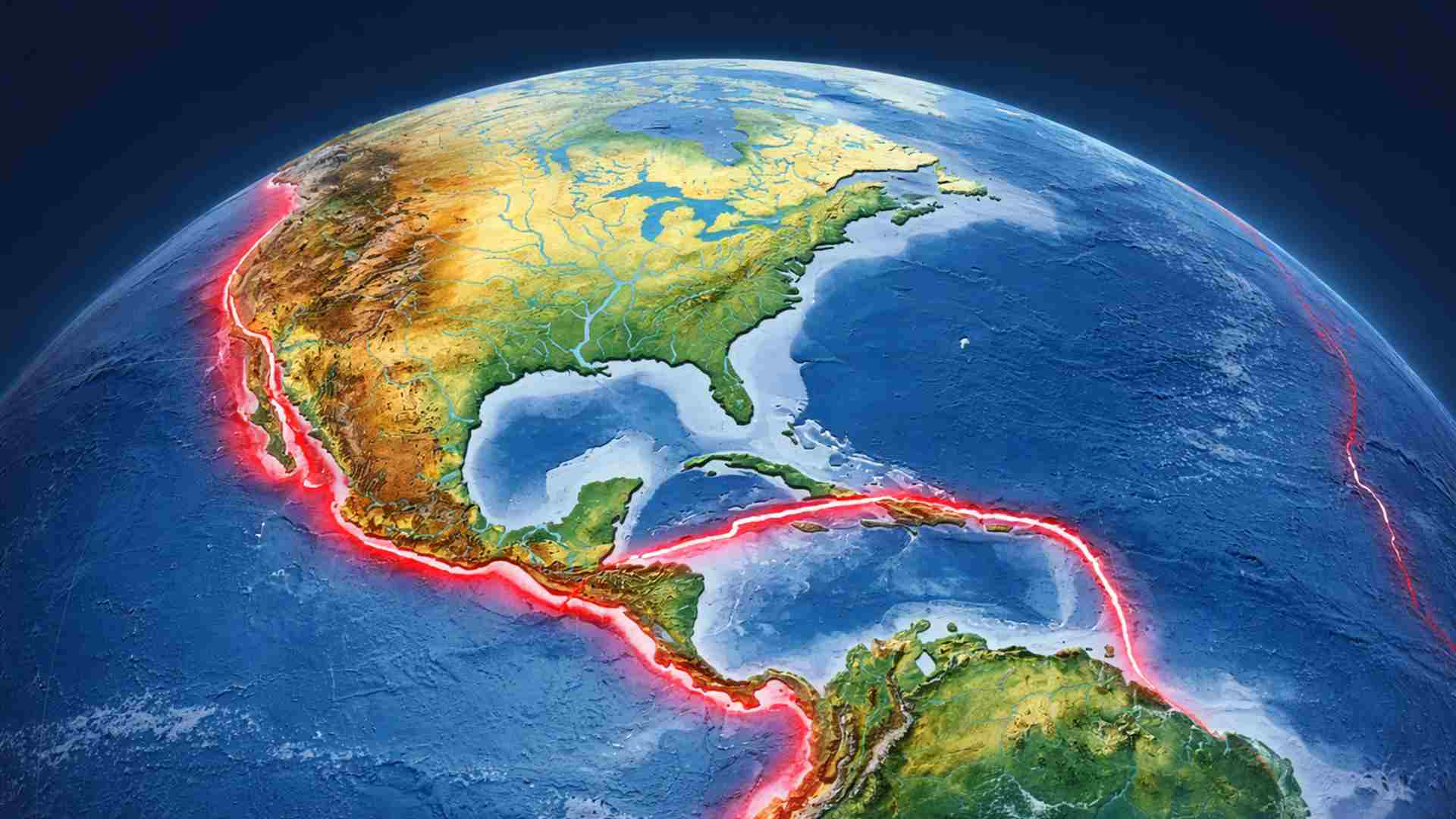
The discovery that the continents joined much earlier than expected challenges established climatic and biological models. The anticipation of this geological event offers a new perspective on how plate tectonics shaped ocean currents and life in the Americas.
New geological evidence indicates that the land connection between North America and South America formed much earlier than science previously believed. Studies conducted on sedimentary rocks and mineral records suggest that the closure of the isthmus, a process known as the collision between the Americas, began and concluded in periods that challenge the established consensus of approximately 3 million years ago. This discovery rewrites the chronology of plate tectonics and global ocean circulation patterns.
Mineral evidence and the new geological timeline
Researchers analyzed the presence of zircon crystals and geochemical signatures in sedimentary basins in Colombia, finding records of river flows dating from 13 to 15 million years ago. These data indicate that there was already a land bridge or a chain of islands very close allowing the transport of sediments between the landmasses. The collision between the Americas would therefore have begun to alter the regional geography long before the Great American Biotic Interchange became evident in the fossil record.
Detailed analysis suggests that the uplift of the land was a gradual process, but significantly earlier. The presence of minerals originating from the north in soil layers from the south, dated to the Miocene, reinforces the thesis that the marine barrier between the continents was already severely reduced or nonexistent at that time. This anticipation of the collision between the Americas compels geologists to reconsider the tectonic forces that drove the subduction of plates in the Panama region.
-
U.S. National Park Deploys Robotic Birds Near Wyoming Airport to Protect Endangered Species: Dancing and Sound-Emitting Replicas Aim to Lure Real Birds to a 100-Acre Restored Area Away from Runways After 32 Aircraft-Related Deaths

-
Russia and India Lift 320-Ton Pressure Vessel into Kudankulam Nuclear Plant Reactor, Advancing Project That Has Already Prevented 112 Million Tons of CO2 Emissions

-
Brazilian Student Wins Global Science Fair in the U.S. with Sound Wave Method to Alter Alzheimer’s-Linked Genes
-
Bosch Unveils Revolutionary 2.3 kg Hub Motor for E-Bikes with 45 Nm Torque and 400 Watts Power, Eliminating Resistance Above 25 km/h in Historic Shift for German Manufacturer


Impact on ocean circulation and global climate
The definitive union of the landmasses had drastic consequences for the planet’s climate, as it interrupted the exchange of waters between the Atlantic Ocean and the Pacific Ocean. With the collision between the Americas, the formation of the isthmus forced the redirection of ocean currents, giving rise to the Gulf Stream. This phenomenon transported warmer waters to the North Atlantic, playing a crucial role in regulating temperatures in Europe and the formation of polar ice caps.
Scientists are now seeking to correlate the new dating of the collision with global cooling events observed in other climate records.
If the land barrier formed millions of years earlier, changes in ocean currents may have influenced the transition to glacial periods in a more complex way than previously thought. A precise understanding of the collision between the Americas is crucial for understanding how small geographical changes can trigger climate transformations on a planetary scale.
Repercussions for biodiversity and evolution
The discovery also sheds light on the movement of animal and plant species between the two continents. Although large-scale exchange is dated more recently, the existence of an earlier connection explains the presence of certain lineages in unexpected locations before the official closure of the isthmus. The collision between the Americas would have allowed for migratory “jumps” through islands or temporary connections, influencing biological evolution in advance.
The continuation of field research aims to identify more sedimentary contact points that confirm the stability of this early land bridge. Geologists and paleontologists are working together to align the physical evidence of land with records of fauna dispersion. The review of the collision between the Americas demonstrates that the history of the Earth is dynamic and that new dating methods can transform scientific certainties into new questions about the past of our continent.
Click here to access the study.





Be the first to react!