






 Portuguese
  Spanish
  4 min of reading
  0 comments


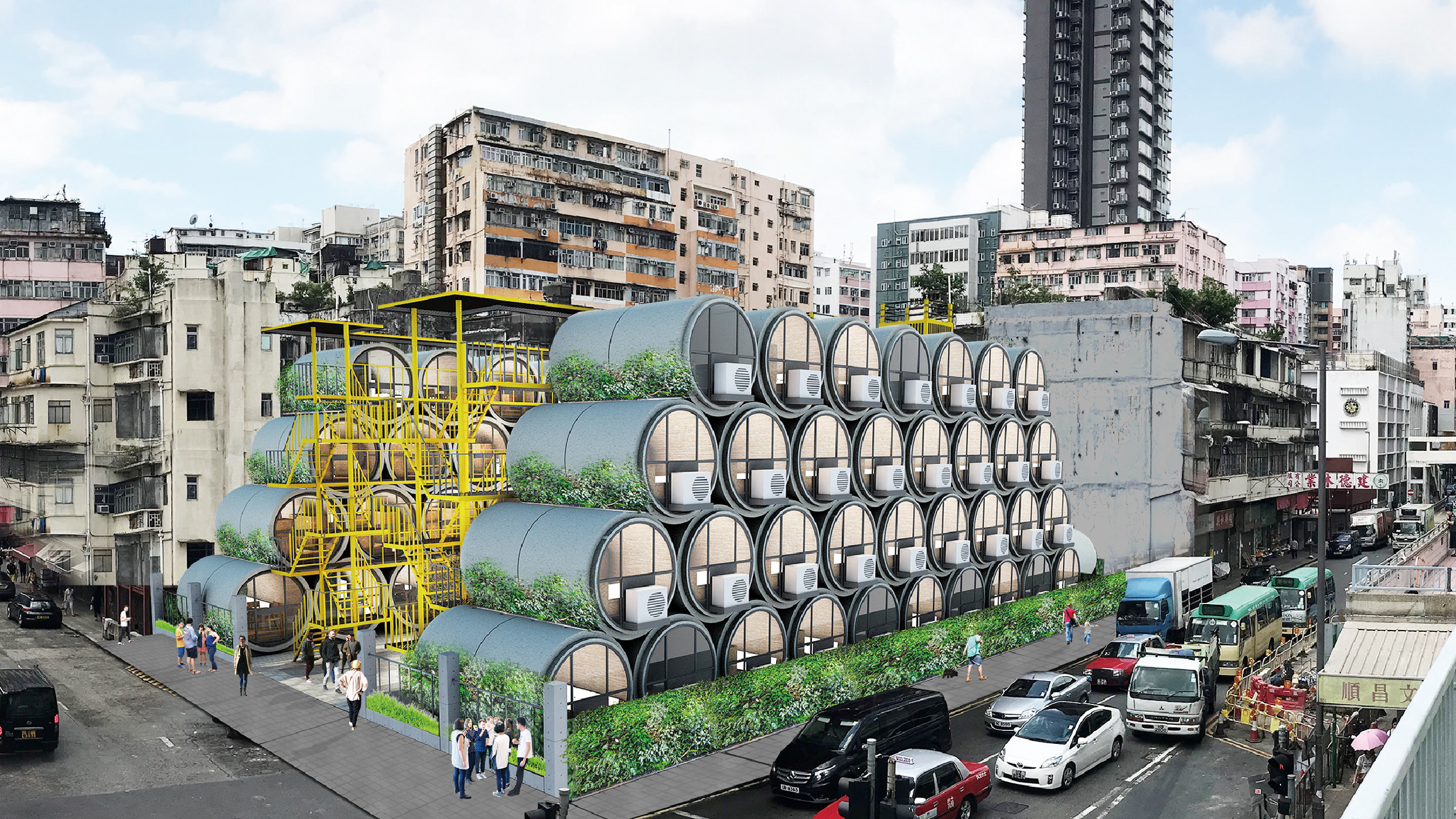
9.29 m² Micro-apartment Concentrates Living Room, Kitchen, Bathroom, and Bedroom
In one of the cities with the most expensive and least accessible real estate on the planet, an unusual architectural proposal has gained international attention. Instead of conventional buildings, the OPod Tube House project transforms large concrete tubes used in infrastructure into micro-apartments designed for one or two people. According to Architonic, the idea was created by the James Law Cybertecture office in Hong Kong as an experimental micro-living unit built from a concrete water pipe with a 2.5-meter diameter.
The proposal was born directly from Hong Kong’s housing crisis. According to Area Arch, the city was identified by the Demographia International Housing Affordability Survey 2017 as the least affordable real estate market in the world, a scenario that has helped drive the search for compact and lower-cost solutions. In this context, the OPod Tube House emerged as an attempt to occupy neglected urban spaces with modular residential units ready for installation.
Concrete Tubes Used in Infrastructure Gained Residential Function in Hong Kong
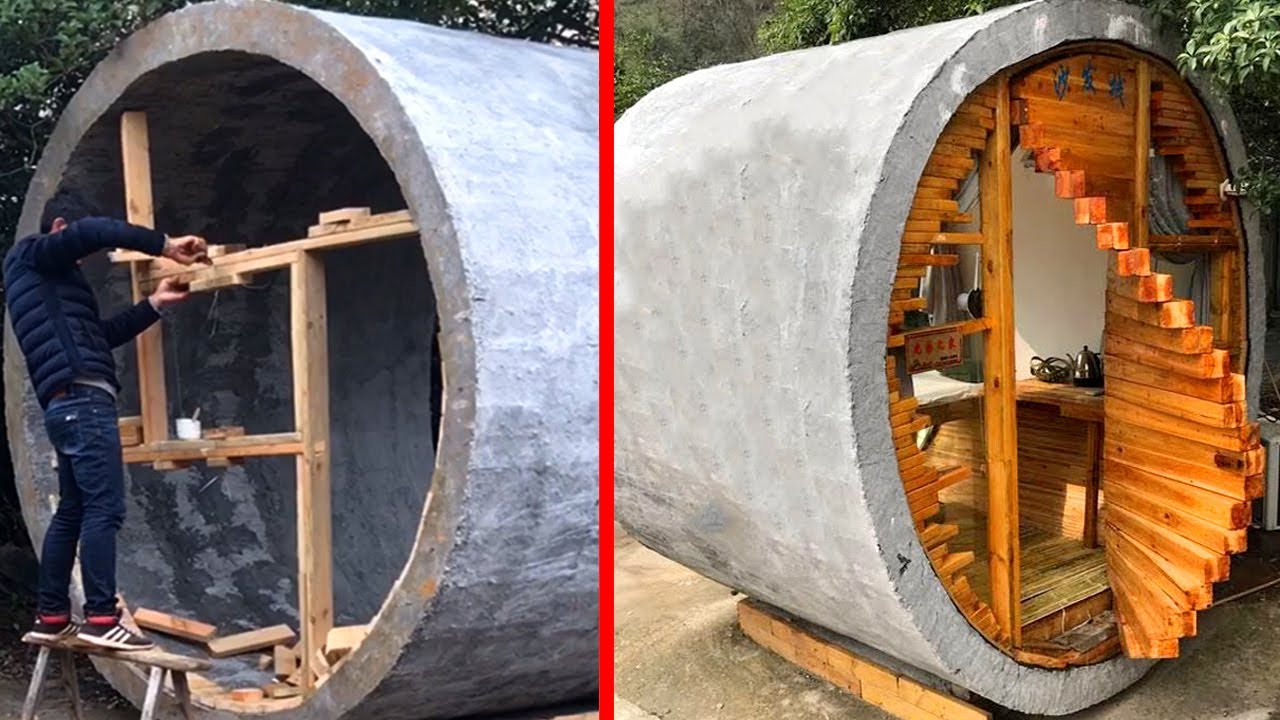
According to Architonic, each unit of the OPod Tube House uses a concrete tube originally employed in water systems. The project repurposes this cylindrical structure and converts it into a compact apartment, maintaining the concrete’s strength as the basis of the dwelling.
-
The La Galerie Nortis, a real estate launch by developers Cyrela and Nortis in Moema, São Paulo, arrives with apartments featuring 4 suites ranging from 283 to 416 square meters, an estimated gross development value of R$ 765 million, and the proposal to redefine the high standard in the region.

-
Transnordestina sets record by installing 1.69 km of tracks in a single day, reaches 81% completion, and plans to deliver an additional 100 km of railway by the end of June 2026.
-
Instead of plastering the wall, Argentine architects left ordinary bricks exposed, without traditional mortar, without finishes, without paint, and created a perforated pavilion that looks like an art installation.

-
Prefabricated wooden house surprises in Spain with 132 m², two floors, up to four bedrooms, and a price starting from 45,751 euros, while the version with insulation for living can reach 80,059 euros without assembly, installation, and architect included.




Area Arch reports that each tube weighs about 22 tons, a factor that helps explain why the units can be installed and even stacked with relative simplicity, without relying on very complex support structures. The module’s own mass becomes part of the project’s construction logic.


This model transforms a common element of heavy infrastructure into a piece of modular housing. Instead of being restricted to underground or hydraulic works, the tube functions as a residential capsule installed in small, empty, or underutilized urban areas.
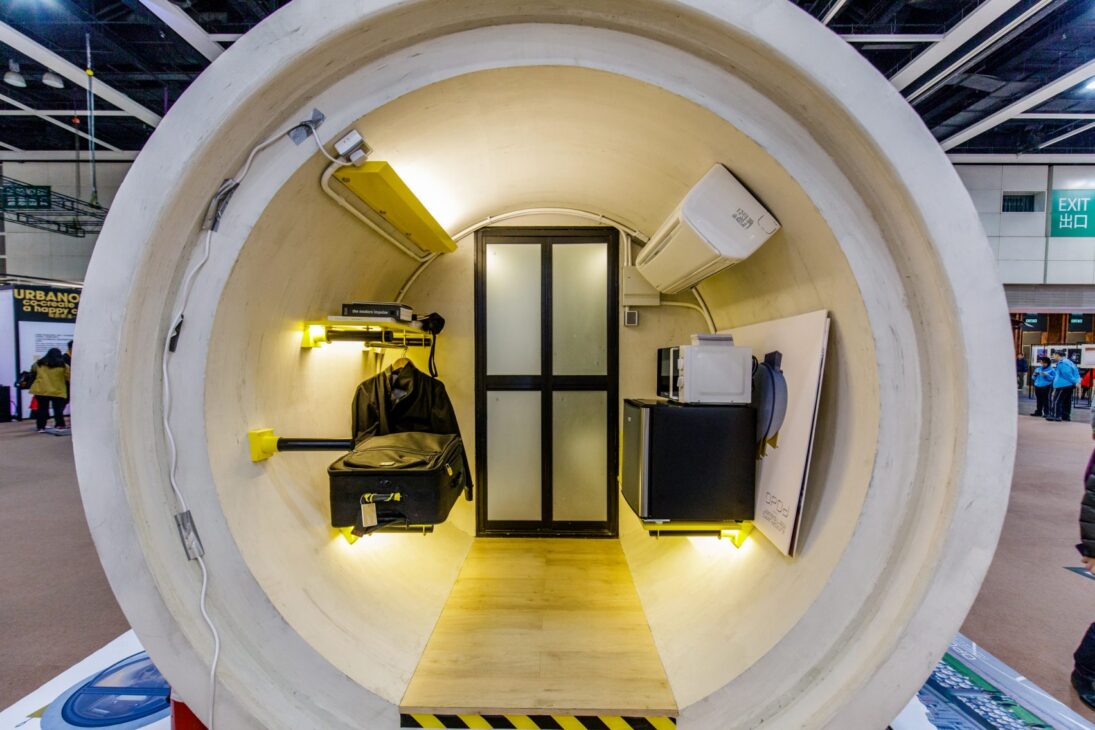
Microapartment of 9.29 m² concentrates living room, kitchen, bathroom, and bedroom
According to Area Arch, each unit is about 100 square feet, equivalent to 9.29 m², and is designed to accommodate one or two people. Within this reduced space, the project combines a living area, compact kitchen, bathroom, and furniture designed to make the most of every available inch.
Architonic describes the OPod Tube House as a low-cost micro living unit, equipped to function as a complete dwelling despite the reduced dimensions. The internal design was conceived to combine basic functions of living, cooking, resting, and using the bathroom within the circular structure.
The logic of the project lies precisely in this extreme space condensation. The goal is not to compete with traditional apartments but to offer a functional and compact alternative in a city where housing costs push part of the population towards increasingly tight and expensive solutions.
Project aims to occupy small plots and abandoned urban spaces
One of the central points of the OPod Tube House is the use of areas that would not normally receive conventional constructions. According to Area Arch, the proposal seeks to install these units in vacant and underutilized locations in central Hong Kong, creating housing on narrow or temporarily unused plots.
Architonic also presents the project as an experimental low-cost micro living housing solution, designed to address the city’s space limitations. This includes precisely the possibility of fitting modules where the traditional logic of buildings does not work with economic efficiency.
This characteristic makes the project more than just a small house. It tries to position itself as a modular urban occupation system, aimed at increasing the housing supply in areas where the city usually leaves gaps due to lack of scale, shape, or feasibility for conventional constructions.
OPod Tube House became a symbol of compact architecture in a city with extremely expensive properties
The international impact of the project did not come solely from the unusual format. It arose from the contrast between a typical heavy infrastructure object and the proposal to convert it into housing in one of the most expensive cities in the world to live in. According to Area Arch, the project attempts to offer a lower-cost response to a housing crisis marked by high population density and strong pressure on the residential market.

Architonic emphasizes that the OPod Tube House is an experimental proposal, not the definitive solution to Hong Kong’s housing deficit. Even so, the project gained visibility precisely by showing how a common industrial material can be reused in a completely different function from the original.
In the end, what draws attention to the OPod Tube House is the way it combines compact architecture, structural reuse, and urban crisis in a single object. By transforming a concrete tube into a micro-apartment, the project proposes an unlikely response to a real and increasingly urgent housing problem.








Be the first to react!