Portuguese
  Spanish


Earth’s Population is Questioned by Study from Aalto University that Compared Censuses, Population Estimates, and Rural Areas Linked to Dams. The Research Suggests Underestimation in Remote Communities, but Experts Urge Caution Before Revising the Global Count or Talking About Extra Billions on the Planet, According to a Scientific Report in 2026.
The Earth’s population returned to scientific debate after researchers from Aalto University in Finland compared resettlement data linked to rural dam projects in 35 countries with global population databases. The study, published in 2025 in the journal Nature Communications, analyzed records between 1975 and 2010 and pointed out significant underestimation in rural areas.
According to Popular Mechanics, in a report by Darren Orf published on June 10, 2026, most estimates place the human population around 8.2 billion, but the study suggests that rural regions may be under-represented in global data sets. The most delicate point is that other experts still consider a billion-scale revision unlikely without additional evidence.
Study Does Not Say the Planet Already Has Billions More, but Raises an Important Question
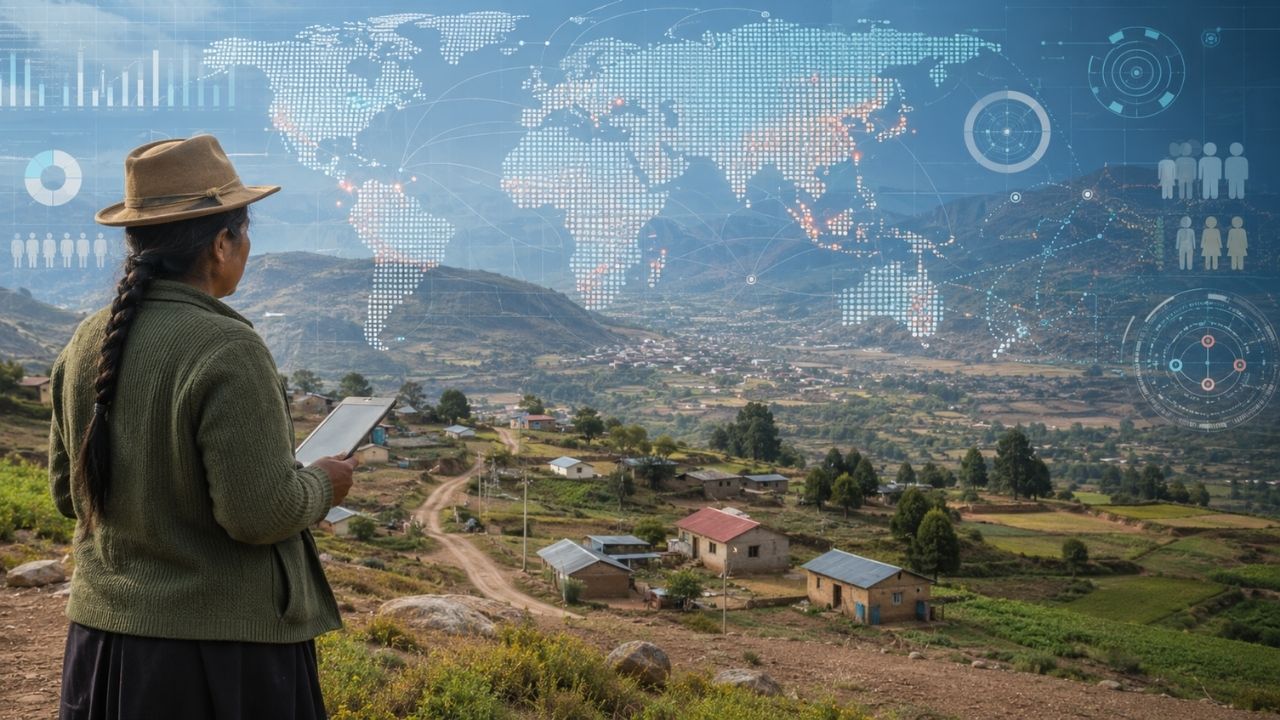
The first reading of the topic may seem explosive: the Earth’s population would be much larger than imagined. But the correct interpretation is more cautious. The study points out that global databases may underestimate rural populations in analyzed areas, especially in places where censuses are difficult, infrastructure is limited, and communities are far from administrative centers.
-
From Space, a “Great Solar Wall” Spans 400 km of China’s Kubuqi Desert, Transforming the “Sea of Death” with Giant Panels to Combat Sandstorms and Revitalize the Land

-
New Study Finds Brief Stress Episodes Can Alter Blood and Increase Risk of Clot Formation

-
Ukraine Escalates War Efforts with Plan to Deploy 25,000 Ground Drones, Test Phantom MK-1 Humanoid Robot, Use Armed Mini-Tanks, and Expand Automated Attacks up to 15 km from Frontline

-
New Superfiber Developed by Imperial College Researchers and Approved by the EU Promises to Increase Satiety and Help Prevent Weight Gain


This does not automatically mean that the total number of inhabitants on the planet should be altered by billions. The research raises a potential flaw in population maps, it does not deliver a new official count of humanity. Even so, the doubt is relevant because this data guides public policies, environmental studies, infrastructure planning, and resource distribution.
Dams have become an unexpected source for recounting rural areas
To test the accuracy of global databases, researchers used resettlement data linked to over 300 dam projects in 35 countries. When a dam is built, communities in flooded areas need to be relocated, and these populations are often recorded more accurately because there are compensation and resettlement processes.
This methodological choice made dam projects a kind of independent reference. Instead of relying solely on traditional censuses, researchers compared these local records with global population databases. It was in this difference between field data and population maps that the suspicion of rural underestimation arose.
Rural areas are precisely where the count can fail the most
The Earth’s population is estimated through national censuses, statistical models, satellite images, and spatial databases. The problem is that remote rural areas may be less visible in these systems, especially in countries with lower collection capacity, access difficulties, and incomplete administrative records.
The research from Aalto University states that the analyzed datasets tended to underestimate rural populations, with differences ranging from 53% to 84% compared to the records used as a reference. If this pattern appears in other contexts, the impact could be significant for communities that already receive little attention from public authorities.
Why getting the population wrong changes more than just a statistic
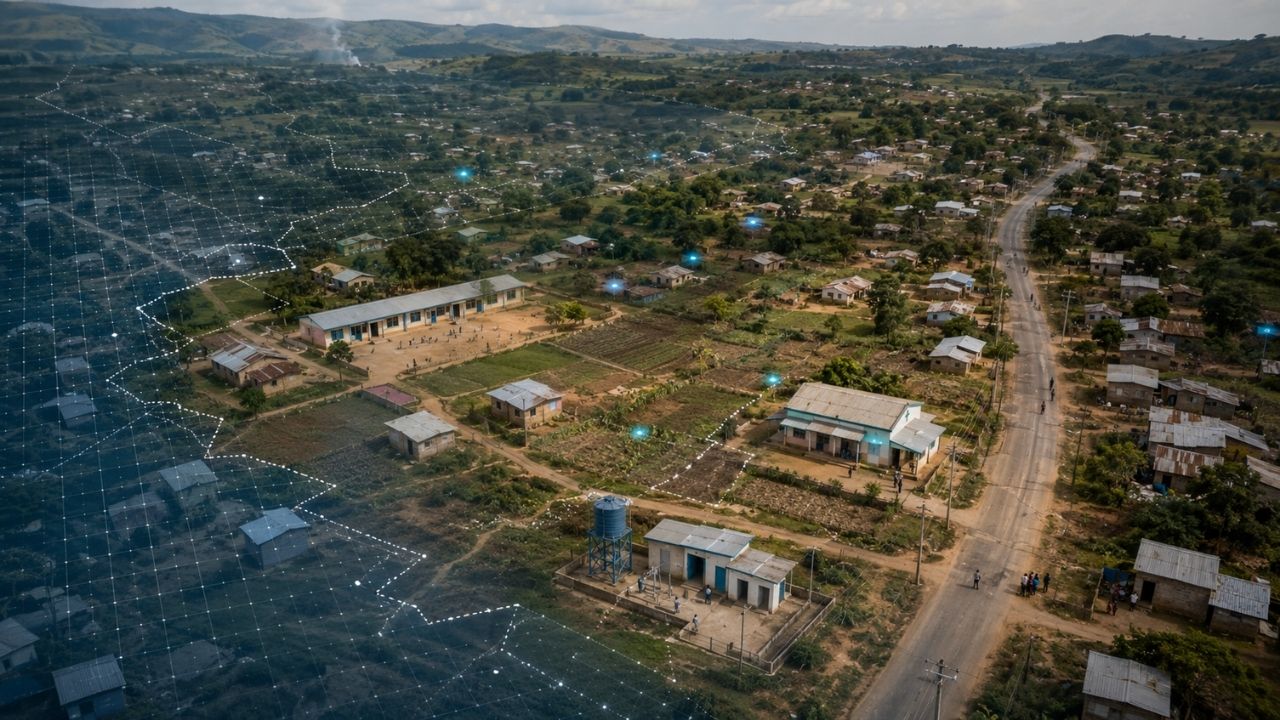
Counting people is not just a demographic curiosity. The size of a population helps governments and institutions define schools, hospitals, roads, sanitation, energy, disaster response, and social policies. When a group appears smaller than it is, it may receive fewer resources than it needs.
Therefore, the potential failure in the Earth’s population has practical effects. An underestimated rural community can become invisible in the budget, planning, and even in studies on climate risk. Statistics cease to be just numbers and start influencing who is served, where the State reaches, and which regions enter the priority map.
The estimate of 8.2 billion continues to be treated with caution
Most current estimates place humanity around 8.2 billion people. The study cited by Popular Mechanics does not replace this number with a new global count but suggests that the base used to represent rural areas may have significant gaps.
This detail is crucial to avoid turning a serious research into a misleading headline. The correct question is not just “how many people are there?”, but “where are the population models leaving people out?”. The difference changes the tone of the debate and avoids stating as fact what still needs to be proven.
Demographers call for evidence before a historical revision
The skeptical reaction is also part of science. Stuart Gietel-Basten, from the Hong Kong University of Science and Technology, was quoted by Popular Mechanics as considering that an underestimation of billions of people would be extraordinary news and would clash with many other data sets accumulated over decades.
This warning does not undermine the importance of the study but shows its limit. To change the understanding of the Earth’s population, it would be necessary to verify if the rural underestimation found in dam projects appears in other types of territories, countries, periods, and counting methods. In science, a strong clue needs to become repeated evidence before changing consensus.
Satellites help, but do not solve everything alone
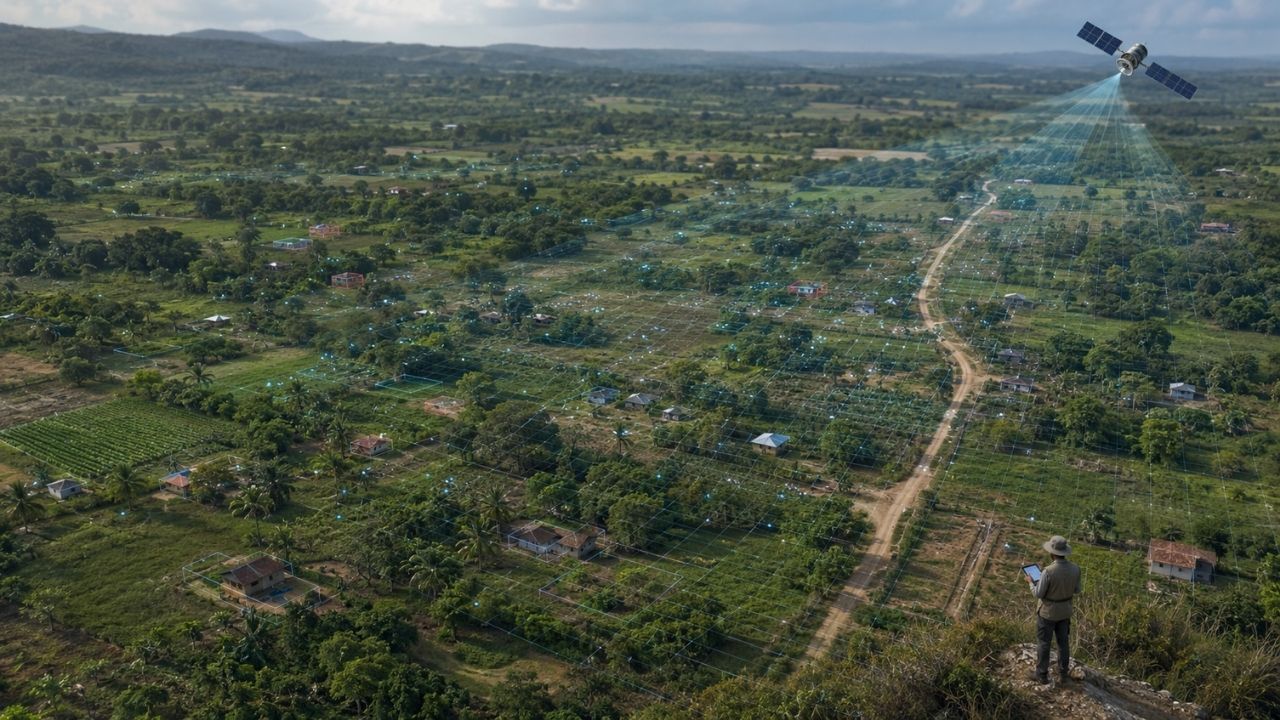
Satellite images are used to estimate human occupation, population density, and expansion of inhabited areas. However, even advanced technologies can fail when houses are dispersed, small, covered by vegetation, poorly recorded, or located in regions of difficult visual interpretation.
The study combined resettlement data with spatial information precisely to compare different ways of viewing human presence. The lesson is that technology without local validation can create convincing but incomplete maps. To estimate the Earth’s population more accurately, global models need to better engage with field records.
The discussion exposes a hidden inequality in the data
The majority of the rural world does not appear with the same clarity as large cities. Metropolises are easier to map, have more robust administrative records, and concentrate infrastructure. Meanwhile, agricultural regions, isolated villages, and distant communities can become diluted in broad statistics.
This visibility inequality is the social point of the debate. If rural areas are underestimated, the flaw is not just in the numbers, but in how the world decides who deserves to be seen. The Earth’s population may be better accounted for in urban centers than in territories where data arrives late.
What is still needed to change the global count
For the world population estimate to be robustly revised, new studies would need to confirm if the same pattern appears outside cases related to dams. It would also be necessary to cross-check census data, local records, satellites, household surveys, and population models with greater coverage.
Until then, it is more accurate to treat the study as an important alert, not as definitive proof that there are billions more people. The research puts pressure on global databases, but the official count of humanity still depends on broad confirmation.
A doubt that changes the way we look at the planet
The discussion about the Earth’s population shows that even seemingly consolidated numbers can hide weaknesses. If rural communities were underestimated in databases used by thousands of studies, the problem could affect decisions on resources, infrastructure, health, climate, and development.
Now the question remains: do you think it’s possible that rural areas are much more populated than the data indicates, or do you believe that a billion-dollar difference would be too difficult to go unnoticed for so long? Leave your opinion in the comments.