Portuguese
  Spanish


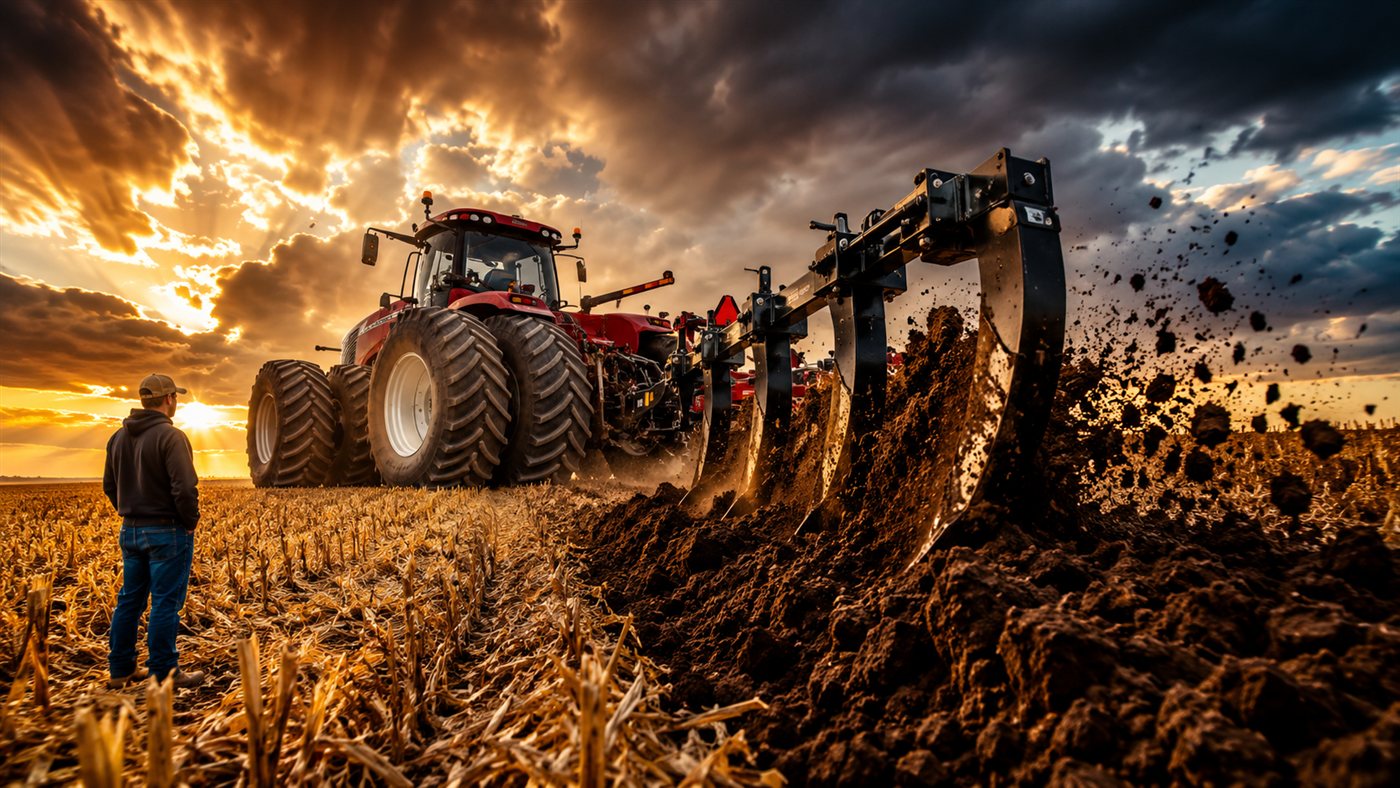

In the 1-hour video from the channel Cole The Cornstar, with 722 thousand views, Cole buys a 600-horsepower tractor and begins installing with his family the system estimated at US$ 4 million
Burying drainage pipes under the crop has become the biggest project of American farmer Cole’s life, from the channel Cole The Cornstar, on YouTube, and the lesson is valuable for Brazilian producers. In a video published on November 9, 2025, he explains that too much water in the soil stole more than 300 thousand dollars in profit from the family farm in a single year, and the contractor’s budget to drain the entire property reached 4 million dollars. His response was to do the work with his own hands.
According to the channel Cole The Cornstar, the family had already tried everything to increase profitability, from extra fertilizer to soil decompaction. Nothing compared to the effect of draining the waterlogged soil, and this is the project that the video documents from the first hole to the last pipe joint.
The invisible loss: US$ 300 thousand per year underground
The enemy does not appear on the surface. As the channel Cole The Cornstar explains, the farm fields function like a flower pot: if the plant receives too much water, it dies. The difference is that, in a pot, the hole at the bottom solves the problem, and in a field of hundreds of acres, there is no bottom to pierce.
-
Two-Person Team Builds Entire House from Scratch in Just 3 Days Using Low-Cost Materials, Documenting Every Step on Video

-
New Anti-Humidity Paint Reduces Mold and Fungus by Controlling Condensation, Enhancing Indoor Protection and Paint Durability Without Major Renovations

-
Polystyrene Panel Technique Goes Viral for Tackling Household Mold and Persistent Dampness
-
Innovative Building Material: EPS Construction Revolutionizes with Faster Builds, Less Waste, and Enhanced Thermal Comfort





The result is silent and costly. Just in the last harvest, the waterlogged conditions cost more than 300 thousand dollars in lost profit, among flooded areas, delayed planting, and hindered harvest. It is the kind of loss that does not come from pests or market, but from soil physics, repeated year after year until someone addresses the cause.
How the drain tile works, the hole at the bottom of the giant pot
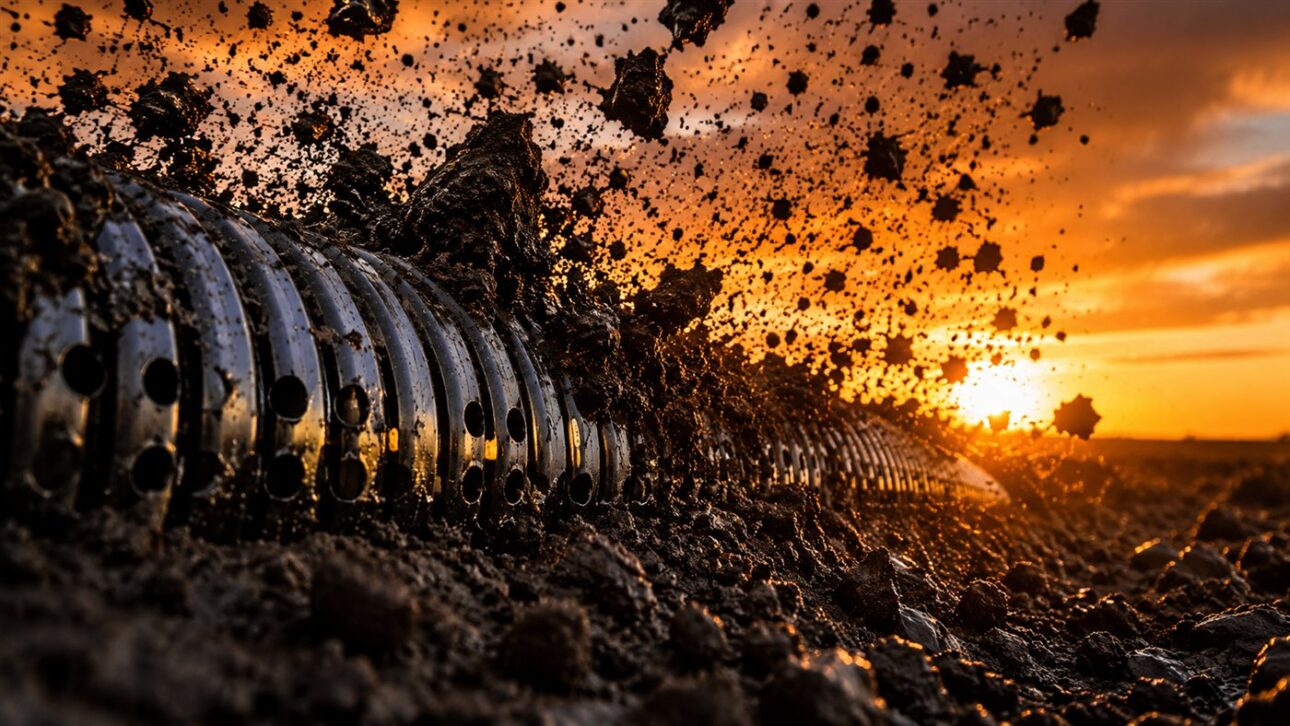
The solution has a well-known name in the United States: drain tile. These are perforated plastic pipes, buried about 90 centimeters deep, with one end connected to a stream. According to the channel Cole The Cornstar, the perforations allow excess underground water to enter the pipe, which carries it to the outlet, just like the hole in the flower pot.
The name comes from history. During the construction, the team unearthed a clay pipe about 70 years old, from the time when agricultural drainage was done with ceramic pieces, the original “tiles.” The material changed from clay to plastic, but the engineering principle has been the same for decades: giving water a faster path to exit the soil than to rot the crop roots.
The network follows a miniature watershed logic. The 4-inch lateral lines are the streams, which run into the 6 and 8-inch main lines, the rivers, which flow into the outlet by the creek, the ocean of the system. With each gauge jump, the pipe’s capacity doubles.
The $4 million budget that became a self-made project
With the diagnosis made, Cole sought out a specialized contractor, and the response came like a punch: 4 million dollars to install drainage on the entire farm, according to the Cole The Cornstar channel.
The reaction defines the video. Instead of giving up or spreading the work over decades, he bought a 600-horsepower tractor weighing about 27 tons, a new drainage plow, and decided to install hundreds of kilometers of pipes on his own, with the help of his brothers and father. For the technical project, he sent the coordinates of the plots to a sizing company, which returned the complete mesh design and material list.
On the first day of work, specialists from the plow manufacturer accompanied the family to calibrate the equipment and teach the operation, from the GPS software to the positioning of the pipes. After that, the production line is domestic: one brother digs the starting holes with the mini-excavator, another feeds the pipe rolls, and Cole pulls the lines with the tractor.
GPS, plow, and 1-kilometer rolls: the technology of the project
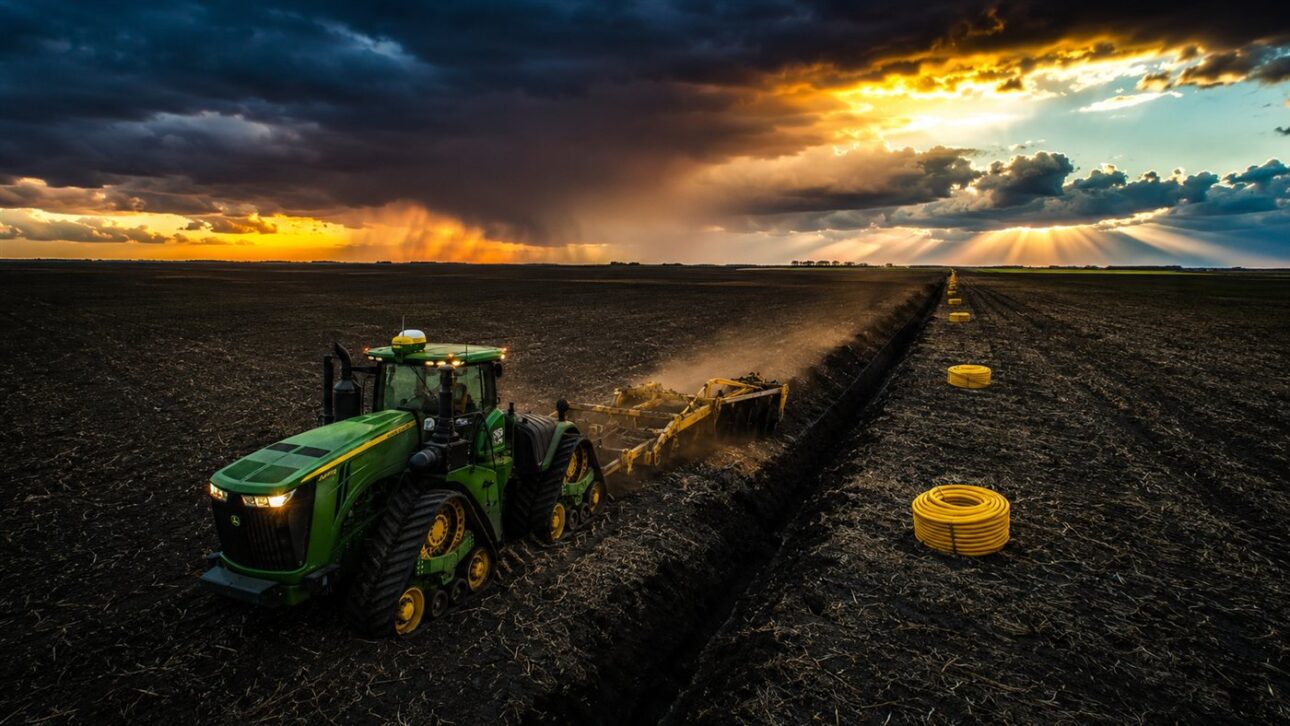
The precision of the system is impressive. According to the Cole The Cornstar channel, three GPS antennas, one on the tractor, one on the plow, and a fixed base at the edge of the field, communicate with the onboard monitor, which controls the depth and slope of the pipe on its own. The operator practically just follows: the set follows the projected line, buries the pipe between 29 and 48 inches deep, aiming for 36, and ensures a minimum slope of 0.1% for the water to flow.
The logistics numbers give the scale. The large rolls of 4-inch pipe bring 3,600 feet each, more than 1 kilometer of pipe per roll, and the spacing between lines is 40 feet, about 12 meters. In a single day, the team installed 21 lateral lines and 16 network stretches, and the project for the first field foresees 142 connections between laterals and main lines.
The Mathematics of Water: 66,000 Liters per Acre per Day
The system sizing has a central number, the drainage coefficient, which measures how much water the network can remove from the soil per day. According to the channel Cole The Cornstar, the installed system works with 0.7 inches per day, equivalent to 17,500 gallons per acre per day, about 66,000 liters, almost double the market standard.
And the drainage does not dry out the crops. As demonstrated by the channel Cole The Cornstar with a sponge, the pipe cannot pull the water retained by the soil’s capillarity, only the excess. The drained soil remains moist like a wrung sponge, but never waterlogged, which reduces runoff, erosion, and soil compaction, and allows planting earlier in the spring and harvesting on time even after heavy rain.
More Corn at Harvest: Up to 75 Bushels per Acre Advantage
The proof that the numbers add up is in the combine’s yield monitor. According to the channel Cole The Cornstar, in areas of the farm that already had old spot drainage, the measured advantage was 45 to 75 bushels per acre compared to the rest of the field, and one drained spot reached 267 bushels per acre, 67 above the field average.
This difference funds the project. If the gain repeats for 3 consecutive years, the entire system pays for itself, turning what seemed like a $4 million expense into one of the best capital investments for the farm. After that, the productivity advantage becomes recurring profit, season after season.
What Drainage Pipes Teach Brazilian Agriculture
Brazil is well aware of the opposite problem, lack of water, but excess also reduces productivity in floodplains, lowlands, and regions with concentrated rainfall, from the rice fields in the south to winter crops. The lesson from American drainage pipes applies here: standing water in the root zone is a measurable loss, and agricultural drainage is an investment with calculable returns, not a cost.
The second lesson is about technological autonomy. With a professional project, GPS, and the right equipment, a family executed a project estimated in millions, at their own financial pace. For Brazilian producers, who face high costs for specialized services, the model of learning to operate the technology and internalizing the work is increasingly realistic.
Watch the Drainage Project in Video
The first stage of Cole’s battle against waterlogged soil is documented in a 1-hour video, from the daunting budget to the first network functioning, on the Cole The Cornstar channel on YouTube.


In the end, the question every producer should ask themselves is: how much of your productivity is being drowned by a problem that doesn’t appear on the surface? Tell us in the comments: in your region, is the villain the lack or excess of water in the crops?