Portuguese
  Spanish



29-minute video from the Terran Works channel details the engineering behind the feat: 2 billion liters of fresh water per day coming from the Mediterranean, treated sewage turning into irrigation, and greenhouses controlled by artificial intelligence in the middle of the Negev
Agriculture in the desert is no longer a contradiction in Israel, and a video published on July 1, 2026, by the Terran Works channel on YouTube, unravels the engineering that sustains the miracle, with direct lessons for the Brazilian semi-arid region. According to the Terran Works channel, almost 60% of Israel’s territory is desert and more than 90% of the land is practically unsuitable for cultivation, yet the country has built a high-tech agricultural industry valued in billions of dollars.
The recipe has three pillars that the video covers one by one: desalinate the sea, give sewage a second life, and deliver every drop directly to the plant’s root. The result is a system that produces more than 5 million tons of food in one of the most hostile environments in the Middle East.
The crisis that forced Israel to reinvent water
The starting point was near collapse. According to the Terran Works channel, Israel has about 22,000 square kilometers and more than 10 million inhabitants, with regions receiving less than 100 millimeters of rain per year and temperatures exceeding 50°C.
-
74-Hour Barbecue in Brazil Sets World Record: 3.4 Tons of Meat, 10,500 Meals Served

-
Man Takes on Swarms in Singapore, Saves 6 Million Bees and Encourages Locals to Choose Conservation Over Pesticides
-
In Brazil’s Arid Northeast, Vineyards Now Produce Wine Grapes Year-Round, Accounting for 98% of the Country’s Grape Exports

-
China Limits Brazilian Meat Imports After Returning 20 Soybean Ships, Causing Factory Shutdowns and Concerns in Brazil’s Meat Industry


For decades, the country relied on a single large natural freshwater reservoir, Lake Kineret, the Sea of Galilee. After about five decades of large-scale extraction, the lake’s level repeatedly fell to critical levels, as the Terran Works channel reports, and the food security of the entire nation came to depend on finding another way.
The response was dual and radical: transform Mediterranean water into drinking water and transport billions of liters across the desert, converting more than 12,000 square kilometers of sand into a network of high-tech agricultural oases.
Reverse osmosis: the sea turns into 2 billion liters per day
The journey of water begins far from the beach. According to the Terran Works channel, the plants capture seawater through pipes 2 to 4 meters in diameter, installed hundreds of meters or kilometers from the coast, where the water is more stable and clean, and each intake delivers about 500,000 cubic meters per day.
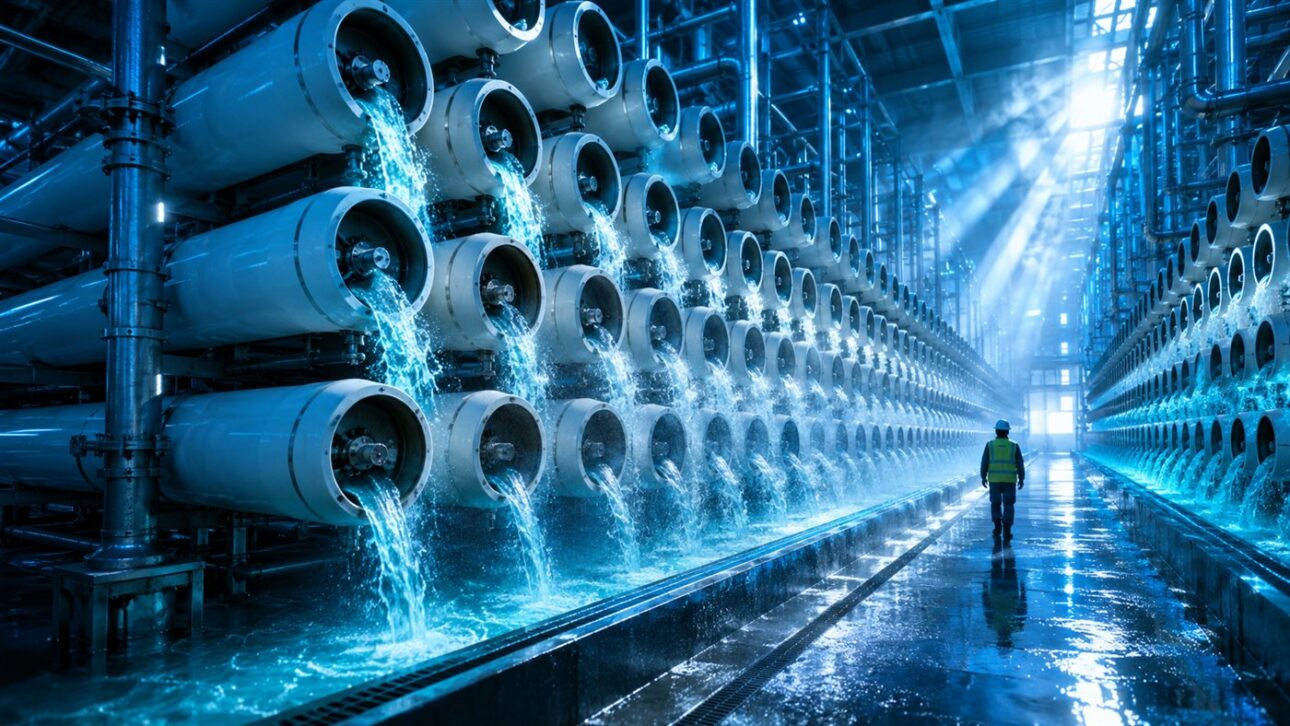
Inside the plant, the water passes through screens, multi-stage sand filters, chemical treatment, and cartridge filters until it reaches the heart of the system: reverse osmosis. Giant pumps apply pressures of 55 to 70 bar, dozens of times the pressure of a car tire, to push the water through membranes that block more than 99% of salts, along with bacteria and heavy metals. In the end, the pure water is still remineralized with calcium and magnesium to prevent corrosion of the pipes.
The national output is impressive: according to the Terran Works channel, Israel now produces almost 2 billion liters of fresh water per day from the sea, distributed through a national network of pipelines and pumping stations that reach deep into the Negev desert.
The second life of sewage: 90% of the water returns to the fields
Desalinated water is too expensive to irrigate fields on a large scale, and this is where desert agriculture gains its most affordable pillar. According to the Terran Works channel, more than 1.5 million cubic meters of sewage are collected daily from Israeli cities and industrial areas and sent to treatment plants.
The process goes from solid removal to biological treatment, where billions of microorganisms in aeration tanks decompose dissolved waste, followed by disinfection with chlorine, ultraviolet, or ozone. The system loses only about 10% of the original volume: 90% of the sewage becomes irrigation water, a reuse rate practically unparalleled on a national scale.
This water does not go directly to the fields. It is pumped into large reservoirs in the desert, true strategic water banks, from where it supplies agricultural hubs scattered across the sand.
Medjoul Dates: $350 million harvested from the sand
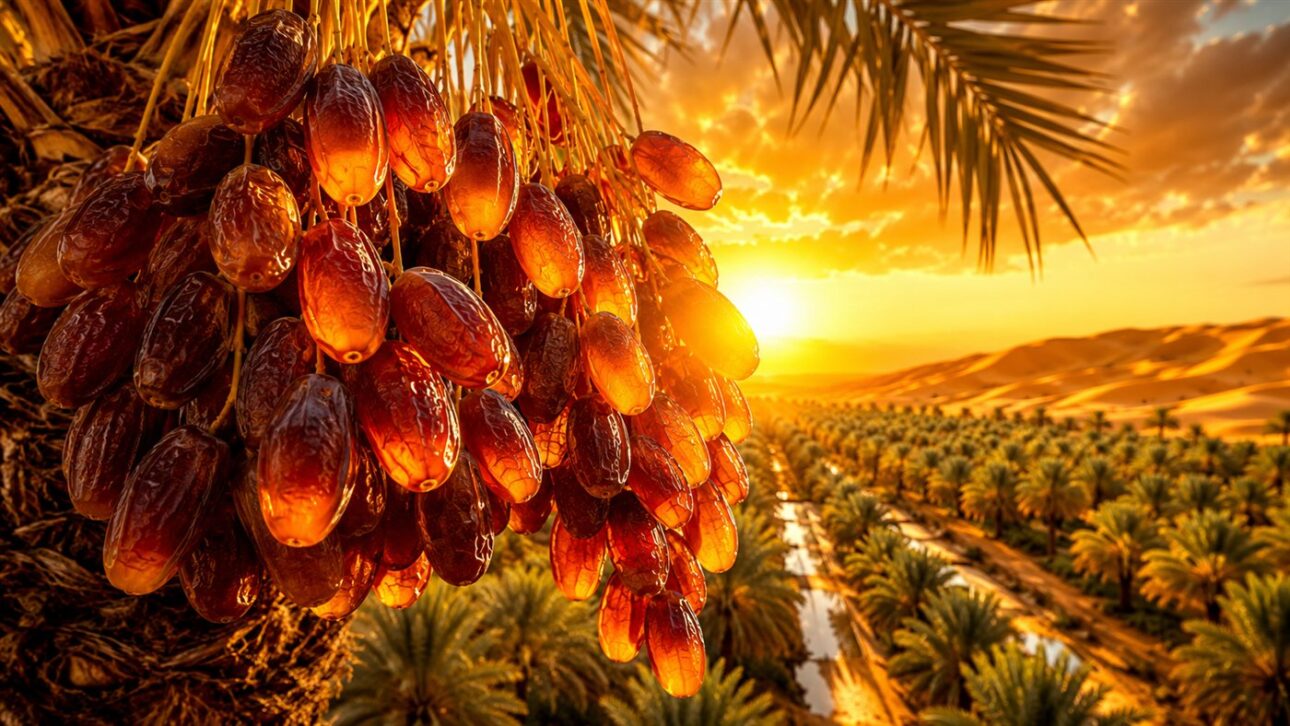
With water guaranteed, the desert began to bear fruit literally. In the Arava Valley, farmers cultivate where just a few decades ago almost no life existed, and the most famous example is the Medjoul date, sweeter, denser, and more flavorful than those from temperate regions, according to the Terran Works channel.
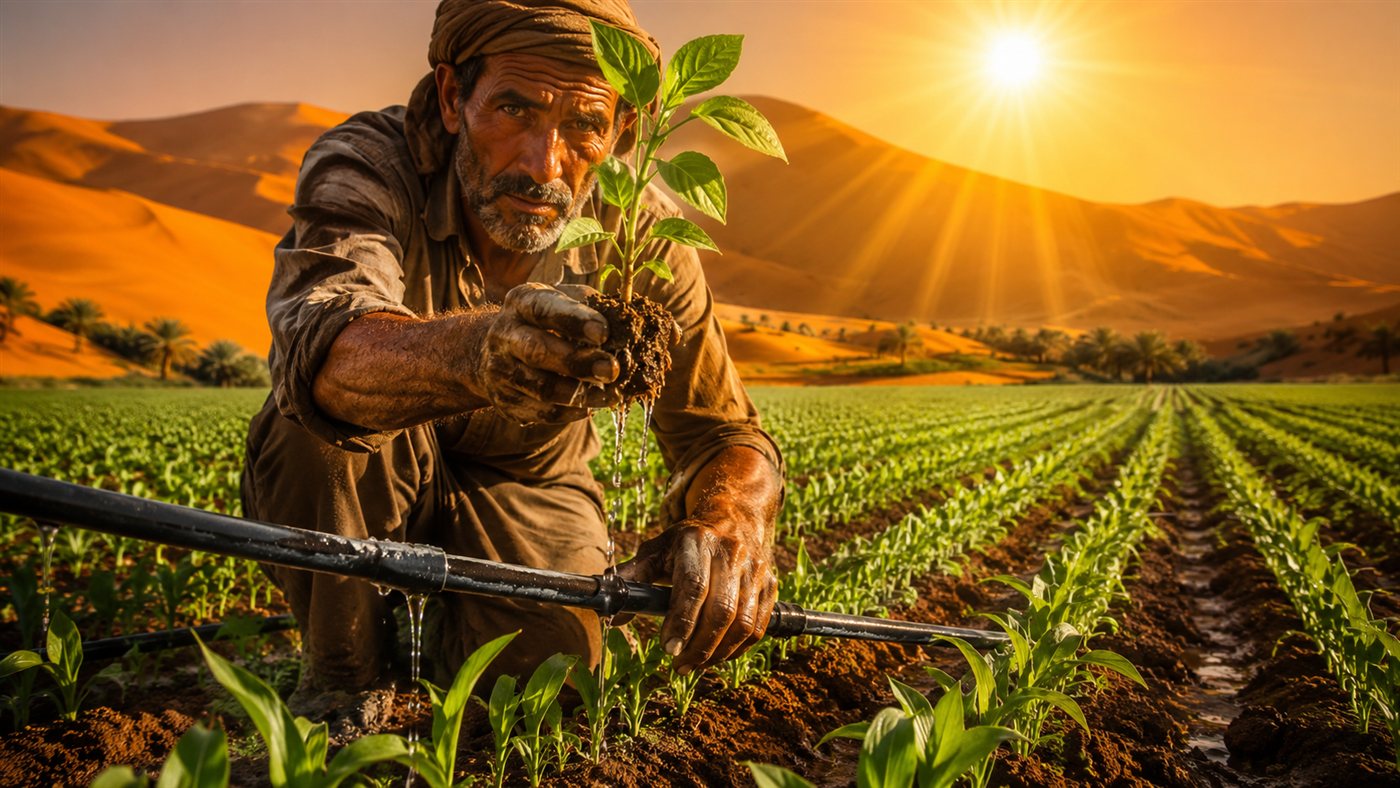
The secret lies in water delivery. Precision drip irrigation, combined with soil moisture sensors and fertigation, delivers water and nutrients drop by drop directly to the root zone, cutting water loss by up to 60% compared to flood irrigation. The economic result: one of the largest date exporting industries in the world, with an annual revenue of approximately US$ 350 million.
Cotton in the desert with double the productivity
Israel went further and chose to cultivate one of the thirstiest crops of modern agriculture: cotton. According to the Terran Works channel, the country produces about 15,000 tons per year, less than 0.01% of global production, but has become one of the most successful models of cotton in a desert environment.
The hot climate and lack of excessive humidity in the Negev reduce fungal diseases, and precision irrigation delivers to each plant exactly what it needs at each stage. Many fields exceed 5 tons per hectare, more than double the yield of large cotton-growing regions in the United States and China, with premium quality fiber for the textile industry. Decades of genetic improvement, with varieties tolerant to extreme heat and saline soils, complete the equation.
Greenhouses that function like agricultural data centers
The highest level of this technological pyramid is the smart greenhouses. According to the Terran Works channel, Israel has only 25 to 30 square kilometers of high-tech greenhouses, but the productivity per square meter is up to 10 times that of open fields.
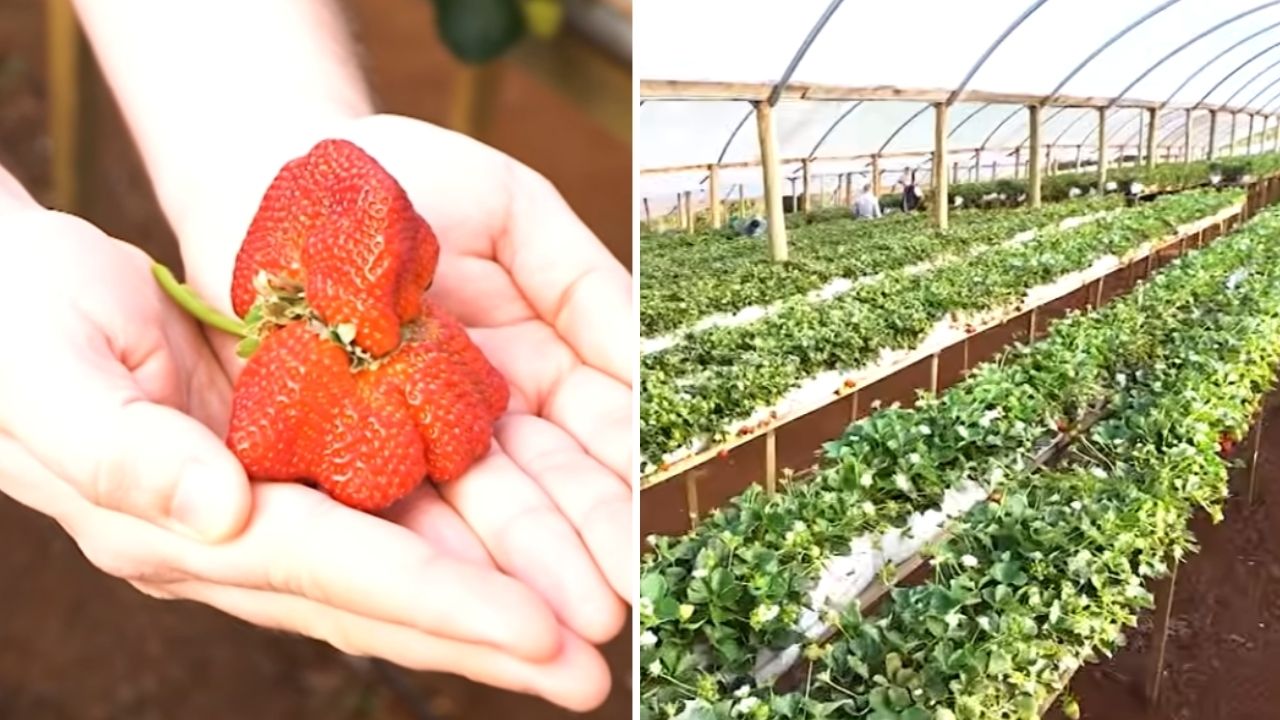
These are climate-controlled structures for extreme heat, with shading, ventilation, and cooling panels, where thousands of sensors measure temperature, humidity, light, carbon dioxide, and evaporation every second, and artificial intelligence adjusts irrigation, nutrients, and climate in real-time. Tomatoes, cucumbers, strawberries, leafy greens, melons, and peppers come from there, including about 200,000 tons of peppers per year. The video itself summarizes: many greenhouses in the Negev operate more like agricultural data centers than farms.
The honest account also appears: every drop of this water carries a huge cost of electricity in plants, pumping, and climate control. Israel traded dependence on nature for dependence on energy and technological infrastructure.
What desert agriculture teaches the Brazilian semi-arid
Brazil does not have the extreme scarcity of Israel, but the northeastern semi-arid region is well aware of the cost of missing water. The irrigated fruit farming of the São Francisco Valley already exports mango and grape with similar drip technology, and the Israeli lesson is clear: water treated as a strategic asset, measured, recycled, and charged for the value it generates, multiplies production where the map says it can’t.
The second lesson is reuse. While Israel returns 90% of sewage to agriculture, Brazil still treats sewage as a liability, not as an agricultural input. For a country that wants to grow in agriculture without depleting its water sources, the Israeli desert model functions as a laboratory for the future of agriculture in the desert and beyond.
Watch: how Israel transformed the desert into a farm
The complete engineering of this transformation of desert agriculture, from desalination membranes to data-driven greenhouses in the middle of the sand, is in the video on the Terran Works channel on YouTube.


In the end, the question that the video itself provokes remains: if a country with 60% desert became an agricultural power by treating every drop as capital, how much does Brazil, with all its water, still fail to harvest? Tell us in the comments: should the Brazilian semi-arid region copy the Israeli model?