





 Portuguese
  English
  Spanish
  2 min of reading
  0 comments



GM Announced the Layoff of 1,300 Workers in Michigan Due to Production Changes After the Closure of the Bolt and Camaro Models.
General Motors (GM), the largest automaker in the United States, recently announced the layoff of 1,300 workers at two factories located in the state of Michigan. The layoffs come as a result of a restructuring of production, especially after the closure of production for the Bolt and Camaro models. The layoffs will take effect from January 2, 2024.
Understand the Reason That Led GM to Lay Off So Many Workers From Its Factories
In early January, GM confirmed the layoff of 945 workers at the Orion Assembly plant, which is undergoing a significant transition.
The site, responsible for producing the Chevrolet Bolt electric vehicle, will end this production line to begin manufacturing electric pickups starting in late 2025.
-
Suzuki sells an “economical family minivan” with 7 seats cheaper than Chevrolet Spin, Citroën Aircross, and Caoa Chery Tiggo 8 in Brazil; for about R$ 47,000 in conversion without taxes, the Ertiga has a 1.5 engine, manual or automatic transmission, CNG option, a trunk of up to 803 liters, and a family package that Brazil doesn’t have, but India does.

-
Mitsubishi sells a “minivan with the soul of an SUV” with 7 seats cheaper than Chevrolet Spin, Citroën Aircross, and Caoa Chery Tiggo 8 in Brazil; for about R$ 76,000 in conversion without taxes, the Xpander has a 1.5 engine, manual or CVT transmission, 220 mm ground clearance, and a robust family package that Brazilians don’t have, but Indonesia does.
-
Japan and Mercosur may reach an agreement to lower the cost of cars and auto parts, with manufacturers like Toyota, Honda, and Nissan coming into focus.
-
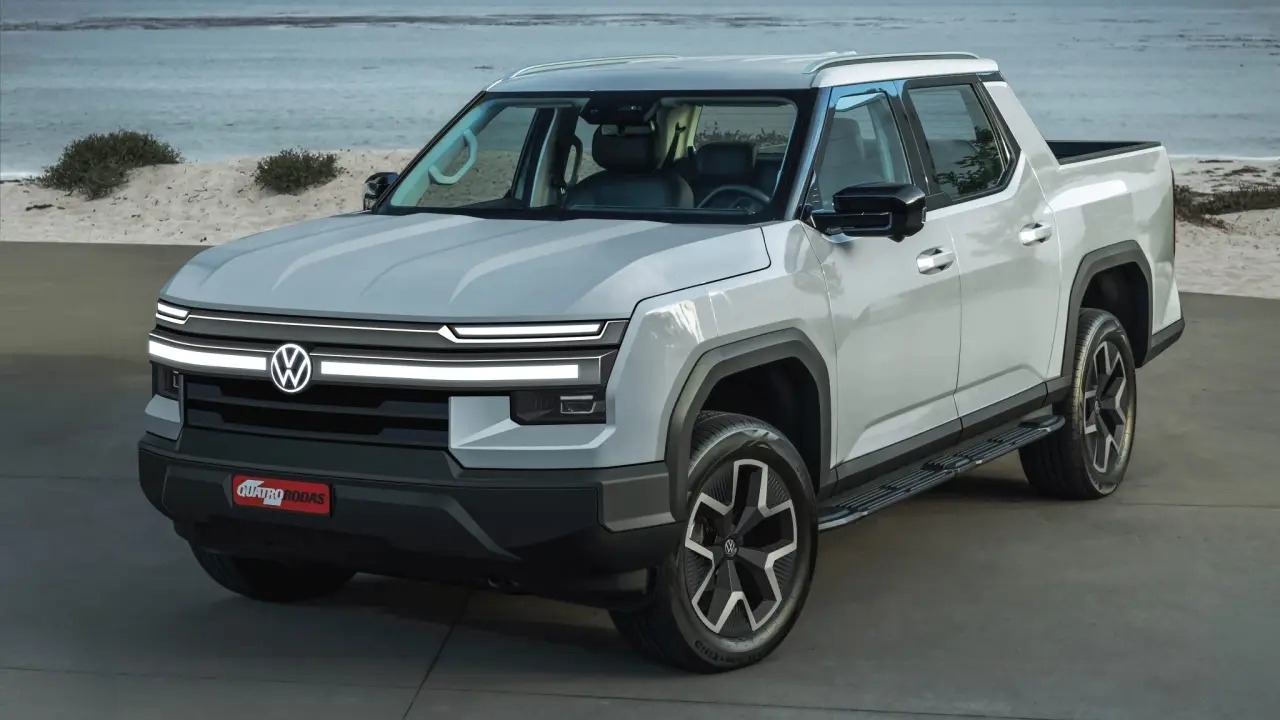
Volkswagen is preparing an SUV derived from the new Amarok to compete with the Toyota SW4 and Haval H9, utilize the Argentine Pacheco factory, and transform a pickup into a more profitable family of products.



The last production of the Bolt in Orion is scheduled for next week.
Additionally, 350 of the 1,400 workers at the Lansing Grand River plant will also face layoffs, resulting from the end of production for the Chevrolet Camaro.
However, the plant will continue to produce the Cadillac CT4 and the Cadillac CT5.
These layoffs are the result of an agreement between the automaker and the United Auto Workers (UAW), the union representing automotive workers in the United States.
The agreement, sealed at the end of October, ended a strike that lasted six weeks.


The Future of General Motors and Its Production
GM assured that the affected hourly workers will receive job offers at other company factories.
This decision comes amid a transformation in the automotive industry, with GM committed to stopping the sale of gasoline vehicles by 2035.
In October, the company announced a revision of its goal to produce 400,000 electric vehicles between 2022 and mid-2024.
During the same period, Ford also announced temporary adjustments, reducing a shift at its F-150 Lightning EV electric pickup factory.
Recently, GM informed suppliers that it plans to produce about 1,600 F-150 Lightning EV electric pickups per week starting in January 2024, approximately half of the initially planned quantity of 3,200 units per week.
These adaptations reflect the challenges and adjustments in the transition to vehicle production in the automotive industry.








Be the first to react!