Portuguese
  Spanish


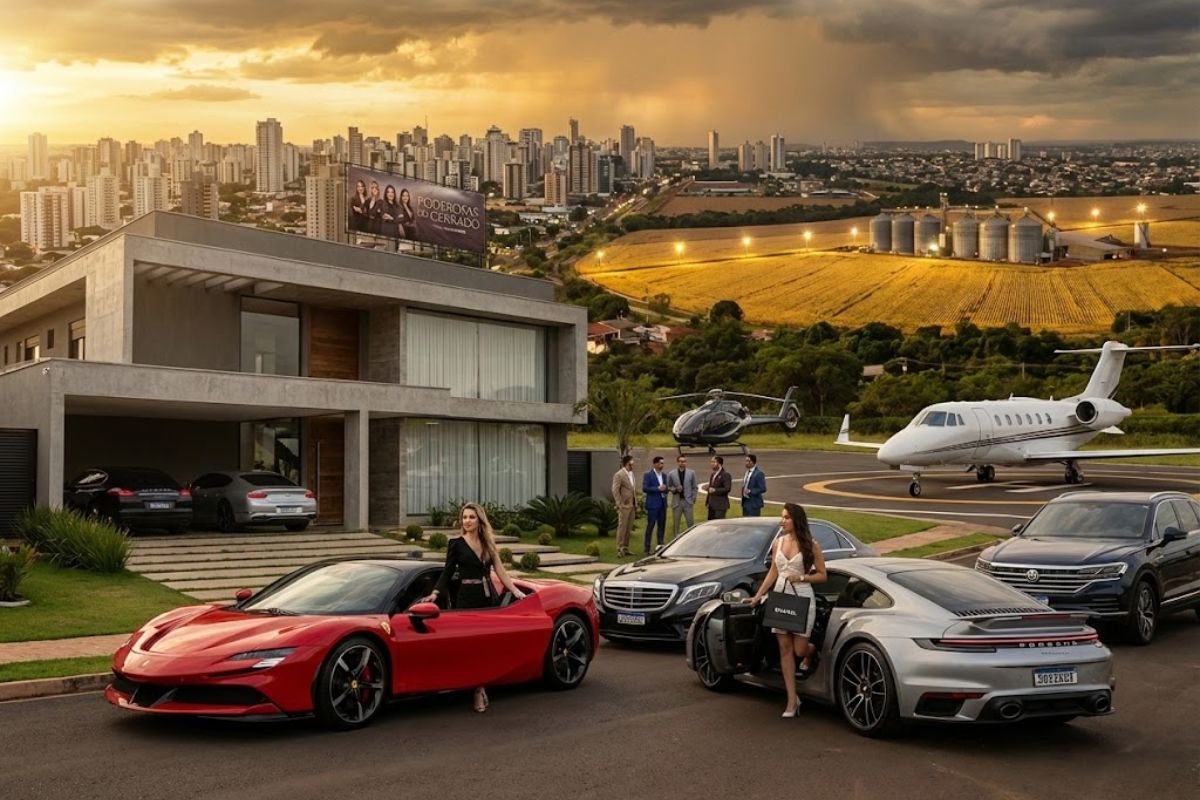


In The Capital Of Agroluxo, Millionaire Apartments, Sports Cars, Executive Jets, Designer Boutiques And Gated Communities Are Added To The Reality Show Powerful Women Of The Cerrado To Show How Agriculture Has Transformed Goiânia Into A Billionaire Center Of Consumption, Services And Status In The Central-Western Region Of Brazil, Redefining Habits, Desires And Symbols Of The Rural Elite
Goiânia has ceased to be merely the capital of an agricultural state to become, in practice, the capital of agroluxo in Brazil. It is in this city that the money from agriculture is transformed into Porsches, Ferraris, jets, luxury boutiques, and narratives like the reality show Powerful Women of the Cerrado, which help consolidate Goiânia as a showcase for this new rural elite.
This new wealth map gained national attention with the reality show Powerful Women of the Cerrado, from Globoplay and GNT, which follows six women connected directly or indirectly to agriculture. The show exposes a rural elite that consumes high fashion, super sporty cars, and exclusive services while claiming a “jeca, but jewel” identity, based on pride in their rural origins and the strength of the agriculture that fuels the region.
How Goiânia Became The Capital Of Agroluxo

The movement did not come from nowhere. Goiânia is now the most populous capital and has the largest GDP in the Central-West, excluding Brasília, and has consolidated itself as the major center for commerce and services in the region.
-
Chinese Farmers Develop “Blanket Greenhouses” to Grow Vegetables in Extreme Winter Without Heaters

-
Centuries Before Modern Greenhouses, English Gardeners Used Horse Manure to Grow Pineapples in Cold Climates

-
Sugarcane Cultivation in India: A Symbol of Water Stress and Environmental Strain Amidst Global Demand for Sugar and Green Fuel
-
Innovative Farm in Northeastern Brazil Combats Drought with Advanced Techniques, Aiming for 10,000 Liters of Milk Daily Production


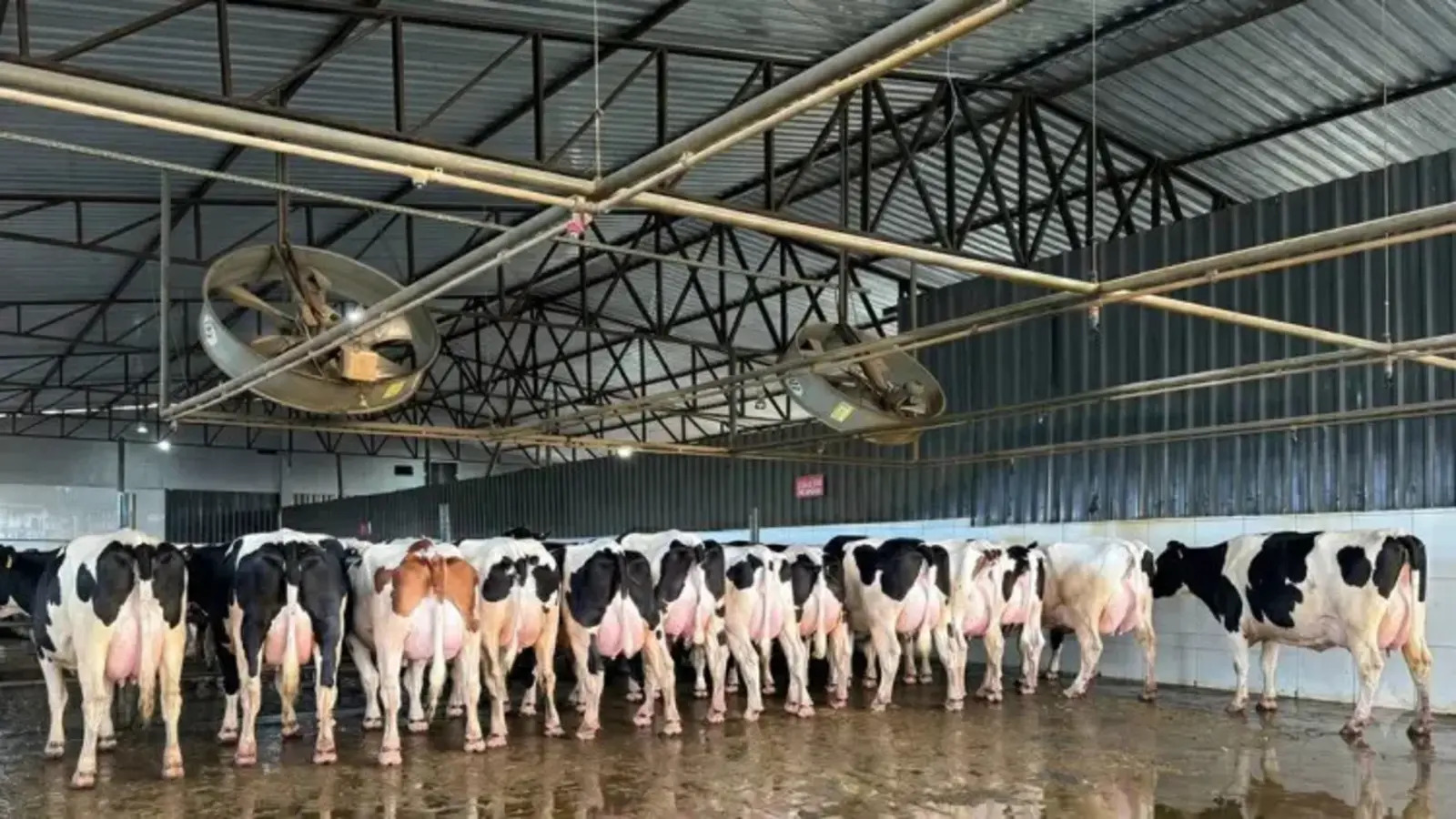
Economic and population growth has been fueled for years by an agribusiness that moves billions in soybeans, corn, livestock, and associated chains.
This income flow has transformed the city into a high-standard consumption hub.
Brands that once concentrated in São Paulo and Rio de Janeiro have begun to target the capital of agroluxo: Gucci and Louis Vuitton opened stores in Shopping Flamboyant, and in 2024 Chanel chose the same shopping center to establish its largest boutique in Brazil.
The presence of these brands acts as a seal that there is enough clientele to sustain high-rotation showcases.
At the same time, the Brasília-Goiânia corridor has become one of the main population corridors in the country, according to IBGE data, attracting people who come to work, invest, and consume.
This combination of economic growth, the arrival of new residents, and money from agriculture has created the ideal ground for Goiânia to assume the position of capital of agroluxo in the national imagination.
Reality Powerful Women of The Cerrado: The Showcase of The New Rural Elite

The reality show Powerful Women of the Cerrado crystallizes this change in a near-didactic way.
The series follows Roseli Tavares, heir to vast ranch lands in the countryside, influencer Layla Monteiro, luxury drinks and events entrepreneur Thaily Semensato, Andrea Mota, linked to fashion, and sisters Tana and Cristal Lobo, from the events segment.
Together, they give a face to the new rural elite that now frequents Goiânia, the capital of agroluxo.
In one of the most talked-about scenes, Roseli says she gained “tequeta” by hiring a personal stylist, and is corrected by her colleague, who insists on “etiqueta” as part of elegance.
The phrase “we’re rustic, but we’re jewels” becomes a mantra of the program and summarizes the contrast between the simplicity of the speech and the scene of jewels, champagne glasses, and expensive parties.
The image of Roseli talking to herself in the mirror, with shining jewels and a glass in hand, reinforces the idea that “hard work” in the countryside has been converted into symbols of urban status.
Researchers remind us that this agroluxo is not merely ostentatious consumption.
There is an aesthetic dimension that mixes rural and urban references: boots, hats, harvesters of up to R$ 3 million in music videos, alongside sports cars, jewelry, and designer clothes.
Goiânia appears as a stage where agriculture performs its own power narrative, helping to consolidate the city as the capital of agroluxo in the Central-West.
Chanel, Flamboyant And The Display Luxury In The Capital Of Agroluxo
If the reality show is the television showcase, Shopping Flamboyant is the physical showcase of this new phase.
Personal stylist Keila Moura reports that the fully booked schedule of clients shows how personalized image services have become part of the daily lives of those who circulate in the capital of agroluxo.
The styling work, once seen as exclusive to artists, has been sought after by women who want to align their wardrobe, social media, and presence at events.
The establishment of Gucci, Louis Vuitton, and the largest Chanel boutique in Brazil in Goiânia is a direct indicator of the appetite for high-standard consumption.
The brands understood that there is a strong purchasing power concentrated in the region, especially among vain women who value the ability to buy the same day for an evening party, without relying on trips to other capitals.
Another point mentioned is the perception of safety. Goiânia has lower violent death rates than large Brazilian capitals and, at the same time, rates of theft and robbery of cell phones that do not compare to the worst scenarios in the country.
In practice, this means that displaying luxury bags, watches, and accessories in shopping malls and restaurants seems more viable in the capital of agroluxo than in cities marked by a greater sense of risk, such as Rio de Janeiro and São Paulo.
Porsches, Ferraris And The Porsche Club
On the streets, agroluxo gains momentum.
While in smaller cities linked to agriculture, pickup trucks remain a symbol of power, in Goiânia the reference has become Porsches and Ferraris, according to influencers and entrepreneurs in the automotive sector.
The pickup truck still reigns on dirt roads, but in the capital of agroluxo, the objects of desire are high-performance sports models.
The influencer Hugo Borges, known as Xenão, highlights that “the time of the pickup trucks is over” and that what sells the most today are Porsches of various models, like the 718, which often exceeds R$ 1 million at dealerships.
Goiânia has practically become a center for shipping these cars all over Brazil, with local stores negotiating via Instagram and attracting buyers from other regions.
At One Boss, a luxury vehicle dealership and automotive styling company run by Marcelo Medeiros, there are models valued at up to R$ 8 million.
The catalog ranges from a 1975 Dodge Dart at R$ 189.9 thousand to a 2013 Dodge Viper quoted at R$ 3 million, as well as a 2011 Lamborghini Gallardo around R$ 1.4 million.
Car meets featuring Ferraris, Lamborghinis, and the Porsche club, which gathers 50 to 60 people weekly, turn the capital of agroluxo into a runway on wheels, where agriculture showcases its return at top speed.
Jets, Air Taxis, And The Billionaire Sky Of The Central-West
Agroluxo is not limited to the ground. The skies of the Central-West also reflect the new income level.
About 27 percent of the country’s jets are in the region, according to data from the Brazilian General Aviation Association.
Part of this is explained by Brasília, but industry representatives point out that Goiás is increasingly contributing to the demand for executive aviation.
The general manager of Líder Aviação, Bruna Assumpção, reports a significant increase in the demand for charters in areas with low coverage of regular flights but high business volume, a profile that Goiás fulfills with ease.
In practice, entrepreneurs and producers can take off from nearby airfields to farms, production units, or company headquarters and land in destinations without a robust commercial network, shortening distances and multiplying commitments in the same day.
The company has positioned a jet in Goianápolis, 40 km from Goiânia, for flights of up to six passengers to Belo Horizonte, for about R$ 68.5 thousand in trips of just over one hour.
Platforms like Flapper, compared to a “Uber for aviation,” already have 22 jets and turboprops certified for air taxis based in Goiânia, as well as seven companies and 70 maintenance workshops in the region.
It is not uncommon for clients from the capital of agroluxo to book flights to destinations like Angra dos Reis, Búzios, Trancoso, Paris, or Lisbon, with tickets that can reach R$ 1 million on modern aircraft.
Gated Communities, Epic City Home, And The Real Estate Boom
On the city’s ground, new wealth appears in glass, concrete, and landscaping.
Data from Ademi-GO indicates that Goiânia is already the third largest real estate market in the country, behind only São Paulo and Rio de Janeiro, with the highest number of launches in the historical series recorded since 2010.
At the same time, the capital still offers one of the cheapest square meters among Brazilian capitals, which fuels expectations for appreciation and attracts investors.
Some launches are directly aimed at the clientele of the capital of agroluxo.
An example is Epic City Home, a skyscraper in front of Parque Vaca Brava, with apartments of 3 to 5 suites ranging from 330 to 880 square meters, as well as a tennis court, spa, and hot tub.
Recent advertisements show units valued between R$ 5 million and R$ 13 million, values that align with the income of large farmers, entrepreneurs, and professionals orbiting agriculture.
The presence of the Lamborghini family at the launch event of another building, featuring compact apartments and offices, reinforces the association between real estate, luxury brands, and success narratives.
In the metropolitan region, cities like Senador Canedo lead population growth among municipalities with more than 100 thousand inhabitants and are marked by gated communities, often described as having an “Americanized” aesthetic, with houses without walls, yet surrounded by opulent security routines and intense monitoring of staff.
Economic Growth, Inequality, And The Other Side Of The Capital Of Agroluxo
Numbers help to understand why Goiânia could become the capital of agroluxo.
From 2002 to 2023, the Central-West experienced the highest average annual GDP growth rate among Brazilian regions, at 3.4 percent, surpassing the North, Northeast, Southeast, and South. All states in the region grew above the national average, especially Mato Grosso, Goiás, Mato Grosso do Sul, and the Federal District.
In demographic terms, the 2022 Census shows that the Central-West also led the population growth rate since 2010, with the Brasília-Goiânia axis standing out for concentrating high-density municipalities.
This economic and demographic context is the structural basis on which agroluxo rests, fueling retail, construction, financial services, private education, and entertainment.
However, the sophistication of shopping malls and luxury condominiums coexists with challenges.
In the Map of Inequality among Capitals, Goiânia appears as the ninth least unequal, which indicates relative improvement in education, health, and the environment, but does not erase internal differences.
The capital of agroluxo is still marked by contrasts between ultra-high standard condominiums and popular neighborhoods, between private helicopters and workers who sustain this machinery under very different living conditions.
The City That Became The Stage Of Agroluxo
The combination of million-dollar cars, executive jets, designer boutiques, reality show, and real estate boom has made Goiânia a capital of agroluxo recognized not only by numbers but by the narrative built around the city.
The image of Powerful Women of the Cerrado, Porsches at the shopping entrance, and jets crossing the sky summarizes an economic frontier where agriculture has ceased to be merely “from the countryside” to become the protagonist of urban luxury in the Central-West.
For some, this movement is proof that agribusiness has raised the regional standard of living and placed Goiânia on the national radar for high-standard consumption.
For others, it exposes a concentration of wealth that coexists with structural inequalities, even in a capital that appears well positioned in development rankings.
Regardless, the capital of agroluxo has established itself as a billion-dollar showcase of a Brazil that is increasingly seen as rural in discourse and urban in spending.
And you, looking at this Goiânia that mixes R$ 3 million harvesters, Chanel at the mall, Porsches at the buildings’ doors, and reality Powerful Women of the Cerrado, do you think that the capital of agroluxo represents a desirable advance for the country or a worrying sign of wealth concentration?