Portuguese
  Spanish


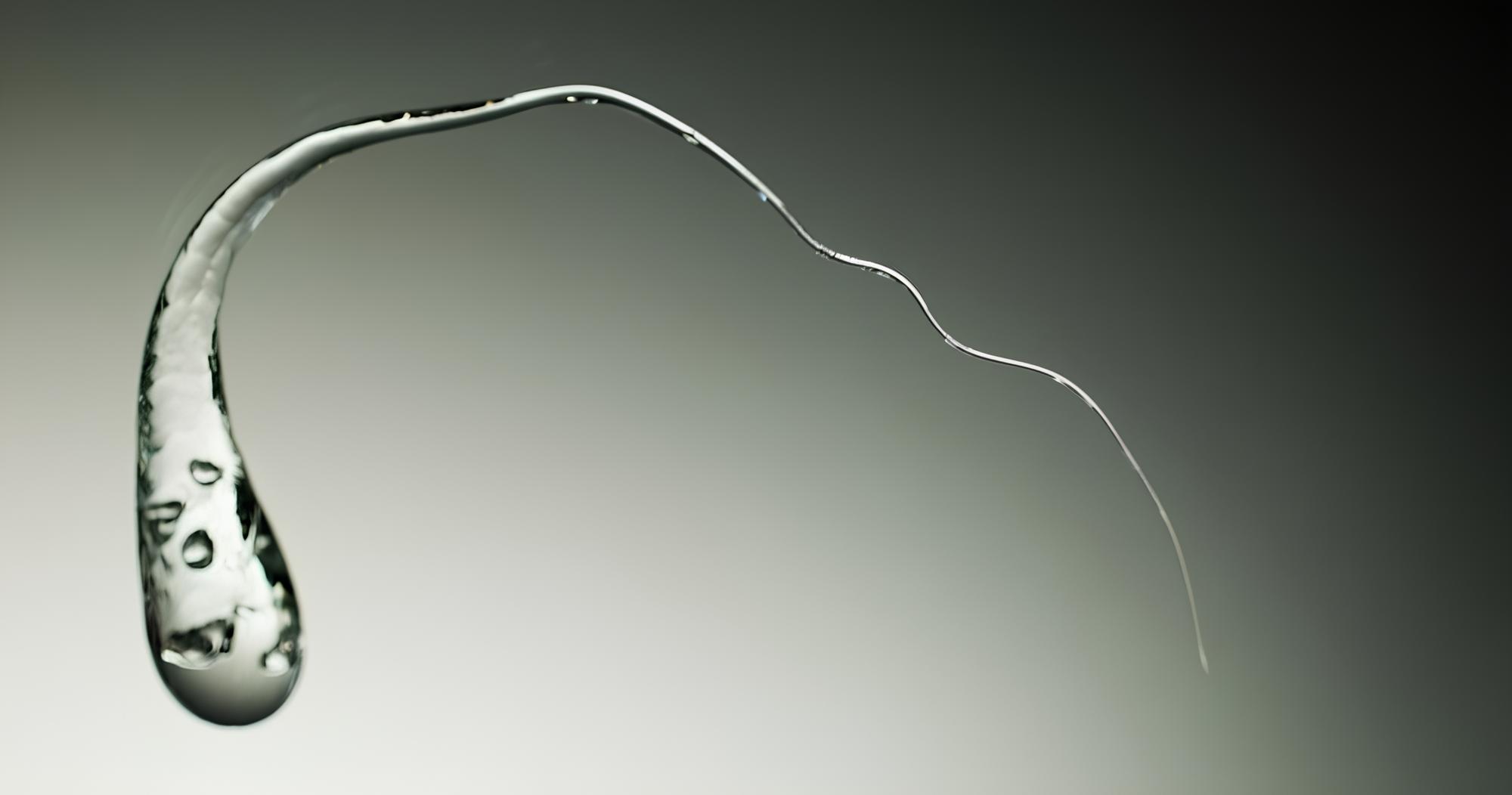


Created With Molten Glass And Instant Cooling, Prince Rupert’s Drops Withstand Brutal Impacts But Disintegrate With A Simple Touch. A Real Phenomenon That Intrigues Science To This Day.
Imagine holding in your hands a piece of the world’s strongest glass capable of withstanding hammer blows without cracking. Now imagine that, with a light touch to the tip of this same glass, it explodes into a cloud of invisible shards. It may seem like a magic trick or a special effect, but this phenomenon is real, has centuries of history, and a peculiar name: Prince Rupert’s Drops.
Created with a simple process — but with surprising results — these drops have intrigued scientists for over 400 years. Today, they inspire material engineers, physicists, and industrial designers, proving that the most fascinating science is the one that challenges logic and common sense.
The Origin of the Mysterious Glass Drops
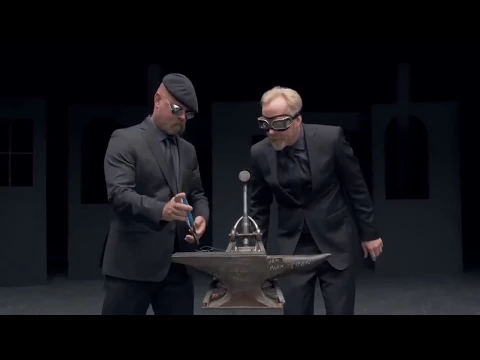

The name refers to Prince Rupert of the Rhine, a German aristocrat who brought the drops to the English court in the 17th century as a sort of magical demonstration of strength and fragility at the same time.
-
Parker Solar Probe Discovers High-Speed Dust Grains Near the Sun, Offering New Insights into Solar Corona’s Mysteries

-
Google Revives Historic Hangar for Cutting-Edge Tech in Silicon Valley: Once Built for a “Flying Aircraft Carrier,” Now a Hub for Drones and Robotics
-
Son of Brazilian Farmers Develops AI Robots in Arizona, Wins $175,000, and Tests Machines for Farming Tasks Amid U.S. Labor Shortage
-
Canadian Student Wins $50,000 at World’s Largest Youth Science Fair with AI-Powered Sea Turtle Robot Hunting Microplastics and 3D Holographic Camera Exposing Ocean Threats



Made of molten glass dripped into cold water, these structures resemble small tadpoles — with a robust head and a thin, elongated tail.
The process is as simple as it is ingenious: when hitting the water, the outer part of the drop cools almost instantly, creating an extremely resilient shell. The interior cools more slowly, generating a core under extreme compressive and expansive tension.
The result is an object with paradoxical properties: almost indestructible at the head, absurdly fragile at the tail.
The Strongest Glass That Is Stronger Than Steel — Up To A Point
Modern tests with pressure sensors and high-speed cameras have revealed that the head of the drop can withstand pressures exceeding 15 tons per square centimeter — something that surpasses the strength of many industrial metals.
Researchers have applied brute force hammer blows to the front of the drop without managing to crack it. This resistance comes from the internal stress generated during cooling: a compressive force that keeps the glass “locked” in an ultra-dense and stable structure.
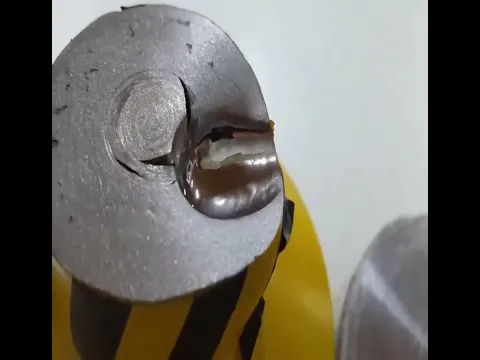
But the magic dissipates when the tail is struck or cut. At that moment, all the accumulated tension dissipates in a chain reaction, causing the drop to explode instantly into thousands of microfragments.
What Has Science Discovered About The Drops?
For centuries, the phenomenon was merely a curiosity — a science fair trick. But with the advancement of technology, especially with the use of high-speed cameras and 3D simulations, scientists have been able to study what really happens inside the drop.
It became possible to map in real-time how tension propagates within the structure. The breaking of the tail acts as a “trigger” that destabilizes the entire compression of the glass, releasing stored energy in a matter of microseconds.
This extreme behavior of matter is now the subject of study at universities and research centers worldwide. And it is no coincidence.
Modern Applications: How This Glass Inspires Current Engineering
What once seemed merely a historical eccentricity has become a source of inspiration for new ultra-strong materials and structures with controlled behavior under tension.
Today, researchers are using the concept behind Prince Rupert’s Drops to develop:
- More efficient safety glass, such as those used in cars, cell phones, and armor.
- Aerospace components, where lightness and strength are essential.
- Materials with programmed breakage, useful in pharmaceutical capsules, electronic devices, or military artifacts.
The beauty of the phenomenon is that it shows how a simple cooling strategy can completely alter the properties of a material.
And this is something that modern engineering constantly seeks: accessible ways to transform common materials into advanced solutions.
The Unlikely Combination Of Strength And Fragility
What makes Prince Rupert’s Drops so fascinating is precisely this contrast: the head withstands hammer blows, but the tail explodes with a breath.
This duality is rare in the material world. Typically, what is strong is also dense, expensive, or difficult to produce. The drops, however, are made only of ordinary glass and cold water.
In other words: the secret lies in the shape, not in the substance.
This opens doors to think about material design in a completely new way. Imagine, for example, structures that are resistant to compression but that disintegrate safely and predictably in the event of an accident. The drops offer the foundational concept for this type of development.
Curiosities: The Glass That Became Legend
- The first known record of the drops dates back to 1625, when glass artisans accidentally created them in European workshops.
- King Charles II of England was so impressed with the demonstration that he ordered a detailed scientific investigation — one of the first in the history of materials.
- The drops became part of scientific displays for centuries, being used to impress audiences with their apparent “magic.”
A Powerful Reminder That Science Is Also Made Of Surprises
The Prince Rupert’s Drops teach us that not always what seems fragile is indeed fragile — and that a simple process can hide an incredibly sophisticated behavior.
Even with all the evolution of science, they remain one of the most iconic examples of how matter can behave unexpectedly.
At the core, they are proof that human curiosity can transform a rudimentary experiment into inspiration for technologies of the future.