





 Portuguese
  English
  Spanish
  3 min of reading


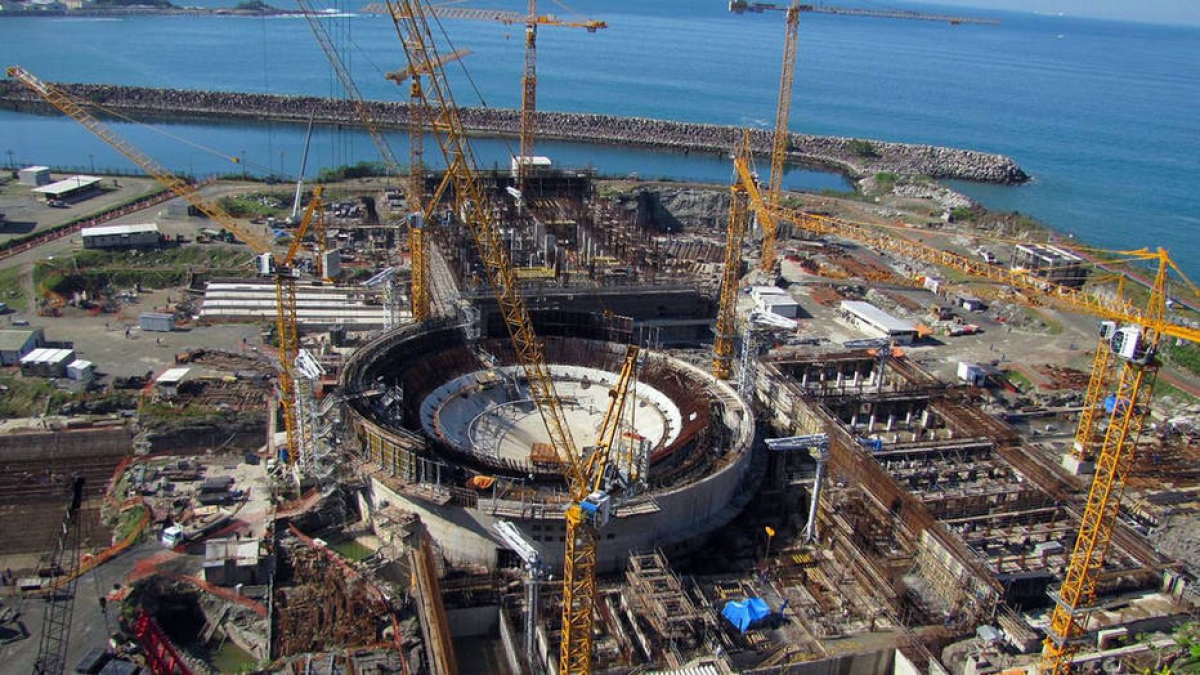
The Construction of the Angra 3 Nuclear Plant Should Resume in June, in Two Phases. The MME Said That the Project May Receive Investment of Up to R$ 15 Billion
The government announced that it will resume, next week, the construction process of the Angra 3 nuclear plant, located on Itaorna beach, in Angra dos Reis, in the state of Rio de Janeiro. According to the announcement, it will also open proposals from companies interested in participating in the project, with investments expected to reach R$ 15 billion. About 18 groups purchased the tender and visited the site where the two buildings of the unit will be constructed – one to house the reactor (dome) and a second for auxiliary use. Also see: Works in the Naval Industry of Angra dos Reis Confirmed – FPSO from Teekay Offshore is on its Way to the Brasfels Shipyard for Adaptation Works, Operating Under Contract from Karoon Energy
- Global Chip Crisis Affects Tesla Production, and Automotive Company Delays Launch of Two Electric Cars
- Multinational Toyota Announces Investments of R$ 1 Billion and 800 New Jobs in São Paulo
- A Milestone in Brazil’s Mining Industry! Senai and Mining Company Unite for Rare Earth Minerals Exploration in Bahia, Which Was Previously Unfeasible
- Philco Opens Selection Process with Many Job Vacancies for Professionals in Manaus – AM
- USP Discovers Deposit on the Ocean Floor, and the Submarine Treasure Makes Brazil ‘Rich’ in Renewable Energies
Resumption of Construction of the Angra 3 Nuclear Plant
The Angra 3 nuclear plant is the largest infrastructure project planned in Brazil for 2021, with an estimated cost of approximately R$ 15 billion. The initial project of the nuclear plant envisions the construction of two buildings, one to house the reactor and the other for auxiliary use. According to government information, the first stage in the construction process of Angra 3 consists of opening proposals from companies interested in participating in the construction of the project.
The expectation is that the resumption of construction of the nuclear plant will begin in June of this year and be finished by 2026. There is also a forecast to add about 1,405 megawatts (MW) of installed capacity to the national electrical system.
-
Brazilians may pay more taxes and churches are to blame: PEC could raise VAT by 1 percentage point and generate an impact of up to R$ 7 billion per year, warns the Ministry of Finance.

-
After laying off 6,600 employees, the supermarket giant opens a new store, reaching 310 operations in Brazil and accelerating expansion even after closing 28 units in a restructuring that reduced the workforce by 13.9%.
-
With R$ 3 billion on the table, a Brazilian mining company wants to process 20,000 tons of monazite per month, a mineral that contains 700 kg of rare earths per ton and could put Brazil back in the competition against China.
-
Commerce will be suspended on the days of the national team’s matches during the World Cup, and public servants will be released hours before the games.





The Angra 3 project has accumulated 30 years of delays and carries a debt of R$ 9 billion in financing with public banks. A first attempt to resume construction was made in 2010, but in 2015, the project was halted again due to the repercussions of Operation Lava Jato, which identified embezzlement of funds in the Angra 3 nuclear plant.
Government Says Angra 3 Works Will Contribute to the Energy System
Ney Zanella dos Santos, head of strategic management advisory at the MME, states that known uranium reserves in Brazil already ensure the supply for the Angra 3 Nuclear Plant and the others in the area for more than 300 years.
Bento Albuquerque states that Brazil lacks the desired quantity of nuclear plants, which has been included in the country’s planning for 40 years. The MME minister also says that if Brazil had the 6 nuclear plants that were planned, it would not be facing this moment today, emphasizing that the nuclear plant is also a form of clean energy. Bento referred to the low levels in the country’s water reservoirs, which supply hydroelectric plants. This energy source corresponds to 65% of the country’s energy matrix, according to the minister.






Be the first to react!